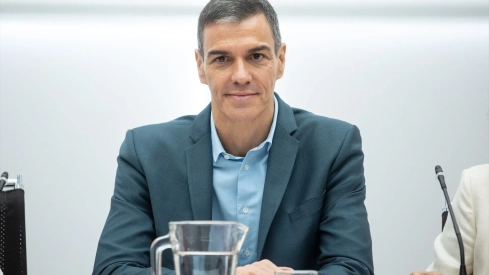
The PSOE arrives this Saturday at its Federal Committee at the most delicate moment for Pedro Sánchez in a year. Ferraz will gather nearly 300 socialist leaders with a formal agenda focused on the 2027 primaries and internal transparency measures, although the atmosphere will be marked by the conviction of José Luis Ábalos, the investigations into Santos Cerdán, the 'Leire Díez case', the judicial situation of José Luis Rodríguez Zapatero and the parliamentary pressure on the President of the Government.
Sánchez will open the meeting with an open speech. The socialist leadership expects him to repeat much of the message he already delivered this week to Congress: defense of continuity, rejection of irregular party financing, and a promise to act against any case of corruption. Ferraz wants the Committee to serve to close ranks, organize the electoral calendar, and convey to the grassroots that the party remains standing despite the political and judicial blow of recent months.
The Secretary of Organization, Rebeca Torró, will present a report on transparency and good management. The PSOE wants to showcase the measures approved after Cerdán's fall, including the collegiate leadership of Organization, dual signatures on sensitive decisions, more economic controls, internal audits, and asset declarations by Executive members. Some of these changes require regulatory adjustments that the Federal Committee must approve.
The other major item will be electoral. The PSOE will ratify a flexible primary calendar for the 2027 municipal and regional elections, with several windows for each federation to choose whether to accelerate the process in July or leave it for September or November. The Balearic Islands appear among the territories that can activate the fast track after Francina Armengol's decision not to run again as a candidate, with Rosario Sánchez as the favorite. Madrid is also stirred by Enma López's step forward, who has left the federal Executive to compete for the Mayoralty against Reyes Maroto.
The calendar also matters due to the territorial fear of being dragged down by the general elections. Sánchez has ruled out an electoral 'super Sunday' and has left the door open to calling elections before or after the municipal and regional elections if the Budgets get stuck again. This message has relieved several federations, worried about reaching May 2027 tied to Moncloa's wear and tear. The relationship with partners doesn't help either: Junts, ERC, Sumar, Podemos, and PNV are asking for more explanations, while Congress this week approved an initiative to urge the president to submit to a vote of confidence.
Page, Barbón and ReActiva: the criticism Ferraz hopes to contain
The most anticipated intervention will be that of Emiliano García-Page. The president of Castilla-La Mancha already asked for a vote of confidence or an early election a year ago and now arrives with a harsher diagnosis. His entourage maintains that the PSOE is worse off than then, due to Ábalos' conviction, the progress of judicial cases, and the poor electoral results of the last cycle. Page will also bring to the Committee his rejection of any financing model he sees as a privilege agreed upon with the independentistas.
Ferraz assumes that Page will speak harshly, but does not expect him to rally an internal majority. The Castilian-Manchegan president remains the critical voice with the most territorial weight, although within the Federal Committee he is in a clear minority against the bloc of leaders aligned with Sánchez. Attention will also be on Adrián Barbón, president of Asturias, who has defended that the internal debate should take place in the party's bodies and that "it is no drama" to have different positions.
Adding to this noise is ReActiva Socialdemocracia, the critical current that has called for general elections before the end of the year, a Management Committee, and an extraordinary Federal Congress. Its spokespersons assure that they have a voice within the Committee and demand a deep regeneration of the PSOE. The socialist leadership, for now, interprets this movement as a sign of discomfort, but not as an organic threat capable of altering Sánchez's control over the party.
Most federations will go in the opposite direction. Salvador Illa, María Jesús Montero, Óscar López, Diana Morant, Pilar Alegría, Ángel Víctor Torres, María Chivite or the PSE-PSOE appear among the supports that Ferraz takes for granted. The common message will be to vindicate the Government, defend the social measures approved and separate corruption cases from the continuity of the legislature. The "less noise, more Government" that the party has already claimed on its social networks will be heard.
Menos ruido. Más Gobierno. pic.twitter.com/avGgzivPGa
— PSOE (@PSOE) June 25, 2026
The Committee also comes with another uncomfortable fact for Ferraz. The democratic quality ranking of +Democracia has lowered the PSOE from a pass to a fail, with a score of 3.6 after the latest scandals and criticisms of its internal functioning. The leadership will try to compensate for this picture with the package of internal reforms and with the start of the primaries. This Saturday's meeting will serve to check how much criticism is heard inside the room and how much remains, again, outside Ferraz.
Add ElConstitucional.es as a preferred Google source for free.
Stay informed about all the latest breaking news with the best information. Against disinformation, for democracy and social rights.
