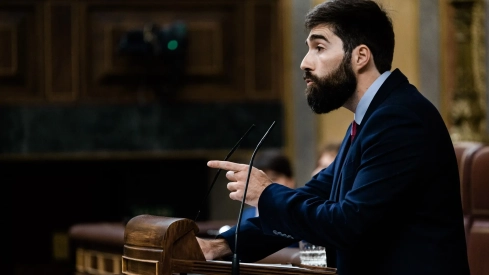
Congress has rejected this Tuesday the attempts by the PP and the far-right Vox to stop the reform of the Penal Code that proposes eliminating the specific crimes of insults to the Crown, religious offenses, and outrages to national symbols. The initiative thus overcomes the plenary debate and will continue its processing after remaining blocked for almost three years.
The amendment presented by the far-right Vox has only received the support of its 33 deputies, compared to 179 votes against and 138 abstentions. The PP's alternative has also fallen, with 171 votes in favor and 178 against.
PSOE, Sumar, and the groups that supported the investiture have re-established their majority to allow a reform aimed at adapting Spanish legislation to European standards on freedom of expression to advance. The text will now go to committee and then to the Justice Commission, where the groups will negotiate its final wording.
Vox calls for harsher penalties and even withdrawal of nationality
The spokesperson for the far-right Vox, Manuel Mariscal, has used the debate to present the reform as a supposed "open bar" for burning the flag, booing the anthem, or insulting Catholics. His party intended to maintain the current crimes and increase the punishment for certain expressions against Spain and its symbols.
The far-right proposal went much further. It included the possibility of imposing as an accessory penalty the loss of Spanish nationality for citizens who had acquired it and were convicted of these behaviors. It also demanded a protocol to prevent protests against the anthem or the flag in sports competitions.
Vox also proposed a specific aggravation of penalties for religious mockery when the conduct had an "anti-Christian" character. The measure would have created reinforced criminal protection for a specific confession, despite the Constitution establishing the non-denominational nature of the State.
Mariscal mixed insults to the Crown, religious offenses, and terrorism during his speech. However, the agreement reached between PSOE and Sumar keeps the crime of glorification of terrorism in force, which is finally left out of the reform.
The ultra party's offensive sought to use this issue to toughen other crimes related to political, artistic, satirical, or protest expressions. Enrique Santiago, spokesperson for Sumar, has accused the far-right of intending to criminalize any manifestation contrary to their ideological vision.
What will change in the Penal Code
The reform will abolish articles that offer special criminal protection to the King and other members of the Royal Family against insults or slanders. The Crown will retain the general protection of the right to honor, like any other person or institution, but the types specifically created for the Head of State will disappear.
Insults against the Cortes Generales and regional parliaments will also be eliminated. The modification will also extend to expressions directed against the Government, the General Council of the Judiciary, the Constitutional Court, the Supreme Court, and the governing bodies and superior courts of the autonomous communities.
Another change affects the crime of offending religious sentiments. The reform will abolish criminal punishment for the public scorn of dogmas, beliefs, rites, or ceremonies, a figure questioned for years due to its difficult fit with artistic and freedom of expression.
Threats, damages, coercion, discrimination, and hate crimes will remain prosecutable. Decriminalization affects the manifestation of ideas, criticisms, satires, or offensive expressions, without extending to violent conduct or conduct directed against people because of their beliefs.
The text will also eliminate the crime of outrages against Spain and its symbols, used to punish certain actions against the flag or the anthem. The promoters of the reform recall that the European Court of Human Rights has on several occasions questioned the convictions imposed in Spain for symbolic expressions against the Monarchy or institutions.
The PP accuses the majority of "disarming" the State
PP deputy Cayetana Álvarez de Toledo has defended an alternative amendment that maintained all current criminal figures and toughened the punishment for glorifying terrorism. The popular leader has accused the parliamentary majority of wanting to "disarm the State" and facilitate attacks against the King, judges, and institutions.
The PSOE has responded that the reform does not intend to alter the form of the Head of State nor weaken constitutional guarantees. Its deputy Artemi Rallo has defended that the objective is to prevent criminal law from acting as an element of intimidation against political criticism.
Junts, ERC, EH Bildu, PNV, BNG, Podemos and Compromís have allowed the initiative to continue, although some of these groups have reproached the Government for recovering the text so late. ERC has asked to speed up the processing to prevent it from being paralyzed again before the end of the legislature.
The reform will now continue its course in the Justice Committee, where the agreement to preserve the crime of glorifying terrorism will be formally incorporated. As it is an organic modification of the Penal Code, the final text will need the support of an absolute majority of Congress before passing to the Senate.
Add ElConstitucional.es as a preferred Google source for free.
Stay informed about all the latest breaking news with the best information. Against disinformation, for democracy and social rights.
