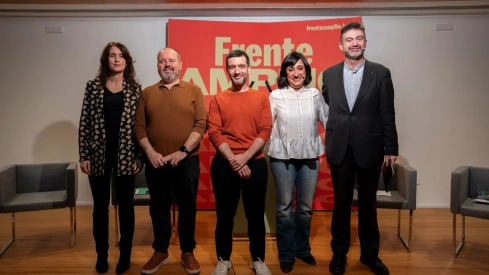
Pablo Bustinduy presented this Monday in Madrid the electoral program of the Frente Amplio for 29N and put a figure on the proposal that Ada Colau advanced last night. The coalition wants to limit to ten million euros what each heir can receive and apply a 100% rate on the part that exceeds that amount. "It's already quite an advantage to be born rich," said the Minister of Social Rights and campaign spokesperson, who defended that this money be allocated to public services.
El 29 de noviembre se decide si la vivienda es un derecho o un negocio para unos pocos.
— Frente Amplio (@Frente_Amplio_) November 16, 2026
Si defendemos los salarios, las pensiones y el patrimonio de la gente trabajadora o permitimos que siga creciendo la desigualdad.
🗣 @pbustinduy pic.twitter.com/ZveiPc4gCm
Bustinduy opened the event with housing and inequality, the two issues that the coalition wants to turn into the "referendum" of November 29. He presented 'A program like a house', with more than a thousand measures that, as he explained, are accompanied by an economic report. At the close, he stated that more than 170 organizations have participated in some way in its elaboration. The spokesperson summarized the purpose of the document in one sentence: "We want life to cost less".
A limit of ten million per heir with a 100% rate
Bustinduy detailed how the inheritance tax would look. He announced a marginal rate of 50% between 800,000 euros and five million, 75% between five and ten million, and 100% from that figure. Each percentage would apply only to the part of the inheritance that falls within its bracket. The proposal would lower the rates in the brackets below 120,000 euros, would compute donations received during life, and would eliminate regional bonuses, a power that common regime communities currently have.
"What merit is there in being born into a rich family? What surname is worth ten million euros?", the minister asked, addressing the right. The coalition estimates that the reform could bring in between 1,500 and 2,000 million additional euros per year. Bustinduy gave as an example the spending on social housing policies, which the Broad Front estimates could double with that collection.
Nadie en España va a heredar más de lo que pueda gastarse en una vida. A partir de 10 millones de euros, el dinero va a ir a los servicios públicos, que son el patrimonio de todos los demás.
— Frente Amplio (@Frente_Amplio_) November 16, 2026
¿Qué mérito hay en nacer en una familia rica? ¿Qué apellido vale 10 millones de euros? pic.twitter.com/FERiH4UDY9
The minister has also defended the State entering the renewables business through a Generational Energy Fund. His idea, he said, is "to do with our sun what Norway did with its oil." The State would have a 30% stake in new small and medium-sized renewable and storage facilities. Half of the profits would return to the fund and the other half would be dedicated to public housing, rehabilitation, and pensions. Bustinduy attributed the initiative to the citizen campaign promoted by the popularizer Javier Peña.
Bustinduy demands approval of childcare aid before 29N
The announcement with the most immediate deadline came when discussing the universal childcare benefit, of 200 euros per month for each child under 18 in the Frente Amplio program. The PSOE has incorporated into its own program a state benefit for households with minors, with a progressive design and additional protection for low incomes. Bustinduy celebrated that the socialists have taken up the proposal and asked them to take it to the Government before voting. "We have three cabinet meetings left before the elections," he recalled. He assured that his party is already working for it to be approved in one of them.
The minister then introduced the heads of the four program areas. Joan Mena placed housing at the forefront of his intervention and argued that no eviction should be carried out without a housing alternative. He demanded stable rents and more public housing, in line with the proposal Bustinduy had recalled at the opening of the event, that of expropriating homes from large funds to incorporate them into the public housing stock. Mena linked this agenda with free school meals, the strengthening of primary care, and the expansion of public places for children aged zero to three.
Más Madrid councilor Sara Ladra argued that renewable electricity should translate into lower bills. She announced that the coalition wants to dedicate 3.5% of the annual gross domestic product to the ecological transition, create a public energy retailer, and automatically recognize the social tariff for households that need it. She also called for extending the single transport pass and legally stipulating that basic public services should be less than thirty minutes away from those living in rural areas.
The economist Carlos Sánchez Mato has advocated for restoring retirement at 65 years old, removing penalties for those who retire early after long contribution careers, and shielding the equalization of minimum pensions to the minimum wage. To finance these measures, he has proposed a minimum effective rate of 20% in corporate tax and a levy on companies that allow their workforces to lose purchasing power by raising wages below inflation.
Isabel Rosa closed the interventions by areas with a call to strengthen the prevention of gender violence and the protection of victims. She also defended legal and safe migration routes, the right to protest, and a foreign policy focused on diplomacy and cooperation instead of rearmament. After her intervention, Bustinduy announced that Ada Colau will unveil this Tuesday the latest measures of the program on the cost of living.
Contact
We are listening. Get in touch.
