The Popular Party insinuated this Tuesday that the Government of Pedro Sánchez is hindering a possible visit by the President of the European Commission, Ursula von der Leyen, to Ceuta. The accusation has provoked an immediate response from the PSOE, which considers it "yet another invention" by the opposition. For now, the Popular Party has not provided proof that Brussels has formally requested the trip or that Moncloa has rejected it.
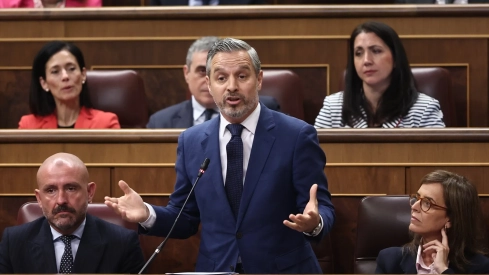
The Deputy Secretary of Finance, Housing and Infrastructures of the PP, Juan Bravo, opened the debate by asking "why" the Executive does not want Von der Leyen or any European commissioner to travel to the autonomous city. In his opinion, Spain should facilitate these visits so that community institutions can see firsthand the consequences of the massive entry recorded at the end of July.
The parliamentary spokesperson for the PP, Ester Muñoz, went a step further and asked journalists to "connect the dots". Muñoz maintained that an institutional trip by the President of the Commission would have to be coordinated with the Spanish Government, just as the visit of the Kings depends on an agreement between Moncloa and the Royal Household. Asked again about the existence of a specific veto, she admitted that she did not have information and referred to her party's foreign policy officials.
The PSOE accuses the PP of fueling another theory
The socialist spokesperson in Congress, Patxi López, rejected the insinuation and accused the PP of echoing "all conspiracy theories". "This strikes me as another invention," he responded after hearing Muñoz's statements.
Nor has the Minister of Foreign Affairs, José Manuel Albares, confirmed that there is a request from Von der Leyen blocked by the Government. The position he defended this Tuesday from New York is, in fact, far from the idea of keeping community institutions out of the crisis. Albares has demanded that Ceuta and Melilla play a "fundamental role" within the European Union and has recalled the efforts made by Spain to strengthen its presence in community policies.
The Government has launched a package that includes greater participation of Frontex, specific funding, and the integration of the two cities into different European structures. Foreign Affairs is also working to ensure that Ceuta and Melilla have permanent representation in the European Committee of the Regions and receive treatment adapted to their status as the Union's only land border with Africa.
The political battle to bring Ceuta to Europe
The PP has been trying for several weeks to place the Ceuta crisis at the center of the community debate. Alberto Núñez Feijóo visited the city this Monday with the president of the European People's Party, Manfred Weber, and the president of Ceuta, Juan Jesús Vivas. The latter has already invited Von der Leyen and the European Commissioner for Home Affairs and Migration, Magnus Brunner, although a date has not yet been announced, nor has a public acceptance from the President of the Commission been recorded.
Von der Leyen has expressly supported Spain. During her recent State of the Union address, she declared that "Ceuta is Spain, Ceuta is Europe" and promised that community institutions would stand by the city. She also announced a new European framework to respond to migratory emergencies and the reinforcement of external border surveillance.
The dispute that opened this Tuesday therefore revolves around a visit that is not closed. The PP maintains that the lack of a date points to Moncloa, while the PSOE rejects the accusation and recalls the involvement that Brussels has already shown in the crisis. Ester Muñoz ended her appearance without specifying which European leader would have asked to travel to Ceuta, when this trip would have been proposed, or who would have communicated its rejection.
Add ElConstitucional.es as a preferred Google source for free.
Stay informed about all the latest breaking news with the best information. Against disinformation, for democracy and social rights.
