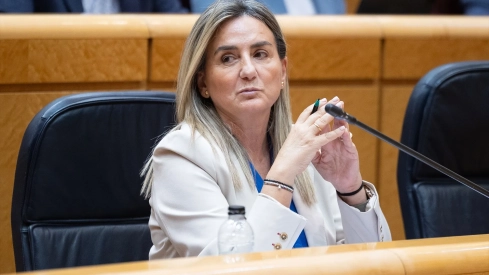
The Government of Isabel Díaz Ayuso has opened a new front with Madrid's teaching staff by imposing "ideological neutrality" instructions in public centers that the Ministry of Education considers a threat to fundamental rights. The central Executive demands that the Community of Madrid withdraw a rule that, in its opinion, can dissuade teachers from expressing their opinions and exercising constitutionally protected rights, such as freedom of association and the right to strike.
The demand comes in the midst of an indefinite strike by public school teachers in Madrid, who are maintaining their struggle with the Ministry of Education over their working conditions. The conflict has now escalated to the institutional level: the central Government gives Ayuso one month to withdraw the instructions and warns that, if she does not, it will go to court.
The Secretary of State for Education has sent the regional Executive a 14-page request demanding that it "revoke and withdraw" the rule approved on November 19. If the Ministry does not rectify, the Ministry will resort to the contentious-administrative jurisdiction.
Ayuso uses ideological neutrality in the midst of a teachers' strike
The Ministry of Education, directed by Mercedes Zarzalejo, defends that the instructions seek to guarantee ideological neutrality in the centers, a principle included in the Organic Law on the Right to Education of 1985. However, the Ministry considers the rule unnecessary and questions the Community of Madrid's use of this principle to regulate the actions of teaching staff in the middle of a labor conflict.
The text prohibits teachers from transmitting their political, ideological, partisan, or union opinions to students "with the aim of them sharing them." It also prevents making comments favorable to the strike before students or families and bans the placement of posters related to the strike on facades and common areas of the centers.
The restrictions directly affect how teachers can address the educational conflict within schools. The rule also comes when unions are maintaining an indefinite strike and preparing for their union elections in December. This is no minor detail: the words "union" or "union-related" appear up to 30 times in the Ministry's instructions.
A complaint channel to monitor teaching staff
One of the aspects that most concerns the Ministry is that the Community of Madrid has incorporated a specific channel for any member of the educational community to report teachers who fail to comply with instructions. Education considers that this mechanism can project an image of institutional distrust towards teachers and cause them to avoid exercising their rights for fear of possible consequences.
The requirement also questions the lack of precision of the norm. According to the Ministry, the instructions do not clearly define when a complaint should lead to an investigation or what should be understood by "serious indications" to justify the intervention of the educational inspection. This ambiguity, it warns, leaves an excessive margin for interpretation to the Administration.
The Secretary of State also rejects that the text adequately distinguishes between teaching fundamental rights and taking a stand in a specific conflict. Teachers can explain in the classroom rights such as freedom of association or the right to strike, but the Community of Madrid cannot confuse that educational work with the propaganda of a specific position.
The central Government threatens to go to court
In its letter, Education recalls that the Constitutional Court has established that the dissemination and publicity of a strike are part of the exercise of this right, provided that no coercion or pressure is incurred. It also emphasizes that administrations cannot adopt measures on fundamental rights that cause a deterrent effect or discourage their exercise.
The Ministry warns that Ayuso's instructions may end up restricting freedom of expression, freedom of association, the right to strike, and academic freedom of teachers. For this reason, it demands their withdrawal and leaves open the judicial route if the Community of Madrid maintains its decision.
The ball is now in the court of the regional Executive, which must decide whether to rectify or maintain instructions that have added a new source of tension to the already entrenched dispute between the regional Government and Madrid teachers.
Contact