Today we are going to talk about a judicial investigation that, the more it is analyzed, the more questions it generates and the fewer answers it offers. I am talking about that of Judge Peinado, and I am going to get straight to the point.
This begins with a complaint based on press clippings. Yes, press clippings; some, moreover, incorrect. It is not, therefore, the beginning of a great judicial case. It is rather the start of something apparently quite flimsy. But, surprisingly, with that material, a whole investigation that has already lasted two years is launched.
Begoña Gómez Case: Peinado's instruction walks directly to disaster.
— ElConstitucional.es (@elc_es) April 15, 2026
✍️The opinion of Federico Quevedo for https://t.co/qwXhgSUGUm pic.twitter.com/oUBvO7nqLL
Two years in which we have seen everything: questioned decisions, rectifications and the occasional corrective from higher instances. Come on, what amounts to a model instruction, but in reverse. And, despite that bumpy road —or precisely thanks to it, who knows—, the judge decides that this deserves to go to trial, and not with minor charges. No: we are not talking about influence peddling, corruption or embezzlement; that is, heavy artillery.
And here is where one ends up asking oneself: does this hold up legally or does it hold up by inertia? Because the defenses are already pointing out something quite serious. Pay attention to this: the judge would have declared the investigation closed while he continued ordering proceedings. Translated: we have finished, but we continue. It's a kind of judicial Schrödinger.
Erwin Schrödinger, in case you don't know, was a physicist who calculated the probabilities of finding a quantum particle in a specific place. The same calculation of probabilities of finding a crime that judge Peinado seems to be practicing. Which, in legal terms, can have very untheoretical consequences, such as, for example, the nullity of the procedure, which is not a minor detail by any means.
From here on, political noise comes into play. Some speak of persecution, others of necessary justice, and all, curiously, quite interested. But, if we remove the noise, the dead leaves, what's important remains. And what's important is this: justice cannot allow itself to seem improvised. It cannot start with press clippings, stumble for two years and pretend that everything culminates in a solid trial, as if none of this had happened.
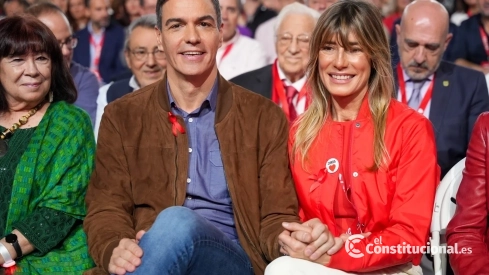
Because then the problem is no longer this case, the Begoña Gómez case. The problem is the precedent that this case sets and, above all, the trust or distrust it generates. Because, in a rule of law, the question is not only who sits in the dock —in this case, the wife of the Prime Minister—. The question is whether the path to that dock is clean, solid, and legally impeccable.
And when that path looks more like a zigzag than a straight line, the least one can do is ask questions. Many questions. And, for now, to those questions we have few convincing answers.