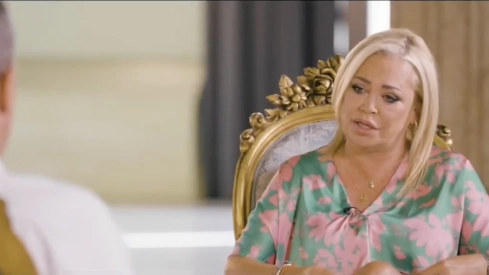
That Belén Esteban, when she talks about her story, her pain, and her indignation, is a television draw was something many of us already knew —although some have tried to question it for a very long time—. This Saturday it was proven again: her interview on De Viernes boosted the program's audience to an 18.7% share and 1,130,000 viewers, figures that make the offering a leader and that neither the network nor the format had seen in a long time. And how glad I am that they have reconnected with that audience that, at times, felt orphaned.
Belén has reconnected with the public, with those who so missed seeing themselves reflected on television. Because there are many Beléns, mothers who find themselves completely alone in raising their daughters. And anyone can empathize with that pain and be completely captivated watching a mother look at the camera to address her ex-husband and ask him to get his daughter back, that she still loves him.
"The channel's potential audience is hungry for more everyday topics and is exhausted by political tension," reflected television critic Borja Terán this very morning. And how right he is. "On every channel you turn to, there are politicians," my grandmother complains as I write this article.
At a time when television programming is flooded with pundits who don't self-criticize, political brawls, polarization, and dehumanization, Belén Esteban arrives and shows us her most human side. That pain of a mother who sees her daughter demanding her father's attention, of the "invisible man," as she calls him; of a woman who felt rejected by her in-laws; of a person who only protects her daughter. Because, as she once said, she would kill for her daughter. Like almost all mothers.
But Belén's magic is not only in her story —which it is, too— but in how she tells it. In how she gets emotional, recomposes herself, nervously moves her hands and, when necessary, sends a message to the camera to her daughter's father: "She is 27 years old. I would love for you to meet her, to see where she lives, her friends, and the great woman she has become. I would like that one day you and she... You and she... would have a chat, because that day you would cry. But do you know why? From happiness."
Andrea Janeiro's statement
Another of the great protagonists of the night was Andrea Janeiro, the great victim of a story of absences and contempt. Many of us knew the story, the pain of a young woman who has gotten ahead outside of Spain and fleeing the easy money of fame, but this summer they have tried to sell another version again. They have been talking for months about the "other version of the story" without stepping forward and telling it, as they have tried to do for years. But there is only one reality and, as Belén Esteban has publicly defended, Andrea has only had the support of her mother.
So many things affecting Andrea have been said in recent months that she herself has had to step forward and issue a statement through her lawyers, in which she authorizes her mother "to publicly explain those facts strictly necessary to defend the truth." In the same statement, they clarify that "in no case will unnecessary aspects be disclosed, nor will this authorization be allowed to be used to unjustifiably increase her public exposure" and that the aim is "to prevent incomplete, inaccurate, and unrealistic versions from being consolidated." The silence maintained until now, they add, "cannot be interpreted as acceptance of inaccurate information." But is her anonymity at risk after this statement?
Lawyer Ariana Margiotta, from MHM Legal, is clear: "Under no circumstances does Andrea cease to be anonymous because she does not make the statements, but rather authorizes her mother to do so without needing to expose herself." However, she clarifies that Belén Esteban's statements on De Viernes can indeed lead to other involved people speaking publicly: "It can lead to other people speaking, but we are talking about a specific period in response to Belén. That in no way authorizes them to take her out of anonymity."
And she warns: "Juls can reply, add her truth, and grant interviews, but she cannot take her sister out of anonymity or undermine her honor. If she does, she exposes herself to Andrea taking whatever legal actions she deems appropriate."