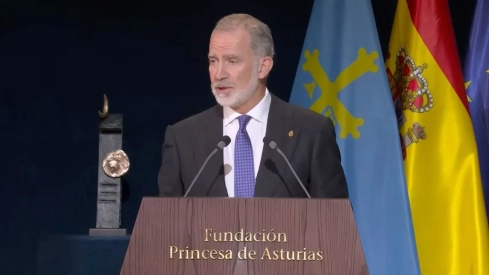
Felipe VI has closed the Princess of Asturias Awards ceremony with a political message in the background: democracy does not end on November 29, when Spaniards are called to the polls again, and it needs a daily commitment to sustain institutions and coexistence.
From the tribune of the Campoamor Theater, in Oviedo, the King has maintained that democratic exercise in a "mature society" like the Spanish one requires time and cannot be limited to an election. "It does not end in an election", he stressed, defending that the political orientation of the country is decided at the polls, but its maintenance requires constant practice.
The Transition as a reminder of method, not as a museum piece
The monarch has once again looked to the Transition to reinforce this argument. He recalled that it was a "complex" process, based on the generosity and "foresight" of its protagonists, and that it allowed a "peaceful and admirable transition from dictatorship to freedom".
Felipe VI has linked this legacy with the 1978 Constitution, which he has defined as a framework "capable of welcoming all Spaniards without any distinction." In his opinion, that path "continues forward", is renewed every year and obliges citizens to remain alert, with humility and a willingness to learn.
Sincerity versus the machine, and time versus haste
After quoting Jorge Luis Borges, the King has focused on sincerity as a requirement for effort to bear fruit. "Sincerity in what we do, want, long for and imagine", he said, is the condition for completing learning and returning something valuable to society.
He applied this same criterion to this year's award winners, of whom he said that they offer examples of how far a life, a career or a project can go when lived with sincerity. He added, moreover, that this sincerity "can never be achieved, by itself, by an algorithm."
The warning about artificial intelligence has appeared later, in one of the most explicit parts of his speech. Felipe VI has admitted that AI can absorb human knowledge and return it synthesized with "astonishing" immediacy, but has questioned whether it can learn over time, reconciling knowledge and moral learning as people do.
El rey Felipe VI en los #PremiosPrincesadeAsturias :
— RTVE Noticias (@rtvenoticias) October 23, 2026
"Es importante subrayar el valor de la experiencia en un mundo que marcha al dictado del bombardeo informativo y la agregación masiva de datos. Un mundo en el que la inteligencia artificial nos parece, por eficaz e inmediata,… pic.twitter.com/dPUj4QPGeg
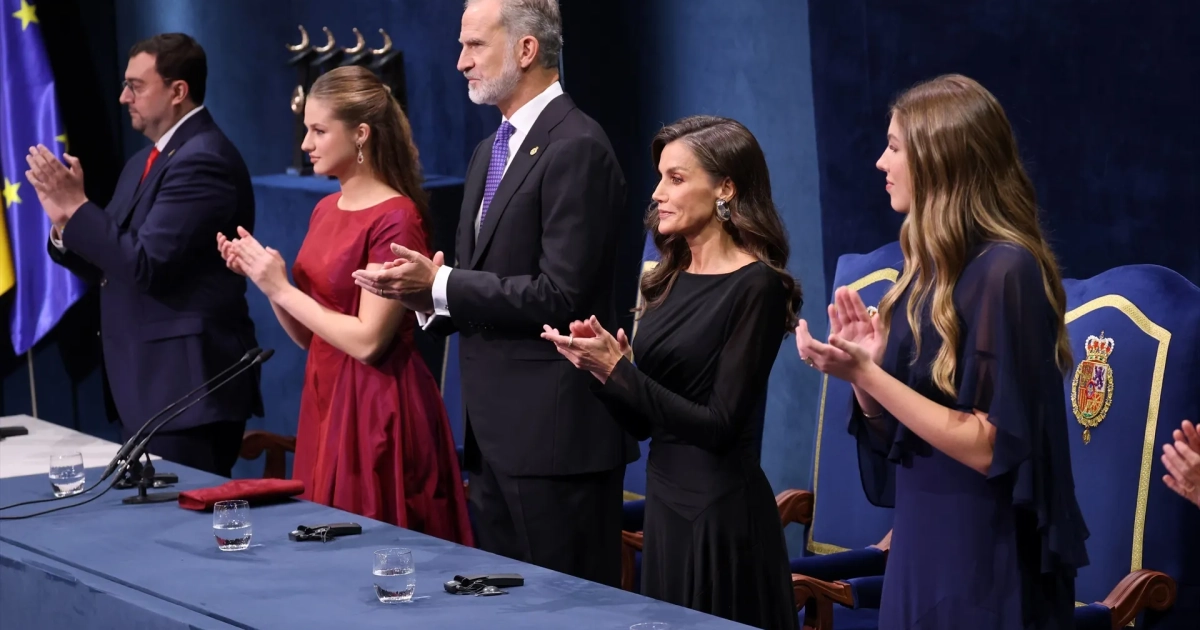
The King has topped off that idea with a defense of patience in an environment of technological acceleration: "we need to give ourselves time", he stated, to obtain results, reach goals and improve as a society. He also had a recognition for Princess Leonor, who spoke before him, and highlighted that she continues to take firm steps as Honorary President of the Foundation, while she trains and Infanta Sofía accumulates valuable experiences in her vital learning.
This edition has also brought an institutional novelty: for the first time, the Princess of Asturias has received the award winners alone, without the company of Felipe VI and Letizia, before the ceremony at the Campoamor Theater.