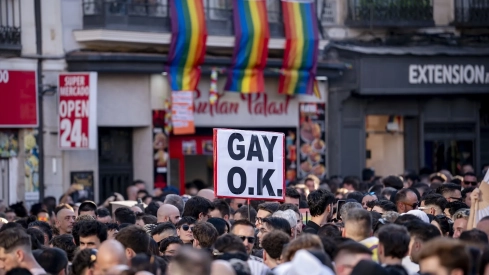
The State Federation of Lesbians, Gays, Trans, Bisexuals, Intersexuals and more (FELGTBI+) has warned of the "permanent" consequences that hatred due to LGTBIfobia can leave on the mental health of LGTBI+ people, in a message disseminated on the occasion of Mental Health Day, which is commemorated this Saturday, October 10.
"LGTBIfobic violence does not end when your bruise heals or when, tired of enduring, you manage to change jobs. This type of violence leaves a much deeper and more lasting wound on our mental health that sometimes accompanies us for life," said the president of FELGTBI+, Paula Iglesias.
The 'State of Hate 2026' report points to an increase in emotional distress
The entity has recalled the results of the 'State of Hate 2026' report, prepared by the Federation with the collaboration of members of a research team from the Institute of Public Policies and Goods (IPP) of the Spanish National Research Council (CSIC).
The research concludes that all forms of hate, whether physical aggressions, harassment, or discrimination, almost double the levels of depressive symptoms, anxiety or stress, apathy, loneliness, rage or anger, and fear among people who have been victims of LGTBIfobia.
According to the study, almost 20% of people who are victims of LGTBIfobia suffer from anxiety or stress "all the time," with 18% among those who have suffered aggression, 17% among victims of discrimination, and 16% in cases of harassment, compared to 11% of LGTBI+ people who have not been victims and feel anxiety.
In addition, almost one in 10 victims of hate feels rage or anger "constantly," with 8% in victims of harassment, 7% in cases of discrimination, and 9% among those who suffered aggression, compared to 4% of LGTBI+ people who have not suffered hate.
The research also reveals that approximately one in 10 victims of LGTBIfobia feels fear "permanently," with 9% in victims of harassment, 10% in discrimination, and 10% in aggression, compared to 6% of the total LGTBI+ population that has not suffered hate.
Likewise, almost one in 10 victims experiences a depressive state "constantly," with 8% in the case of harassment, 10% in discrimination, and 9% in aggression, compared to 7% of the collective that has not experienced violence.
The Federation calls for a state pact against hate speech
Given this scenario, Paula Iglesias has called for measures that act "preventively" before violence occurs. For the president of the entity, "the best way to do this is by tackling hatred at its root, which are hate speeches," because "they point out, stigmatize, and normalize violence that seeps through social networks and public statements" in homes, schools, and workplaces.
"And to stop this violence, we urgently need a State Pact against hate speech towards vulnerable groups," she stated.
Psychoemotional care and strengthening of public health
For her part, the co-coordinator of the Federation's Comprehensive Health Group, Irene Aterido, has argued that "Victims of LGTBIfobic violence need adequate and continuous psychoemotional support."
"Therefore, it is essential to strengthen public health resources to ensure that no one is left without care for not being able to afford private services," she asserted.
Likewise, Irene Aterido has demanded tools that put "an end" to "LGTBIfobic violence," warning that "they leave profound consequences" on the mental health of the collective. "We cannot leave the care of those who suffer violence in the hands of their individual capacity to overcome it, nor solely on the support networks they have managed to build. We need a society that does not generate fear or suffering and in which all people can live and develop with dignity and respect," she concluded.