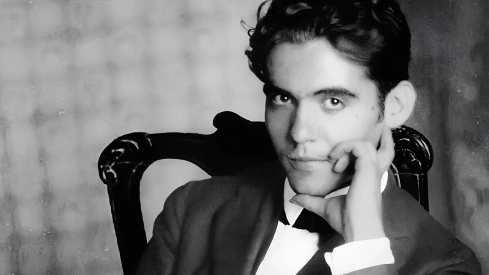
Federico García Lorca was 38 years old when they came for him to kill him. Ninety years later, his verses continue to pass from parents to children, his dramas fill theaters, and his characters speak with a truth that has barely aged. Spain still does not know where his body was thrown or what else the State archives hold about that August dawn in 1936.
The Francoists murdered him without trial somewhere on the road between Víznar and Alfacar. Along with him died the republican teacher Dióscoro Galindo and the anarchist bullfighters Francisco Galadí and Joaquín Arcollas. None of their remains have been located. The four remain united under an unnamed land and in a story that for decades tried to reduce them to silence.
Coinciding with the 90th anniversary of the crime, the Association for the Recovery of Historical Memory has addressed a letter to Pedro Sánchez to demand the declassification of all documentation related to the assassination and its consequences. The entity argues that keeping these papers hidden prolongs the grievance against the victims and protects those who participated in the repression.
Its president, Emilio Silva, recalls that Spanish democracy has been using an Official Secrets Law approved by the dictatorship in 1968 for half a century. The project intended to replace it arrived at Congress in 2025, outside the deadline set by the Democratic Memory Law, and remains trapped in successive extensions of the amendment period.
The voice that kept speaking
Francoism ended Lorca's life. His characters continued to enter homes, schools, and stages. There remain the Bride from 'Blood Wedding', the woman consumed by the desire to be a mother in 'Yerma', the daughters locked up by Bernarda Alba, and the wounded streets of 'Poet in New York'. Lorca wrote about those who lived under surveillance, about persecuted loves, and about lives condemned to hide.
He also brought classical theater to towns that had never seen a performance. At the head of La Barraca, he toured the Spain of the Second Republic with simple sets, young actors, and the conviction that culture should reach every square. That closeness still runs through his work. Lorca knew how to listen to popular speech, mothers' songs, women's pain, and the fear of those who had to live in hiding.
The ARMH kept for six years the only known report in which the Francoist State itself recognized the murder. The document reached the association in secret in 2009 and could be published in 2015, after protecting the person who had delivered it. Opening the rest of the archives would allow reconstructing responsibilities, completing the history, and returning names to those who still remain in the graves.
In 'Mariana Pineda', Lorca put on the lips of another woman from Granada, condemned for defending freedom, a phrase that seems written to cross these ninety years: "On the flag of Liberty I embroidered the greatest love of my life". Spain still owes Lorca the whole truth, the end of silence, and a place to leave him flowers.
