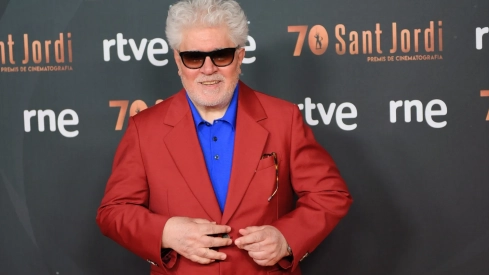
Pedro Almodóvar has once again placed himself at the center of the cultural and political debate after speaking out about the future of artistic freedom in Spain. The filmmaker from La Mancha, who has just turned 77, has used his latest public appearances to warn of the danger of censorship in the world of culture and defend that creators should be able to develop their projects without ideological conditions.
The director made these statements during his visit to the program 'La Revuelta', presented by David Broncano, where he also spoke about his first novel, 'The Man Who Only Wrote on Airplanes', and the good moment Spanish cinema is experiencing. In his speech, Almodóvar expressed his concern about proposals that seek to condition public aid to films based on their content and warned that this type of measure could end up limiting freedom of expression.
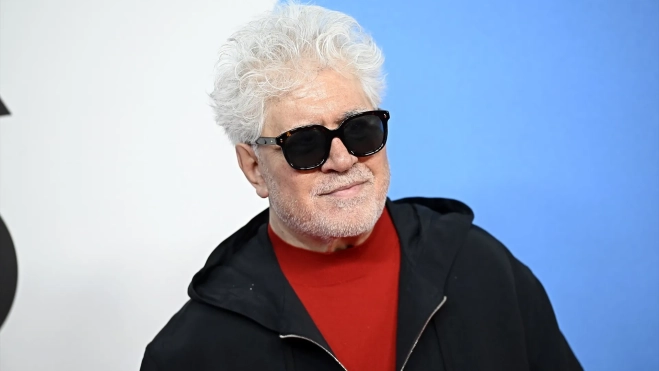
His intervention also comes at a particularly significant moment for his career as a producer. Through El Deseo, the production company he shares with his brother Agustín, he has participated in 'The Black Ball', the latest feature film by Javier Calvo and Javier Ambrossi, which has become one of the great cinematic successes of the year.
Almodóvar believes that limiting films by their ideology is a form of censorship
The filmmaker has expressed his concern about possible restrictions on the financing of certain cultural productions. Almodóvar believes that demanding that films do not have a certain ideological load questions the freedom of creators and opens the door for institutions to decide which stories can reach the screens.
During his intervention in 'La Revuelta', the director referred to the proposals on aid to cinema and criticized the use of concepts such as indoctrination or propaganda to establish which productions can receive public funding. "It's pure euphemism, it's pure and simple censorship," he said when referring to this type of approach. His position stems from an idea he has defended throughout his career: art does not have to respond to a single vision of society. For Almodóvar, cinema must have space to tell uncomfortable stories, address social realities and represent different ways of understanding the world, even if these may generate debate.
Este programa tiene contrastes así, un día viene Pedro Almodóvar y en el siguiente viene Santiago Abascal. #LaRevuelta pic.twitter.com/qadKDb6nZo
— La Revuelta (@LaRevuelta_TVE) November 5, 2026
In this regard, the director assured that he does not intend to give up his creative freedom due to possible political or institutional consequences. "I will do what I want, even if I fall", he affirmed, making clear his intention to continue working without adapting his films to the ideological demands of those who may occupy institutions. He also expressed his concern for the future of culture and for the difficulties faced by new generations of artists. Almodóvar believes that young creators face increasing obstacles to develop their projects, from seeking funding to difficulties in making their way in a very competitive industry.
Almodóvar's support for Los Javis and the success of 'La bola negra'
Beyond his reflections on censorship, Almodóvar also wanted to highlight the current moment of Spanish cinema and, especially, the success of 'La bola negra'. The film, directed by Javier Calvo and Javier Ambrossi, features the participation of El Deseo, Pedro and Agustín Almodóvar's production company, along with Suma Content.
The director has not hidden his satisfaction with the film's journey, which has managed to attract a young audience to theaters with a story that addresses historical memory and homosexuality in different eras of Spain. During his conversation with Broncano, he even defined it as "the great phenomenon of Spanish cinema in the last 20 years". For the filmmaker, one of the most important aspects of this success is that Los Javis have managed to connect with young viewers through a story that deviates from the most common commercial productions. "It has achieved something unique: that young people return to the cinema to see a film about the war and our memory", he highlighted when assessing the public's response.
Es difícil imaginar un año de más éxitos para el cine español
— La Revuelta (@LaRevuelta_TVE) November 5, 2026
Enhorabuena a los Javis porque "La bola negra" es una absoluta barbaridad 👏 Un orgullo total para nuestro cine#LaRevuelta pic.twitter.com/II5TOBDk7I
The film covers three historical moments, 1932, 1937, and 2017, to build a story about identity, desire, and the difficulties that homosexual people have had to face in Spain. A proposal that, in Almodóvar's opinion, also has significant pedagogical value, because it allows new generations to approach episodes of history that have not always had enough presence on screen. The participation of the director from La Mancha is not only a public recognition of the work of the filmmaking couple. His production company has been part of the project since its development and has accompanied Los Javis in a production that has ended up becoming one of the great cinematic events of the season.
Almodóvar has also highlighted the film's ability to move and generate conversation among different generations. A particularly significant endorsement given the admiration that Javier Calvo and Javier Ambrossi have expressed on numerous occasions for the filmmaker, whom they consider one of their great references. In this way, the director has united two of the issues that concern him most today: the need to protect artistic freedom and the importance of cinema continuing to tell different stories. For Almodóvar, the success of 'La bola negra' demonstrates that there is an audience willing to approach films that address social, historical, and personal issues without renouncing their own perspective.
