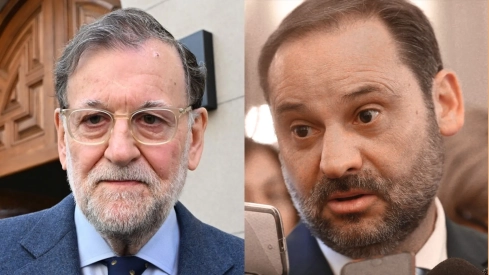
The coincidence in the judicial calendar of the start of two procedures of high political relevance —the Kitchen case, derived from the Gürtel ecosystem, and the Ábalos case— has reactivated a recurring debate in Spain: the apparent asymmetry in the timing of justice depending on whether the process affects the Popular Party or the Socialist Party.
It is not solely a matter of public perception. The comparison between both processes raises structural questions about the functioning of the judicial system, criminal investigation and procedural incentives.
I. Thirteen years versus thirteen months: anatomy of two judicial periods
The so-called "Kitchen operation", a separate part of the Gürtel case, began to be investigated around 2013 and has not reached trial until more than a decade later. In contrast, the case affecting the circle of former minister José Luis Ábalos has advanced at an unusually rapid pace for Spanish standards, reaching advanced stages in approximately thirteen months.
Both cases agree that they were uncovered by the press with investigations based on leaks from some of those involved, Bárcenas and Villarejo in the Gürtel / Kitchen case, and Aldama in the Ábalos case. They are also similar in the number of witnesses summoned for the oral trial (100 in the Kitchen case and 75 in the Ábalos case) and in the evidence in the form of public audios (those recorded by Commissioner Villarejo in the Kitchen case and by the Civil Guard informant Koldo García in the Ábalos case), and in the fact that those who recorded said audios, around which both cases revolve, are indicted (Villarejo is facing 19 years and Koldo García 19 and a half years).
But there the similarities end, since one case has taken 13 years to be investigated and another barely 13 months. The Kitchen case goes to trial more than eight years after that Mariano Rajoy left the government and the Ábalos case arrives with Pedro Sánchez as president, so the political implications in terms of wear and tear on the PP of the former (or the Montoro case, which has been under investigation for eight years) and on the PSOE of the latter are extraordinarily different.
This contrast is not anecdotal. It responds to several structural factors:
- Evidentiary complexity: Kitchen is articulated on facts allegedly occurred within the State apparatus, with multiple layers of political, police, and administrative responsibility.
- Procedural fragmentation: Gürtel has been a macro-process with multiple separate pieces, which prolongs deadlines.
- Legislative evolution: reforms in the Criminal Procedure Law have tried to limit the duration of the investigation, incentivizing greater celerity in recent cases.
- Digitalization and traceability: current cases rely on more immediate digital evidence (messages, audios, transfers), which can accelerate the investigation.
However, these technical elements do not eliminate the perception of temporal inequality depending on whom the judicial process politically affects and the parallel trial at the hands of public opinion.
II. The evidence: between legal robustness and public perception
One of the most controversial points is the treatment of the evidence.
In the Ábalos case, the incriminating elements have revolved around:
- audio recordings, called into question by expert reports from the defense due to possible manipulation (traces of IOS operating systems that did not exist at the time of Koldo's recordings or difficulty in proving the identity of Ábalos or Cerdán in said recordings due to their poor quality).
- testimonies of those involved such as Aldama, who has obtained procedural advantages even in cases unrelated to the one being judged (such as the Hydrocarbons case that led him to pre-trial detention, from which he was released thanks to an agreement with the Prosecutor's Office to point to Ábalos or Cerdán) or regarding the penalties requested for his participation (7 years compared to the 24 requested for former minister Ábalos).
- and economic traces relatively limited and difficult to trace.
In Kitchen, however, there are recordings widely disseminated in media that, nevertheless, have faced greater obstacles in their procedural evaluation.
Here emerges a key distinction:
- Media evidence ≠ judicial evidence
- Validity depends on:
- chain of custody,
- legality in obtaining,
- and procedural guarantees.
The problem is not so much legal as communicative: what public opinion perceives as evident proof may not meet the standards required in court. That is what has prevented recordings by Villarejo with the former secretary general of the Popular Party, María Dolores de Cospedal, from being valid as evidence to incriminate her, despite the report from the Internal Affairs Unit of the National Police which warned that "they could be essential".
The recordings that Koldo García Izaguirre handed over to the Civil Guard or that were seized from him, have indeed been taken into account in the Ábalos case, to the point that they constitute the main incriminating evidence in the case.
III. The role of the “informant”: incentives and credibility
Both cases share a structural element: the relevance of witnesses involved.
- In Gürtel/Kitchen: figures like Bárcenas or Villarejo acted as partial revealers.
- In the Ábalos case: the weight falls on statements from people also investigated, such as Aldama.
This model responds to a clear procedural logic:
- Incentivize collaboration through sentence reductions.
- Facilitate the reconstruction of complex plots.
However, it generates tensions:
- Conditioned credibility: the testimony may be incentivized. In fact, in game theory, it is studied how a system of perverse incentives can pervert the outcome of the evidence. In a way, it is intuitive, just as in the 'Prisoner's Dilemma', that if an imprisoned defendant is offered procedural advantages and his release, he will feel inclined to accuse whomever the Prosecutor's Office intends, as demonstrated by the mathematician John Forbes Nash.
- Penal asymmetry: notable differences in the requested sentences (24 and 19 years for the alleged corrupted and 7 years for the alleged corruptor).
It is not a Spanish anomaly, but a common practice in economic criminal law, but its impact on public perception is significant.
IV. Pre-trial detention: criteria and controversy
Another point of friction is the application of precautionary measures.
In the Ábalos case and his circle, the adoption of preventive detention, just as happened with the former Secretary of Organization of the PSOE, Santos Cerdán, has been justified in:
- flight risk, due to the magnitude of the requested sentences.
- possible destruction of evidence (allegedly, the money from the bribes —90,000 euros according to Koldo's recordings— which, however, has not appeared in either the case of Santos Cerdán or that of Ábalos).
In Kitchen, high-level political (and police) figures have not gone through that precautionary phase despite being presumed to have greater complexity due to the 13 years of investigation it has needed and the penalties are equally high.
The legal explanation is based on:
- individualized risk assessment,
- specific procedural situation of each investigated person,
- moment in which the measures are adopted.
However, the direct comparison fuels the feeling of unequal treatment depending on whether a corruption case affects the Popular Party or the PSOE.
V. Leaks and media environment
The appearance of material from intervened devices adds another layer of complexity.
The leaks:
- they are not formally part of the process,
- but they decisively influence public opinion,
- and can alter the context in which trials take place (parallel trial).
This phenomenon is not exclusive to these cases, but its synchronization with relevant procedural milestones reinforces the perception of “parallel narrative battle”.
In the case of Ábalos, the continuous leak to the media during these 13 months, which has also transcended the core of the case revealing details of his private life (including travel photographs or videos of his birthday), compared to a case like Kitchen that had a specific impact and was circumscribed to the case.
Specifically, 13 months of news programs and talk shows compared to a couple of news programs and talk shows 13 years ago.
VI. Real inequality or comparative illusion?
From a strictly technical point of view, the differences between both processes can be explained by:
- distinct nature of the crimes,
- regulatory evolution,
- and availability of evidence.
However, from the sociopolitical point of view, the problem is another:
Justice, like Caesar's wife, not only must be impartial, but appear so.
The temporal coincidence of both trials, after such divergent trajectories, intensifies the suspicion of arbitrariness, although there may not necessarily exist a legal basis to affirm it.
Conclusion
The comparison between Kitchen/Gürtel and the Ábalos case does not, by itself, demonstrate an irregular functioning of the judicial system. But it does show a persistent deficit: the difficulty of conveying to the citizen the technical logic that explains the times, decisions, and procedural differences.
In a context of polarization, that gap between technical justice and public perception becomes a first-order institutional problem.
Because, ultimately, the strength of the rule of law does not depend solely on how the courts act, but on whether society understands —and trusts— why they do so.