“A feeling of helplessness and terrible fear”. This is how Daniel de Pedro, a young man from Granada, describes how the earthquakes that have been shaking different parts of the province for several days are experienced. After experiencing a tremor for the first time, he acknowledges that the experience is especially distressing when you don't know how long it will last or what might happen next.
“Literally your whole house sways from side to side like a jelly and you can't do anything”, he tells this newspaper. De Pedro explains that he had never experienced an earthquake before these movements began in Granada and admits that the first experience was especially difficult. Fear, he assures, mixes with the feeling of not being able to react to what is happening.
The residents of Granada have once again felt the earth tremble during the early hours of the morning. In total, six earthquakes have been registered in different parts of the province, the largest of them with a magnitude of 2.58. This new succession of movements occurred after the magnitude 3.4 earthquake registered on Tuesday at 10:35 p.m. in Ogíjares, with an epicenter at zero kilometers deep. Subsequently, during the early hours of the morning, two other tremors were registered in La Zubia and Las Gabias, with magnitudes of 1.7 and 1.8, at 1:45 a.m. and 2:34 a.m.
Seismic activity has continued after the intensity 5 earthquake registered last Saturday at 1:04 a.m., with an epicenter also in Alhendín. After that episode, the Junta de Andalucía activated the pre-emergency phase of the Plan against Seismic Risk in the province of Granada, which remains in force.
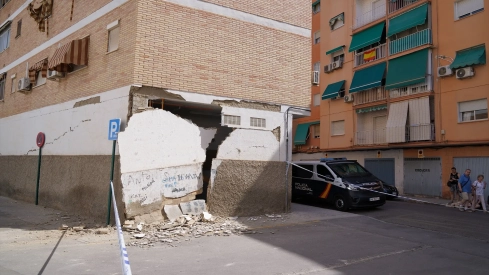
In addition to the succession of tremors, there was the preventive evacuation of some 600 people from 371 homes in Las Gabias during Tuesday, after the earthquake registered in the area. For the moment, the damages detected are mainly superficial in buildings and structures and no personal injuries have been registered.
According to De Pedro, the duration of the tremors also conditions the perception of danger. In Granada, he points out, some movements have lasted between eight and ten seconds, while others have been limited to one or two seconds and correspond to aftershocks. “Obviously the ones that impact the most are the first ones, they become very long and you don't know what to do or if the house is going to collapse”, he explains.
Likewise, the young man recalls that, after the intensity 5 earthquake, many neighbors decided to go out into the street for fear that the buildings could collapse. Now, he assures, the atmosphere has relaxed, although the succession of new tremors maintains the feeling of uncertainty among residents: “Right now it seems to have relaxed, but I just need to say that for it to come back again”.
When facing these episodes, De Pedro considers it essential to remain calm and follow safety recommendations. He explains that, in the event of a higher intensity movement, the priority would be to seek protection and avoid moving around the building during the tremor. In his case, living on a ninth floor, he assures that he would opt to take refuge under a sturdy table. He also highlights the importance of keeping doors open to prevent anyone from getting trapped.
While Granada remains attentive to the evolution of seismic activity, the Junta maintains the pre-emergency phase active. For residents, each new tremor means remembering a sensation that, although it may last only a few seconds, feels much longer when experienced inside the house.
