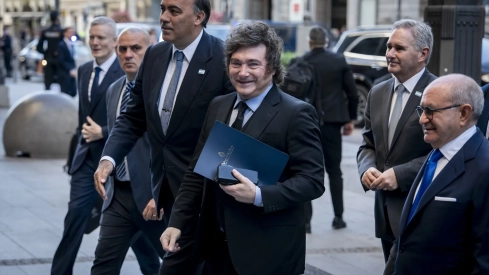
The president of Argentina, Javier Milei, returns to Madrid to participate in the XXX Ibero-American Summit of Heads of State and Government, which will be held on November 4 and 5. His visit comes just two weeks after his last trip to Spain, marked by verbal clashes with the President of the Government, Pedro Sánchez, whom he called "unpresentable dictator," "corrupt," and "thief."
The presence of the Argentine president once again puts the political focus on relations between both countries. However, he is not expected to hold a bilateral meeting with Sánchez nor be received by King Felipe VI. His agenda includes a meeting with the leader of Vox, Santiago Abascal, before participating this Thursday in the plenary session of the summit.
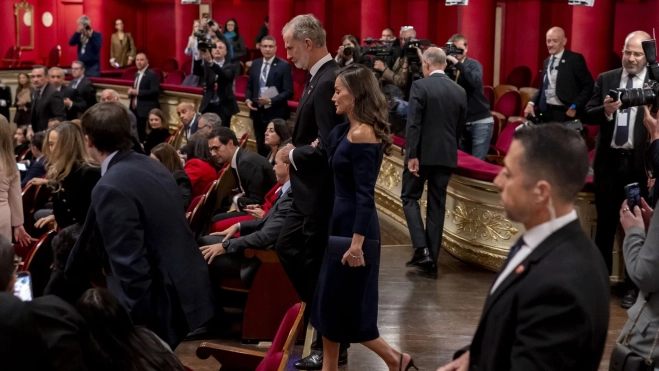
Milei will also not attend the official inauguration ceremony this Wednesday at the Teatro Real nor the gala dinner offered by the Kings at the Royal Palace. His participation will be concentrated on Thursday, when he will coincide with the rest of the international representatives at the Royal Collections Gallery.
Ten countries will attend the summit with their highest representatives
The XXX Ibero-American Summit will bring together delegations from the 22 countries that are part of this community, although the attendance of presidents and heads of government will be lower than initially expected. Only ten countries will be represented at the highest level: Spain, Argentina, Bolivia, Chile, Costa Rica, Guatemala, Honduras, Portugal, Dominican Republic, and Andorra.
Among the attendees will be Pedro Sánchez, Javier Milei, Rodrigo Paz, José Antonio Kast, Laura Fernández, Bernardo Arévalo, Nasry Asfura, Luis Abinader, and Xavier Espot. Portugal will have a double representation, with the presence of its president, António José Seguro, and its prime minister, Luís Montenegro.
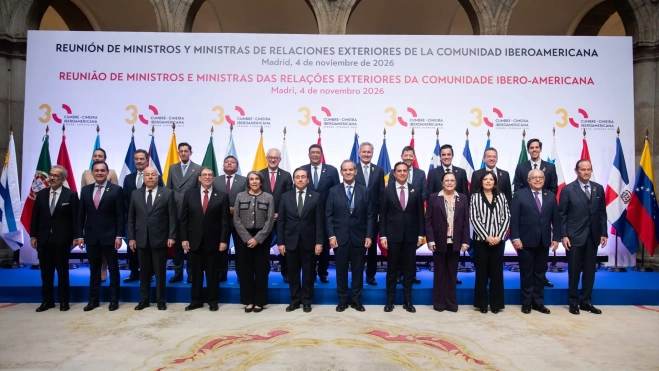
On the contrary, some of the region's main leaders will not attend the event. This is the case of the president of Brazil, Luiz Inácio Lula da Silva; the president of Mexico, Claudia Sheinbaum; and the Venezuelan leader, Delcy Rodríguez. The three countries will be represented by their foreign ministers. Colombia, Ecuador, and El Salvador will send their vice presidents, while the rest of the delegations will have ministerial representatives.
During the two days, issues such as the development of artificial intelligence, academic mobility, protection against natural disasters, and the strengthening of care systems will be addressed. Agreements will also be sought to improve cooperation and economic growth among the participating countries.
Felipe VI calls for unity among Ibero-American countries and Andrés Allamand asks for dialogue capacity
During the day, King Felipe VI defended the need to strengthen cooperation between Spain, Portugal, and Latin American countries to face the international economic and political situation. At the closing of the XVI Ibero-American Business Meeting, held at the Las Ventas bullring, the monarch warned that the world is going through a moment of "great uncertainty and profound transformations", marked by geopolitical fragmentation and trade tensions.
Before business and political representatives, Felipe VI argued that the response to this situation must involve collaboration between countries. "The best response to this drift is not in withdrawal or protectionism, but in an open economy, based on equal rules for all and in cooperation between partners who share values," he stated. The monarch also highlighted the economic potential of Ibero-America, especially due to its energy resources, its biodiversity, and its capacity to participate in new production chains. In addition, he claimed Spanish and Portuguese as strategic tools for technological and business development, especially given the advance of artificial intelligence.
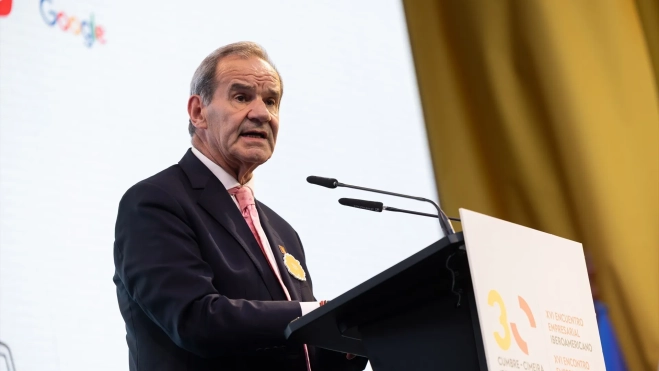
For his part, the Ibero-American Secretary General, Andrés Allamand, has defended the importance of recovering the capacity for dialogue and reaching agreements among the participating countries. His objective is for the Madrid summit to strengthen the Ibero-American community and advance a joint declaration, after the difficulties in achieving consensus at the meeting held in Cuenca in 2024.
The summit will begin with a minute of silence for the victims of Urda
The Urda (Toledo) railway tragedy, which left 69 dead, will also have a space in the international meeting. The summit will begin with a minute of silence in memory of the victims of the accident, as a sign of respect and solidarity with their families. The tribute will take place at a meeting marked by the presence of representatives from different Ibero-American countries, some of whom have also been affected by the tragedy.
The accident, which occurred on October 28, has prompted numerous expressions of condolence and solidarity inside and outside Spain. Since then, various institutions and public events have incorporated minutes of silence to remember the victims.
With this gesture, the international event will incorporate the memory of the deceased into an agenda focused on cooperation between countries and the main political, economic, and social challenges of Ibero-America.
