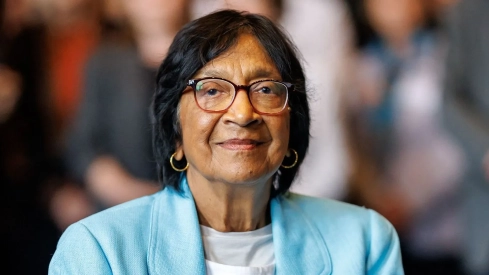
The 2026 Nobel Peace Prize has been awarded to Navi Pillay, a South African jurist and former UN High Commissioner for Human Rights, in recognition of her career in defense of peace, human rights, and international law. The Norwegian Nobel Committee highlighted her work in holding states and their leaders accountable, as well as her commitment to victims of human rights violations.
Pillay, 85, has spent a significant part of her career in international judicial bodies and has participated in investigations into some of the most serious conflicts and crimes of recent decades. Her recognition comes in a context of increasing pressure on international institutions responsible for investigating and prosecuting violations of international law.
The Norwegian Nobel Committee has recognized her career, from the fight against discrimination during apartheid to her participation in investigations into international crimes, reflecting the role that jurists can play in defending fundamental rights. With this award, the Nobel Peace Prize once again brings to the forefront the responsibility of states and the protection of civilian populations, two central issues in the international debate on Gaza and other contemporary conflicts.
A career marked by the fight against impunity
Born in South Africa during apartheid, Navi Pillay grew up in an environment marked by racial discrimination. Her personal experience influenced her commitment to defending fundamental rights and the need for institutions to protect those who suffered abuses of power.
Throughout her career, she became a prominent figure in international justice. She was a judge of the International Criminal Tribunal for Rwanda, created to prosecute crimes committed during the 1994 genocide, and later served as UN High Commissioner for Human Rights between 2008 and 2014. She was also a judge of the International Criminal Court, based in The Hague.
During her career, she has advocated for accountability for international crimes and the protection of vulnerable groups. The Nobel Committee has linked her work to the defense of human dignity and the need to prevent states from acting outside international norms.
The jurist who called Israel's actions in Gaza genocide
One of the most recent and prominent episodes in her career has been her role at the head of the United Nations Independent International Commission of Inquiry on the Occupied Palestinian Territory, including East Jerusalem, and Israel. In September 2025, the body published a report in which it concluded that Israeli authorities and security forces had committed acts of genocide against the Palestinian population in the Gaza Strip.
The commission identified four of the five acts contemplated in the 1948 Convention on the Prevention and Punishment of the Crime of Genocide. These include killings, serious physical and mental harm, the deliberate imposition of living conditions calculated to bring about the destruction of the group, and measures intended to prevent births. The report also pointed to statements by Israeli officials which, according to the commission, evidenced genocidal intent. Pillay argued that the international community should act on the findings of the investigation and called for accountability for those responsible. The document was prepared based on investigations into events since October 7, 2023, and thousands of pieces of evidence.
The commission's conclusions generated strong controversy. Israeli authorities rejected the accusations and questioned the impartiality of the report. Furthermore, it is important to distinguish between the conclusions of this independent commission and a definitive judicial ruling: the document constitutes an investigative assessment within the framework of the United Nations, not a criminal resolution by a court. The Nobel thus places Pillay's work at the center of the debate on the application of international law and the capacity of multilateral bodies to respond to human rights violations.
