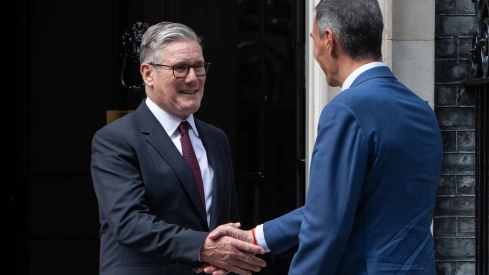
Keir Starmer has ended up giving in to what was already a fact within the Labour Party: neither his MPs nor a growing part of his voters saw him capable of leading the United Kingdom until the next elections. Less than two years after arriving at Downing Street with an overwhelming majority, the British prime minister has announced his resignation as Labour leader and will leave the Government when his party chooses a successor. Until then, he will remain in office to avoid a chaotic transition.
The calendar opens on July 9 with the presentation of candidacies. If there is only one aspirant with sufficient support, the handover can be concluded by mid-July. If there are primaries, the new leader would arrive before Parliament resumes its sessions in September. The favorite is Andy Burnham, former mayor of Manchester, who has just been sworn in as an MP after winning the Makerfield seat, and who has already confirmed that he will run. Former minister Wes Streeting, seen for months as a possible rival, has cleared the way by announcing his support for Burnham.
Keir has given huge service to our country and I want to thank him for his leadership and dedication during such a challenging period.
— Andy Burnham (@AndyBurnhamGM) June 22, 2026
His decision marks the beginning of a transition and it is important that this process is conducted in an orderly and responsible way. I will…
Why is Keir Starmer resigning?
Starmer's fall is not explained by a single crisis, but by an almost constant erosion since his arrival to power in July 2024. He promised stability after 14 years of conservative governments, but his Government never managed to convert the parliamentary majority into a feeling of real change in British households. The cost of living continued to weigh heavily, public services improved less than expected, and rectifications in social aid, pensions, and benefits ended up damaging his authority within his own party.
Errors in judgment also weighed heavily. The appointment of Peter Mandelson as ambassador to Washington, despite his ties to Jeffrey Epstein, directly hit the image of solvency that Starmer had built as a prudent lawyer and serious manager. Added to this was an uncomfortable foreign policy position for a good part of Labour, especially due to his lukewarmness towards Gaza and his failed attempt to maintain a stable relationship with Donald Trump, who ended up publicly attacking him over immigration and energy.
The definitive blow came in May, with the Labour disaster in the local and regional elections. The party lost more than 1,400 councilors and saw how Reform UK, Nigel Farage's ultra-right formation, consolidated its advance in former Labour territories in northern England and Wales. For many MPs, Starmer had ceased to be a dike against the far-right and had become part of the problem. His low popularity, around 15%-18% in the latest polls, did the rest.
What will happen now in the United Kingdom?
Burnham appears as the natural replacement because he offers exactly what Starmer never quite had, such as territorial connection, better communication, and an image closer to the working-class North that Labour needs to recover if it wants to stop Farage. He was a minister under Gordon Brown, has governed Greater Manchester since 2017, and has built his own profile as "King of the North," with a social discourse, defense of public services, and more ease in talking about housing, wages, and class identity.
The problem for the next prime minister will be that the inheritance does not change by changing leaders. The United Kingdom remains trapped in post-Brexit malaise, with a weak economy, migratory pressure turned into an electoral weapon by the populist right, exhausted public services, and a relationship with the European Union that Starmer had tried to mend without daring to cross the red lines of re-entry into the single market or the customs union.
Starmer's departure leaves the United Kingdom on its way to its seventh prime minister in a decade, a figure that portrays the political instability opened since the Brexit referendum. Burnham can reach Downing Street without general elections because Labour retains an absolute majority. The difficult part begins afterward: demonstrating that the change of face is not just another patch in a country that has been changing prime ministers for years without resolving the root of its crisis.
