The twenty-seven governments of the European Union agree that Israeli settlements built in the occupied West Bank violate international law. This common position has once again proven insufficient to adopt a single concrete measure against the trade that sustains them.
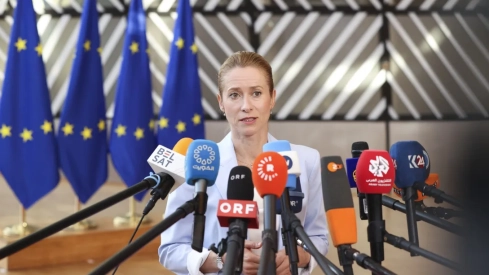
Foreign ministers ended their meeting this Monday in Brussels without agreeing on restrictions on products from the colonies. A total ban was the alternative that received the most support, as confirmed by Kaja Kallas, although it was not even put to a vote. The file now returns to the ambassadors of the Member States after months of pressure for Europe to translate its declarations into decisions.
The Commission had presented three possibilities. One required special licenses to import these goods, another proposed tariffs high enough to discourage their entry, and the third directly closed the community market to products from the settlements. The most forceful option once again prevailed in the political debate, but lacked the necessary support to move forward.
"All Member States agree that Israeli settlements are illegal under international law," Kallas recalled. The head of European diplomacy also acknowledged that the current labeling and differentiation policy is applied unevenly and has barely reduced trade.
The legal debate that keeps Europe paralyzed
The division now revolves around the majority needed to approve the veto. Spain, Ireland, Belgium, the Netherlands, and other partners argue that it is a commercial measure and, therefore, can go ahead by qualified majority. This formula requires the support of at least 15 countries representing 65% of the European population.
The Council's legal service shares this interpretation. Kallas has publicly admitted that there is a legal basis to approve the restrictions by qualified majority and added that the Union could move forward if the necessary political will appears.
The European Commission maintains a different reading. Its approach brings the measure closer to the field of foreign policy and sanctions, where unanimity of the Twenty-Seven is required. Germany and Italy have clung to this path, which grants each capital veto power and greatly reduces the chances of the proposal being approved.
The result has been another meeting without a decision, despite the fact that the European Council had expressly asked the Commission to present options before the July 13 meeting due to the accelerated deterioration of the situation in the West Bank. European leaders had also condemned the expansion of settlements and the growing violence of settlers against the Palestinian population.
Germany again chooses dialogue with Israel
The German Foreign Minister, Johann Wadephul, has defended that the Union keep its conversations with the Israeli Government open and concentrate its efforts on demanding measures against violent settlers. Berlin recognizes that settlements contravene international law, although it rejects using trade restrictions as a pressure instrument.
Wadephul has also called for caution ahead of the Israeli elections scheduled for October, arguing that a European decision could interfere in the campaign or harm diplomatic channels. Germany also maintains that any prohibition must be approved unanimously.
This position has once again placed Berlin among the countries that prevent progress towards a common response. Italy has not closed the door to future measures either, but demands to know a concrete legislative proposal and shares the thesis of unanimity. The combination of both positions allows a debate that has been open for months to be prolonged while settlements continue to expand.
Kallas herself has tried to separate the measure from any general punishment against the country. "These options are not against Israel. They are against illegal settlements that undermine the two-state solution," she explained after the meeting.
Spain denounces a delaying tactic
José Manuel Albares has placed Spain among the most critical governments regarding the lack of progress. The Foreign Minister has denounced that the EU has been accumulating documents, alternatives, and legal debates for too long without adopting a decision that, in his opinion, is required by international law.
"I am concerned that we are facing a delaying tactic, debating and debating without doing something that would not really need any discussion," he warned before the meeting. Albares recalled that Spain already prevents the entry of products from settlements and demands that this policy be extended to the entire European market.
The Spanish position is supported by the advisory opinion issued by the International Court of Justice in July 2024. The court declared illegal Israel's presence and settlement policy in the occupied Palestinian territories and established that states must avoid commercial relations or investments that contribute to maintaining that situation.
The economic value of these imports represents a very small part of the trade relations between the EU and Israel. Its political and legal scope is much greater. Maintaining the exchange means continuing to allow goods produced in occupied territories to access Israel's main commercial market, despite Europe having declared the system that makes them possible illegal for years.
The contrast was especially visible this Monday. The Commission and several partners, including Spain, have launched an initiative of 883.6 million euros for the early recovery of Gaza, aimed at water, sanitation, debris removal, health, energy, and food systems. At the same time, the Twenty-Seven have again failed to adopt measures against Israeli territorial expansion in the West Bank.
The ambassadors to the EU will now resume the file to specify both the legal formula and the content of the restrictions. Kallas has left open the possibility of an extraordinary Foreign Affairs Council meeting during the summer, as the next ordinary meeting is not scheduled until October.
