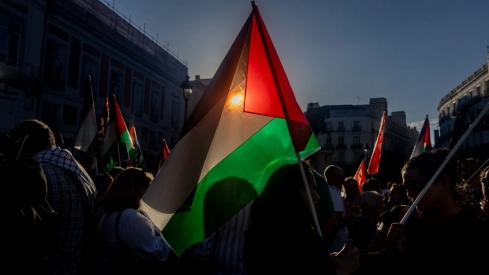
The European Union has redoubled its support for the Gaza peace plan this Tuesday after Benjamin Netanyahu rejected the 15-point roadmap promoted by the United States. Brussels maintains as inseparable objectives the disarmament of Hamas and the total withdrawal of Israeli troops from the Strip, two commitments that the Israeli prime minister refuses to execute in parallel.
The European Commission has demanded that the agreement be applied by all parties in accordance with United Nations Security Council resolutions and international law. It has also confirmed that it will continue to work to facilitate the return of the Palestinian Authority to Gaza and participate in the recovery of a territory devastated by the Israeli offensive.
European support comes at a particularly delicate moment for the project announced by Donald Trump. Hamas has formally accepted the document, although it conditions the surrender of its weapons on a complete and verified Israeli withdrawal. Netanyahu rejected that timetable on Sunday and demands that disarmament end before moving his troops.
Netanyahu blocks withdrawal from Gaza
The roadmap aims to launch the second phase of the ceasefire agreed in October 2025. Its main measures include the definitive cessation of military operations, the creation of a transitional Palestinian administration, the deployment of an international force, the gradual disarmament of militias, and the coordinated withdrawal of the Israeli Army.
That order now concentrates the clash. The process of handing over and storing weapons would begin after Israel fulfilled its previous commitments, the new Palestinian administration assumed its functions, and the international force entered Gaza. Disarmament would advance at the same time as the Israeli withdrawal, under the supervision of an international committee.
Netanyahu has rejected that formula before his cabinet. "Israel rejects the 15-point document," he stated on Sunday, before warning that the Army will remain in Gaza until Hamas surrenders all its heavy and light weaponry. The prime minister also assured that troops will continue to act against any threat they detect.
The Israeli leader again closed the door to a political solution for Palestine. "As long as I am prime minister, no Palestinian state will be created, neither in the West Bank nor in Gaza," he proclaimed. His position directly clashes with the horizon of Palestinian self-determination and statehood included in the international proposal.
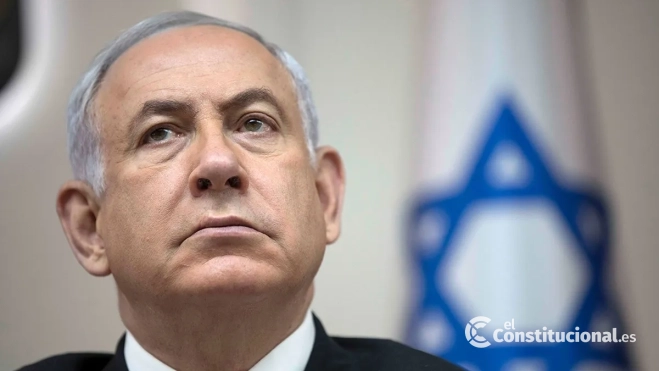
The refusal comes just over two months before the Israeli elections on October 27 and amid pressure from the government's far-right partners. Bezalel Smotrich and Itamar Ben-Gvir have demanded maintaining the military occupation and reject any agreement that contemplates a withdrawal. Netanyahu needs to retain that support to sustain his coalition and have options at the polls.
While negotiations continue, the ceasefire continues to claim Palestinian victims. The United Nations Office for the Coordination of Humanitarian Affairs reported up to August 5 1,254 Palestinians killed and 4,121 injured since the truce came into effect in October 2025, according to data from the Gaza Ministry of Health.
Israeli operations have also not allowed for a stable reconstruction to begin. A large part of the more than two million inhabitants of the Strip continues to live among destroyed buildings, internal displacements, and difficulties in accessing food, water, healthcare, and housing. The rejection of the plan again postpones the withdrawal of troops and the arrival of a Palestinian administration capable of restoring public services.
Trump avoids breaking with Netanyahu and Europe maintains its missions
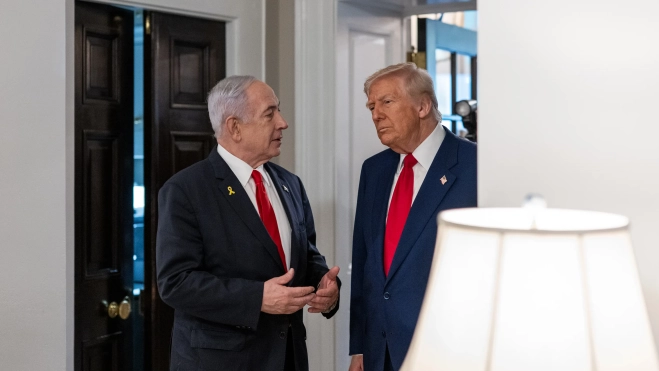
The Israeli position represents a blow to Donald Trump, who presented the agreement reached by the Peace Board as a "historic" advance. The US president announced on July 30 that there was a pact to disarm Hamas and move towards the second phase of the ceasefire.
Netanyahu has ended up rejecting the document promoted by his main ally. Even so, Trump has publicly downplayed the confrontation and assures that his relationship with the Israeli prime minister remains "very good". The White House has also not yet announced pressure measures to get Israel to accept the withdrawal.
The High Representative of the Peace Board for Gaza, Nickolay Mladenov, maintains that the proposal represents "the only way forward" to prevent violence from recurring. Talks with the Israeli Government remain open, although the rejection expressed by Netanyahu has halted the main measures of the roadmap.
The European Union intends to maintain direct intervention through its civilian missions. EUBAM Rafah advises Palestinian personnel in charge of the border crossing between Gaza and Egypt, while EUPOL COPPS works on training the Palestinian Police and reconstructing the criminal justice chain.
Israel has agreed to extend both missions until June 30, 2027, a decision that still needs to be completed by the EU Council. Since EUBAM Rafah resumed its activity last February, more than 10,100 people have crossed the border post, including 1,858 Palestinians who needed medical treatment.
Brussels also supports the return of the Palestinian Authority to assume civil management of Gaza and participates in international humanitarian aid and reconstruction efforts. The EU also maintains its defense of a two-state solution and has rejected Israeli plans to retain military control over a large part of the Strip.
Security Council Resolution 2803 made the roadmap the international framework for ending the conflict, creating a transitional administration, and deploying a stabilization force. Netanyahu keeps his troops inside Gaza, disarmament has not yet begun, and the second phase of the agreement remains paralyzed.
