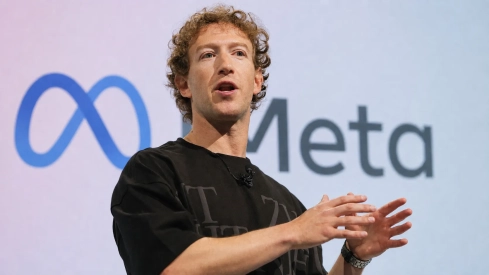
Meta began responding this Tuesday before a federal court in Oakland, California, to accusations capable of altering the future of Instagram and Facebook. Attorneys general from 29 states contend that the tech company deliberately designed its platforms to keep children and adolescents connected for as long as possible, while concealing from families the risks associated with their use.
The heart of the case lies in the architecture of the applications. Infinite scrolling, constant notifications, autoplay, beauty filters, "likes," and recommendation algorithms are pointed out as tools created to increase screen time. The accusation links this design to problems of anxiety, depression, lack of sleep, eating disorders, and deterioration of self-esteem among younger users.
The process will unfold over approximately six or seven weeks before Judge Yvonne Gonzalez Rogers and an advisory jury of eight people. California, Colorado, Kentucky, and New Jersey will present accusations related to their consumer protection laws, while the claims from the 29 states for possible violations of federal child privacy regulations will be studied jointly. The hybrid format will allow prosecutors to share evidence and present a single sequence of events.
Social media design, under suspicion
The states maintain that Meta's advertising business depended on capturing the attention of minors, understanding their habits, and getting them to return to the applications again and again. During opening statements, California Deputy Attorney General Megan O’Neill presented internal research and communications that, according to the accusation, show the company's interest in studying the psychological vulnerabilities of children. One of these documents was titled "Young People Are the Best," according to 'Associated Press' reporting on the first day.
Lawyers will try to prove that Meta knew about the potential harms while publicly conveying an image of safety. Rob Bonta, California's attorney general, accuses the company of having designed Facebook and Instagram to prolong connection time to the point of causing physical and mental harm. "Exploiting our most vulnerable residents to increase corporate profits is illegal," he warned before the trial began.
The second major accusation concerns data from children under 13. The states consider that the company collected personal information without verifiable parental consent, a conduct prohibited by the Children's Online Privacy Protection Act, known in the United States by its acronym COPPA. They also claim that age verification systems could be easily circumvented, allowing millions of children to open accounts.
The case focuses on design decisions, platform advertising, and data handling. This approach reduces the weight of the protection that Section 230 of the Communications Decency Act grants to companies for content published by their users. Prosecutors intend to judge Meta's choices as a manufacturer and responsible for its own digital products.
Mary Anne Franks, a law professor at George Washington University, believes that the process represents "the first real test" to determine the strength of the entire federal litigation over the harms of social media. More than 3,000 lawsuits have been grouped before the same court, including claims from families, minors, school districts, and indigenous communities.
The scientific debate will also be part of the trial. Social media addiction still lacks an independent diagnosis in the main psychiatric manuals, and several researchers warn of the difficulty in separating the impact of platforms from other family, social, or medical factors. The prosecution must prove the relationship between the design of the applications and the alleged harms, while Meta will try to rely on these doubts about causality. This discussion has already marked other similar processes held in the United States.
The bill and the changes that may come
The figure of 1.4 trillion dollars released in the previous days requires an important clarification. That amount comes from a calculation made by Meta by adding the worst possible scenario of sanctions for each infraction. The states have placed a more probable amount around 200 billion, although the final claim will depend on the admitted evidence and the judge's interpretation. There is still no fixed fine.
The deepest threat to the company may come through measures that affect the functioning of Instagram and Facebook. Prosecutors demand stricter age limits, greater controls over usage time, restrictions on notifications, and the removal of infinite scrolling for minors. They also want child data obtained without permission and algorithms or models trained with that information to be deleted. The requests directly affect some of the functions used to increase interaction and advertising revenue.
Meta rejects the prosecutors' narrative and calls the accusations "unfounded". The company argues that the states lack evidence of specific individuals deceived by its platforms, recalls the protections incorporated in recent years for adolescents, and presents age verification as a difficulty shared by the entire industry. It also considers the proposed economic amounts "completely disproportionate".
The tech company arrives in Oakland after several legal defeats. A New Mexico court recently imposed 375 million dollars in sanctions and another 567 million to create a youth mental health fund in a separate case, focused mainly on child safety and sexual exploitation on its platforms. Meta has announced that it will appeal that resolution.
Over the next few weeks, employees, former employees, and experts from both sides will testify. Mark Zuckerberg and the head of Instagram, Adam Mosseri, are among the scheduled witnesses. At the end of the sessions, the jury will issue an advisory opinion, and Judge Gonzalez Rogers will then decide whether Meta violated the laws, how much it will have to pay, and what changes it will have to introduce in Instagram and Facebook.
