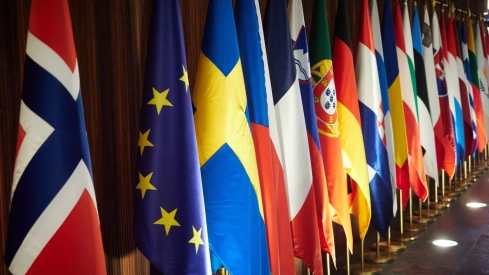
The European Union has closed ranks this Monday with Spain after several days of reproaches and accusations over the migratory crisis in Ceuta. The ambassadors of the Twenty-Seven have concluded that the situation was quickly brought under control and have recognized the response deployed by the Spanish authorities to the entry of tens of thousands of people from Morocco.
The support comes on the eve of the extraordinary meeting that the EU Interior Ministers will hold this Tuesday. The meeting will begin at 10:00 a.m. and will serve to establish a common position on what happened, strengthen the protection of external borders and address the relationship with the countries used by Europe to contain migratory movements, with Morocco at the center of all eyes.
The latest data transferred to Brussels indicate that the vast majority of people who crossed the border have already returned to Moroccan territory. No displacements to the Peninsula or to other European states have been detected either. Spanish management has thus deactivated the main argument used by governments that warned of a supposed threat to the Schengen area.
The emergency leaves, however, a human tragedy of enormous magnitude. In Ceuta, 88 bodies have been recovered and Morocco has recognized another eleven deaths in its waters. Almost a hundred people lost their lives while trying to reach the autonomous city, mainly by sea and in extremely dangerous conditions.
Europe leaves behind the attacks against Spain
The position agreed by the ambassadors contrasts with the accusations launched during the first hours of the crisis. Italy re-established for a month selective controls on non-EU travelers from Spain, although Ceuta remains outside the ordinary Schengen free movement regime and none of the arrivals reached European continental territory.
Denmark and Finland also proposed measures against Spain, while a group of 22 countries linked the crisis to the extraordinary regularization approved by the Government of Pedro Sánchez. The letter sent to the European institutions described this policy as a possible "pull factor" and called for an urgent meeting of Interior Ministers.
Sánchez responded by accusing several governments of acting out of political interest, disinformation, and prejudice. The support now expressed by the Twenty-Seven leaves Spain out of the isolation that the hardest sectors of the Union intended to project and recognizes that the massive arrival was contained without subsequent movements towards other countries.
France and Portugal defended solidarity with Spain from the very beginning. Ireland, which holds the rotating Presidency of the Council, activated the European political crisis response mechanism and organized this Tuesday's meeting. The European Commission has also supported Spanish management, although Ursula von der Leyen has called for strengthening the most vulnerable points of the community border.
Morocco arrives at the meeting under suspicion
The European response will have to live with doubts about Morocco's actions. Pedro Sánchez described what happened as an "attack" and a "violation of Spain's territorial integrity", while the president of Ceuta, Juan Jesús Vivas, maintains that the entry was at least tolerated or favored by the Moroccan authorities.
The first conclusions of the Spanish intelligence services indicate that Rabat did not previously organize the movement, but allowed the advance of thousands of people, reduced border surveillance, and then took advantage of the international repercussions of the crisis. Morocco attributes what happened to mafias, disinformation spread on the internet, and a mistaken interpretation of the latest Supreme Court ruling on returns.
The Audiencia Nacional has asked the Police for a report to determine whether the entry on July 30 and 31 responded to a concerted action or one directed by a criminal organization. The investigation must clarify how tens of thousands of people were able to concentrate and cross the border without an immediate response from the Moroccan security forces.
The precedent of 2021 remains present. Morocco then relaxed its controls during the diplomatic crisis caused by Spain's reception of Sahrawi leader Brahim Ghali and allowed the entry of some 10,000 people into Ceuta. This time, the avalanche coincided with Sánchez's rapprochement with Algeria, Rabat's main regional rival, although there is still no official conclusion linking both events.
The informal format of the meeting directs the appointment towards a political and operational agreement, without planned approval of new laws or sanctions. Ministers will study early warning systems, the role of Frontex, police coordination, and technical and financial support aimed at controlling external borders.
Schengen associated countries, the European External Action Service, Frontex, the European Union Agency for Asylum, and Europol will also participate. Fernando Grande-Marlaska will present the actions deployed by Spain and demand that Ceuta be treated as what it is, an external European border whose protection commits the entire Union.
Add ElConstitucional.es as a preferred Google source for free.
Stay informed about all the latest breaking news with the best information. Against disinformation, for democracy and social rights.
