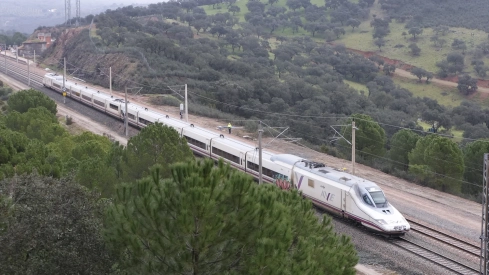
The railway accident that occurred in the province of Toledo, in which, according to initial reports, a Renfe train and an Iryo train were involved, adds to the list of accidents that have marked the history of railways in Spain. Since the inauguration of the first peninsular railway line, between Barcelona and Mataró, in 1848, the development of this means of transport has been accompanied by technological advances, improvements in safety conditions and, also, tragedies that have left a deep mark on society.
The first major accidents: the railway in the 19th century
During the second half of the 19th century, the Spanish railway network expanded rapidly, driven by industrial development and the need to connect cities and territories. However, the infrastructures of the time, the bridges, tunnels and signaling systems presented significant technical limitations. Derailments and other accidents constituted a risk that railway companies had to face with the deficient means available then.
Among the best-known accidents is the one that occurred in 1863 near Hostalric, in the province of Gerona. The rains caused a stream to overflow and affected the bridge over which the train was traveling, with a balance of 21 fatalities.
Ten years later, in 1873, another railway accident near Viana de Cega, in Valladolid, caused another 21 deaths. The accident occurred after a train derailed next to a bridge over the Duero River.
Torre del Bierzo: the great post-war railway tragedy
On January 3, 1944, one of the most serious and controversial railway accidents in Spanish history occurred in Torre del Bierzo, in the province of León.
The accident took place on the line connecting Palencia with Galicia. An express mail train traveling from Madrid to Galicia suffered braking problems during the descent through the Brañuelas area. Upon reaching Torre del Bierzo, it collided with a locomotive that was performing maneuvers. The succession of crashes also involved a freight train and took place near a tunnel, where several wagons were trapped.
The configuration of the place and the damage caused by the collisions considerably hindered rescue efforts. Added to this were the precarious economic conditions of the post-war period, which affected the maintenance of infrastructure and available resources.
The official toll was 87 dead, although later estimates have suggested higher figures. The censorship imposed by the Franco regime and the lack of conclusive documentation have contributed to maintaining the debate about the real number of victims.
From the sixties to the seventies: collisions and fires
The second half of the 20th century was marked by several fatal accidents on a network that still largely depended on conventional signaling, coordination between stations, and the intervention of railway professionals.
On February 11, 1965, a fire affected several wagons of the Madrid-Barcelona mail train in the province of Zaragoza, between Grisén and Pinseque, causing between 30 and 60 deaths.
In 1966, a collision between a passenger train and a freight train near Villafranca del Campo, in Teruel, left a high number of fatalities. Some reconstructions place the toll at around thirty dead and point to fog and circulation circumstances among the factors to be taken into account.
On August 9, 1970, two trains on the suburban line between Plentzia and Bilbao collided head-on in the Urduliz area, in Vizcaya. The accident caused 33 deaths, according to figures collected in some historical chronologies.
The El Cuervo-Lebrija accident, in 1972
On July 21, 1972, one of the most tragic railway accidents in Spanish history occurred. A railcar covering the route between Cádiz and Seville collided head-on with an express train traveling between Madrid and Cádiz, in the section between El Cuervo and Lebrija, causing around 80 deaths.
In February 1977, another railway crash in Corbera de Llobregat, in Barcelona, caused 22 fatalities, according to figures collected in some historical records.
The first years of democracy: level crossings and collisions
During the first years of democracy, several accidents once again highlighted the risks associated with level crossings and the coexistence between railway and road traffic.
In 1978, in La Fuente de San Esteban, Salamanca, a train ran over a school bus. Chronicles attribute 32 fatalities to the accident, mostly students. The tragedy shocked public opinion and highlighted the consequences that the lack of effective separation between railway and road traffic could have.
On September 24, 1980, a train covering the Madrid-Valencia route ran over a bus at a level crossing in Xirivella, in the province of Valencia. 27 people died and around 40 were injured. Published reports indicated that the barriers were raised.
These accidents demonstrated that railway safety did not depend solely on trains and tracks, but also on the protection of crossings, correct signaling, and coordination between different means of transport.
Juneda, a school tragedy
In March 1988, a train ran over a bus at a level crossing in Juneda, Lleida. The accident caused 15 fatalities, including ten young children and four teachers, one of whom was pregnant, in addition to the bus driver.
The tragedy was particularly shocking due to the youth of many of the victims. It also again raised the need to eliminate dangerous level crossings and to reinforce measures that prevent vehicles from accessing the track when a train approaches.
In September 1989, a Talgo covering the Madrid-Gijón route collided with a freight train stopped at Arévalo station, in Ávila. Five people died and dozens were injured.
In 1990, another accident between a passenger train and an obstacle from a freight train caused six fatalities between Alcalá de Henares and Torrejón de Ardoz, in Madrid.
In 1993, a collision between trains in Vega de Anzo, Asturias, caused a fire and left 12 dead. In March 1997, the derailment of the Intercity Miguel de Unamuno in Uharte-Arakil, Navarra, caused 18 fatalities and around a hundred injured.
Overall, these accidents recalled that signaling, track configuration, speed, and emergency response could determine both the severity of an accident and the chances of passenger survival.
The 21st century: between high technology and human error.
The modernization of the Spanish railway and the extension of high-speed rail profoundly transformed rail transport. However, 21st-century accidents demonstrated that technology, however advanced, does not eliminate all risks.
On June 3, 2003, a Talgo train covering the Barcelona-Cartagena route collided head-on with a freight train near Chinchilla de Montearagón, in Albacete.
The accident caused 19 deaths and 38 injuries. Both convoys were traveling on a single-track section, where traffic coordination and safety procedures are fundamental to prevent the simultaneous entry of trains in opposite directions.
The tragedy reopened the debate on control systems, signaling, and mechanisms designed to prevent this type of collision.
Valencia, 2006: the metro tragedy
On July 3, 2006, a Metrovalencia convoy derailed between the Jesús and Plaza de España stations. 43 people died and another 47 were injured.
The tragedy was accompanied by a prolonged struggle by the victims and their families to clarify what happened and ensure that their demands did not fall on deaf ears.
The last three accidents: high speed compromised.
Spain inaugurated the high-speed line in 1992. The AVE (Spanish high speed) connected Madrid and Seville for the first time when the Universal Exhibition was held that year. Since then, the network gradually extended throughout the country, Zaragoza, Malaga, Barcelona or Valladolid were already connected with AVE approximately 15 years after its inauguration, placing Spain as the second country in the world after China in more high-speed lines built.
On July 24, 2013, the eve of the feast of Saint James the Apostle, an Alvia train covering the Madrid-Ferrol route derailed on the A Grandeira curve, in Angrois, on the outskirts of Santiago de Compostela.
The toll was devastating: 80 people died and 143 were injured.
The train was traveling at an excessive speed for that curve. The investigation focused on the actions of the driver, who was distracted during the approach to the section. In 2024, the driver was sentenced to two years in prison.
On January 18, 2026, a serious train accident occurred in the municipality of Adamuz, in the province of Córdoba. A high-speed train from the company Iryo, which had departed from Malaga, derailed and several of its vehicles invaded the adjacent track, on which an Alvia train bound for Huelva was traveling, causing 46 deaths.
Regarding the causes, the first information about the investigation pointed to a possible failure in a weld on one of the rails. It was also noted that the infrastructure had been renovated shortly before the accident, with the investigation still open.
The Toledo accident reopens the debate on the maintenance of high-speed lines, which since their liberalization in 2021, have seen many more trains running on their tracks than just a decade ago, so it is likely that in the coming months the debate on the resources allocated to the maintenance of railway infrastructure will remain in the political debate.
Chronology of the main fatal train accidents
-
1863, Hostalric (Girona): 21 fatalities. Accident related to a stream's overflow and damage to a bridge.
-
1873, Viana de Cega (Valladolid): 21 fatalities. Derailment near a bridge over the Duero.
-
1944, Torre del Bierzo (León): 78 fatalities in the official count, although the real figure continues to be debated. Series of collisions near a tunnel.
-
1965, Grisén-Pinseque (Zaragoza): fire on a mail train. Victim figures require verification.
-
1970, Urduliz (Vizcaya): 33 fatalities, according to some chronologies. Head-on collision between suburban trains.
-
1972, El Cuervo-Lebrija (Seville): between 79 and 86 fatalities, according to sources. Head-on collision between a railcar and an express train.
-
1977, Corbera de Llobregat (Barcelona): 22 fatalities, according to figures collected in some historical records.
-
1978, La Fuente de San Esteban (Salamanca): 32 fatalities. School bus run over.
-
1980, Xirivella (Valencia): 27 fatalities. Train collision with a bus at a level crossing.
-
1988, Juneda (Lleida): 15 fatalities. Bus run over at a level crossing.
-
1989, Arévalo (Ávila): five fatalities. Talgo train collision with a freight train.
-
1990, Alcalá de Henares-Torrejón de Ardoz (Madrid): six fatalities, according to the balance recorded in the text.
-
1993, Vega de Anzo (Asturias): 12 fatalities. Train collision and fire.
-
1997, Uharte-Arakil (Navarra): 18 fatalities. Intercity train derailment.
This chronology gathers some of the most significant accidents in Spanish railway history, but it does not constitute an exhaustive list of all fatal accidents. Historical figures, especially those for Torre del Bierzo and El Cuervo, vary according to the sources and balances used.
History of major railway accidents in Spain: from Torre del Bierzo to Adamuz
From the first lines of the 19th century to high-speed rail, major railway accidents have marked Spain's history and have repeatedly tested safety systems, infrastructure, and prevention mechanisms.
The train accident that occurred today in the province of Toledo, in which, according to initial reports, a Renfe train and an Iryo train were involved, adds to the list of accidents that have marked the history of railways in Spain. Since the inauguration of the first peninsular railway line, between Barcelona and Mataró, in 1848, the development of this means of transport has been accompanied by technological advances, improvements in safety conditions and, also, tragedies that have left a deep mark on society.
1. The first major accidents: the railway in the 19th century
During the second half of the 19th century, the Spanish railway network expanded rapidly, driven by industrial development and the need to connect cities and territories. However, the infrastructures of the time, bridges, tunnels and signaling systems presented significant technical limitations. Derailments and other accidents constituted a risk that railway companies had to face with the means available then.
Among the best-known accidents is the one that occurred in 1863 near Hostalric, in the province of Girona. The rains caused a stream to overflow and affected the bridge over which the train was traveling, with a balance of 21 fatalities.
Ten years later, in 1873, another train accident near Viana de Cega, in Valladolid, caused another 21 deaths. The accident occurred after a train derailed next to a bridge over the Duero River.
These accidents reflected the difficulties of a railway network still under development, in which safety depended as much on the resistance of the infrastructures as on the ability of the companies to maintain them in adequate conditions.
2. Torre del Bierzo: the great post-war railway tragedy
On January 3, 1944, one of the most serious and controversial train accidents in the history of Spain occurred in Torre del Bierzo, in the province of León.
The accident took place on the line connecting Palencia with Galicia. An express mail train traveling from Madrid to Galicia experienced braking problems during the descent through the Brañuelas area. Upon reaching Torre del Bierzo, it collided with a locomotive that was performing maneuvers. The succession of crashes also involved a freight train and occurred near a tunnel, where several wagons were trapped.
The configuration of the place and the damage caused by the collisions considerably hindered rescue efforts. Added to this were the precarious economic conditions of the post-war period, which affected the maintenance of infrastructure and available resources.
The official toll was 78 fatalities, although subsequent estimates have suggested higher figures. The censorship imposed by the Franco regime and the lack of conclusive documentation have contributed to maintaining the debate about the actual number of victims.
Torre del Bierzo thus became associated with one of the most tragic pages in Spanish railway history, both due to the magnitude of the accident and the difficulties in fully clarifying its consequences.
3. From the sixties to the seventies: collisions and fires
The second half of the 20th century was marked by several fatal accidents on a network that still largely depended on conventional signaling, coordination between stations, and the intervention of railway professionals.
On February 11, 1965, a fire affected several wagons of the Madrid-Barcelona mail train in the province of Zaragoza, between Grisén and Pinseque. The number of victims attributed to this event varies according to sources, making it necessary to distinguish between documented data and subsequent estimates.
In 1966, a collision between a passenger train and a freight train near Villafranca del Campo, in Teruel, left a high number of fatalities. Some reconstructions place the toll at around thirty deaths and point to fog and circulation circumstances among the factors to be taken into account.
On August 9, 1970, two trains on the suburban line between Plentzia and Bilbao collided head-on in the Urduliz area, in Vizcaya. The accident caused 33 deaths, according to figures collected in some historical chronologies.
The El Cuervo-Lebrija accident, in 1972
On July 21, 1972, one of the deadliest railway accidents in Spanish history occurred. A railcar covering the route between Cádiz and Seville collided head-on with an express train traveling between Madrid and Cádiz, in the section between El Cuervo and Lebrija.
According to chronicles, the railcar had left the station despite signals prohibiting it from continuing. The collision was devastating and caused numerous fatalities.
The published figures on the accident's toll are not uniform: some references speak of 79 deaths, while others raise the figure to 86. The tragedy highlighted the importance of signaling systems, coordination between stations, and procedures designed to prevent two trains from traveling in opposite directions on the same section.
In February 1977, another railway collision in Corbera de Llobregat, Barcelona, caused 22 fatalities, according to figures collected in some historical accounts.
4. The early years of democracy: level crossings and collisions
During the early years of democracy, several accidents again highlighted the risks associated with level crossings and the coexistence of railway and road traffic.
In 1978, in La Fuente de San Esteban, Salamanca, a train ran over a school bus. Chronicles attribute 32 deaths to the accident, mostly students. The tragedy shocked public opinion and demonstrated the consequences that the lack of effective separation between railway and road traffic could have.
On September 24, 1980, a train covering the Madrid-Valencia route ran over a bus at a level crossing in Xirivella, in the province of Valencia. 27 people died and about 40 were injured. Published reports indicated that the barriers were raised.
These accidents showed that railway safety did not depend solely on trains and tracks, but also on the protection of crossings, correct signaling, and coordination between different means of transport.
Juneda: a tragedy that especially affected schoolchildren
In March 1988, a train ran over a bus at a level crossing in Juneda, Lleida. The accident caused 15 deaths, including ten young children and four teachers, one of whom was pregnant, in addition to the bus driver.
The tragedy was particularly shocking due to the youth of many of the victims. It also once again raised the need to eliminate dangerous level crossings and to reinforce measures that prevent vehicle access to the track when a train approaches.
In September 1989, a Talgo train covering the Madrid-Gijón route collided with a freight train stopped at Arévalo station, in Ávila. Five people died and dozens were injured.
In 1990, another accident between a passenger train and an obstacle from a freight train caused six deaths between Alcalá de Henares and Torrejón de Ardoz, in Madrid.
In 1993, a train collision in Vega de Anzo, Asturias, caused a fire and left 12 dead. In March 1997, the derailment of the Intercity Miguel de Unamuno in Uharte-Arakil, Navarra, caused 18 deaths and around a hundred injured.
Together, these accidents reminded that signaling, track configuration, speed, and emergency response could determine both the severity of an accident and the chances of passenger survival.
5. The 21st century: new demands for railway safety
The modernization of Spanish railways and the extension of high-speed rail profoundly transformed railway transport. However, 21st-century accidents showed that technology, however advanced, does not eliminate all risks.
Chinchilla, 2003: a head-on collision
On June 3, 2003, a Talgo train covering the Barcelona-Cartagena route collided head-on with a freight train near Chinchilla de Montearagón, in Albacete.
The accident caused 19 deaths and 38 injuries. Both convoys were traveling on a single-track section, where traffic coordination and safety procedures are fundamental to prevent the simultaneous entry of trains in opposite directions.
2003, Chinchilla de Montearagón (Albacete): 19 dead. Head-on collision between a Talgo and a freight train.
2006, Metrovalencia: 43 dead. Derailment of a metro convoy.
2013, Angrois (Santiago de Compostela): 80 dead. Derailment of an Alvia train.
2026, Adamuz (Córdoba): 46 dead, according to the balance reported in this article. Derailment and collision between two trains.
The tragedy reopened the debate on control systems, signaling, and mechanisms designed to prevent this type of collision.
Valencia, 2006: the metro tragedy
On July 3, 2006, a Metrovalencia train derailed between the Jesús and Plaza de España stations. 43 people died and another 47 were injured.
Although it was a metropolitan network and not a conventional Renfe railway service, the accident holds a prominent place in the history of major Spanish railway transport disasters.
The investigation and public debate focused on speed, line operating conditions, and safety systems. The case highlighted the importance of protective measures and control mechanisms capable of reducing risks during circulation.
The tragedy was accompanied by a prolonged struggle by the victims and their families to clarify what happened and to have their demands met.
6. Angrois, 2013: the accident that shocked Galicia
On July 24, 2013, the eve of the feast of Saint James the Apostle, an Alvia train covering the Madrid-Ferrol route derailed on the A Grandeira curve, in Angrois, on the outskirts of Santiago de Compostela.
The toll was devastating: 80 people died and 143 were injured.
The train was traveling at an excessive speed for that curve. The investigation focused on the actions of the driver, who was distracted during the approach to the section. In 2024, the driver was sentenced to two years in prison.
The accident opened a broad debate on speed management, signaling, and the scope of automatic protection systems. It also raised questions about risk assessment at transition points between different railway control systems.
Angrois became a benchmark in the debate on high-speed safety in Spain. The tragedy reminded us that prevention cannot depend exclusively on human attention: it also requires technical systems capable of detecting dangerous situations and acting to avoid their consequences.
7. Adamuz, 2026: infrastructure safety, under scrutiny
On January 18, 2026, a serious railway accident occurred in the municipality of Adamuz, in the province of Córdoba. A high-speed train from the Iryo company, which had departed from Malaga, derailed and several of its vehicles invaded the adjacent track, on which an Alvia train bound for Huelva was traveling.
The collision had devastating consequences. The damage suffered by the trains and the complexity of the rescue efforts hindered emergency tasks during the first hours.
The death toll increased as search operations and identifications progressed. On January 30, the death of a woman who remained admitted to the ICU raised the known figure to 46 fatalities.
The tragedy had a special impact in Andalusia and, particularly, in Huelva, where a significant portion of the victims came from. Numerous families were devastated, and tributes and mourning acts were organized in memory of the deceased.
An investigation focused on the track and the causes of the derailment
Regarding the causes, the first information about the investigation pointed to a possible failure in a weld on one of the rails. It was also noted that the infrastructure had been renovated shortly before the accident.
These initial hypotheses must be distinguished from the definitive conclusions of a technical investigation. Determining the causes of an accident of this magnitude requires analyzing the state of the infrastructure, rolling stock, signaling systems, communications, and all available technical records.
Adamuz once again brought several essential questions to the forefront: how to detect defects in the tracks before they cause an accident, how to ensure the integrity of the rails and their welds, and what inspection and maintenance mechanisms allow reducing risks in a high-speed network.
The tragedy also reminded us that having modern trains and technologically advanced infrastructure does not completely eliminate the possibility of a serious accident. Safety depends on the reliability of the entire railway system, from the construction and conservation of the tracks to circulation procedures and emergency response.
8. The Toledo accident and the debate on railway safety
The accident that occurred today in the province of Toledo, according to the initial information provided, once again puts the focus on the safety of the Spanish railway network and the need to clarify the circumstances of each accident.
The historical relationship between Madrid and Andalusia has special relevance in this context. The conventional line connecting Madrid with Cordoba and Seville is part of a historical infrastructure, while the Madrid-Seville high-speed line was inaugurated in 1992, coinciding with the Universal Exposition held in Seville.
It is important to distinguish between both infrastructures: although they share corridors and connections at certain points, they are not the same railway line. The investigation into the Toledo accident must determine which infrastructure was affected, how the collision occurred, and what its causes were.
Beyond the specific circumstances of this new incident, history shows that every accident must lead to a rigorous analysis of prevention systems, traffic conditions, and emergency protocols. The priority must be to clarify the facts and avoid hasty conclusions before those responsible for the investigation have sufficient evidence.
9. Chronology of the main fatal railway accidents
-
1863, Hostalric (Girona): 21 fatalities. Accident related to a stream's overflow and damage to a bridge.
-
1873, Viana de Cega (Valladolid): 21 fatalities. Derailment near a bridge over the Duero.
-
1944, Torre del Bierzo (León): 78 fatalities in the official count, although the real figure continues to be debated. Series of collisions near a tunnel.
-
1965, Grisén-Pinseque (Zaragoza): fire on a mail train. Victim figures require verification.
-
1970, Urduliz (Vizcaya): 33 fatalities, according to some chronologies. Head-on collision between suburban trains.
-
1972, El Cuervo-Lebrija (Seville): between 79 and 86 fatalities, according to sources. Head-on collision between a railcar and an express train.
-
1977, Corbera de Llobregat (Barcelona): 22 fatalities, according to figures collected in some historical records.
-
1978, La Fuente de San Esteban (Salamanca): 32 fatalities. School bus run over.
-
1980, Xirivella (Valencia): 27 fatalities. Train collision with a bus at a level crossing.
-
1988, Juneda (Lleida): 15 fatalities. Bus run over at a level crossing.
-
1989, Arévalo (Ávila): five fatalities. Talgo train collision with a freight train.
-
1990, Alcalá de Henares-Torrejón de Ardoz (Madrid): six fatalities, according to the balance recorded in the text.
-
1993, Vega de Anzo (Asturias): 12 fatalities. Train collision and fire.
-
1997, Uharte-Arakil (Navarra): 18 fatalities. Intercity train derailment.
-
2003, Chinchilla de Montearagón (Albacete): 19 fatalities. Head-on collision between a Talgo and a freight train.
-
2006, Metrovalencia: 43 fatalities. Metro train derailment.
-
2013, Angrois (Santiago de Compostela): 80 fatalities. Alvia train derailment.
-
2026, Adamuz (Córdoba): 46 fatalities, according to the balance recorded in this article. Derailment and collision between two trains.
This chronology gathers some of the most significant accidents in Spanish railway history, but it does not constitute an exhaustive list of all fatal accidents. Historical figures, especially those for Torre del Bierzo and El Cuervo, vary according to the sources and balances used.
Conclusion: a history of progress, victims, and prevention
The history of railway accidents in Spain shows a complex evolution. During the 19th century and a good part of the 20th, technological limitations, infrastructure deficiencies, and difficulties in circulation procedures contributed to numerous accidents. Over time, the modernization of tracks, signaling, and control systems significantly improved safety conditions, although it did not eliminate all risks.
Torre del Bierzo represents the tragedies of an era marked by technical limitations and informational opacity. El Cuervo and Chinchilla recall the importance of avoiding collisions. Valencia and Angrois highlighted the relevance of protection systems, speed management, and risk assessment. Adamuz has once again raised the importance of infrastructure integrity, maintenance, and independent investigation.
Behind every number are people, families, and communities who suffered irreparable losses. Therefore, remembering these accidents should not be limited to establishing which was the deadliest. It should also serve to understand their causes, demand transparency, and turn lessons learned into real improvements.
The best way to honor the victims is to ensure that each tragedy contributes to preventing the next.