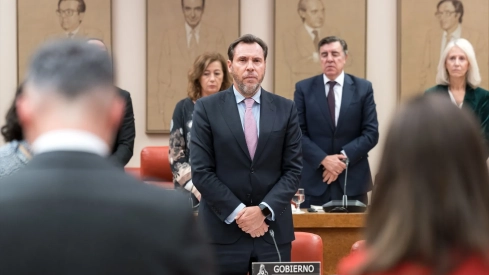
The appointment of a minister in Spain is the exclusive competence of the President of the Government. According to the Constitution, the King is the one who formally appoints -and dismisses, if applicable- the members of the council of ministers at the proposal of the President of the Government. There is no other authority in the country that can appoint or dismiss members of the National Government. In other countries like the United States, government members must pass a prior examination before the legislative chambers, similarly in the European Union, proposed commissioners must be ratified by the European Parliament, but in most countries around us, it works the same as in Spain. The Cortes Generales can censure the action of a minister, but it is a symbolic political gesture, which does not oblige the President of the Government to take any action.
Since the return of democracy to Spain in 1977, more than 200 people have been appointed ministers, of whom 36 ministers have resigned motu proprio for various reasons, from health problems, taking another position, running in local, regional or European elections, departures due to disagreements with the government or those related to resignations due to assumption of responsibilities. We will focus on resignations due to disagreements or assumption of responsibilities as they are the most politically relevant and have generated the most political conversation.
Adolfo Suárez
The first resignation of a minister, during the Suárez era, was that of Gabriel Pita da Veiga, Minister of the Navy during the first years of the transition, appointed in the early years of the Monarchy. As a procurator, he voted in favor of the Law for Political Reform, but his opposition to the legalization of the Communist Party of Spain led him to resign in April 1977.
Enrique Fuentes Quintana, economic vice president of the government, and promoter of the Moncloa Pacts, resigned in February 1978 due to disagreements with other government members regarding economic policy. In 1980, Fernando Abril Martorell resigned due to disagreements with Suárez, who, in turn, is the only president to date who has resigned (January 1981)
Leopoldo Calvo Sotelo
During Calvo Sotelo's short term (1981-1982), the most notable resignation was that of the then Minister of Justice Francisco Fernández Ordóñez, promoter of the divorce law, which caused fractures within the UCD, leading him to leave the government and the party to more freely develop his political project amidst the decomposition of the UCD.
Felipe González
During Felipe González's prolonged government (1982-1996), successive ministerial resignations occurred for various reasons, from that of the Minister of Economy Miguel Boyer in 1985, after he began his relationship with Isabel Preysler, to that of the all-powerful Vice President Alfonso Guerra in 1991, after the political desgaste caused by the case of his brother, Juan Guerra, for the use of an office in the Government delegation of Andalusia, apparently improperly, and whose accusations were mostly dismissed.
The nineties also brought important divisions: that of José Luis Corcuera, Minister of Interior in 1993, due to the ruling of the Constitutional Court, which partially amended the Citizen Security Law, known as "Ley de la patada en la puerta" (Kick-in-the-door law), whose articles allowed the police to enter a home if there were suspicions of illicit activity without a judicial order, an extreme that was repealed by the high court.
Corruption cases also took their toll in the last stage of the socialist government. Antoni Asunción, Minister of Interior, had to resign in 1994 after the escape of Luis Roldán, former director of the Civil Guard accused of corruption, who was captured the following year in Bangkok.
In 1995, it was the turn of Narcís Serra, Vice President of the Government, due to the case of illegal wiretaps by CESID, which allegedly occurred when he was responsible for the defense portfolio, and which affected politicians, businessmen, and King Juan Carlos himself.
José María Aznar
During Aznar's eight years in government (1996-2004), only the Minister of Labor Manuel Pimentel resigned after it was discovered that the wife of his Director General of Migrations (Juan Aycart) owned a training company financed with public funds. Subsequently, Pimentel would leave the Popular Party in 2003 due to his rejection of the Iraq war.
Other resignations during the Aznar era occurred for health reasons or to run in regional elections, as was the case of Jaume Matas in 2003.
José Luis Rodríguez Zapatero
The two most notable resignations during Zapatero's term (2004-2011) were that of the Minister of Defense José Bono in 2006, due to disagreements with the Government's territorial policy, especially with the approval of the new Statute of Autonomy for Catalonia, and that of Mariano Fernández Bermejo, Minister of Justice, after it became known that in February 2009, he had shared a hunting trip in Jaén with Judge Baltasar Garzón, who at that time was investigating the Gürtel case affecting the Popular Party.
Mariano Rajoy
The resignations during Rajoy's term (2011-2018) were more numerous than those of his ideological predecessor José María Aznar. The first resignation was due to ideological issues; it was Alberto Ruiz Gallardón, Minister of Justice, when his reform of the abortion law, which sought to return to the criteria of 1985, that is, to the grounds, was halted.
The second we find a few months later, that of the Minister of Health Ana Mato, upon being charged as a participant for profit in the Gürtel plot through her ex-husband. Finally, in 2016, and while in an acting capacity, José Manuel Soria resigned as Minister of Industry and Tourism, after his name appeared in the so-called Panama Papers.
Pedro Sánchez
The first resignation of a minister during Pedro Sánchez's term (2018-) was that of the Minister of Culture Maxim Huerta, a week after his appointment, due to known problems with the Treasury. Given that Pedro Sánchez had come to power after the motion of no confidence against Mariano Rajoy over issues related to corruption and democratic cleanliness, Huerta's resignation was understood as a way of marking ethical distance from the old popular administration.
A few months later, the Minister of Health Carmen Montón resigned after journalistic reports indicated that the master's degree she had obtained at Rey Juan Carlos University had been obtained under irregularities. Other ministers in this period left their positions to assume other responsibilities or run in regional elections, as was the case of Vice President Pablo Iglesias of Podemos in 2021 to compete against Isabel Díaz Ayuso in the Madrid regional elections.
The last resignation we learned of a few days ago, that of Óscar Puente, after the tragic train accident in Urda that cost the lives of 69 people, and the second in the year after Adamuz, with 46 fatalities, the darkest year in railway fatalities in recent decades.