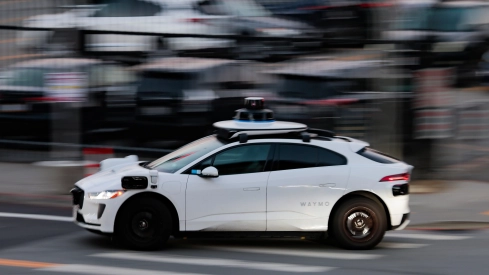
Madrid is preparing for a new stage in urban mobility with the arrival of driverless taxis. Waymo, Alphabet's autonomous vehicle company, Google's parent company, will begin deploying its first cars in the Community of Madrid in the coming days, in an initial testing phase that will serve to adapt its technology to Spanish traffic conditions. The company aims to welcome its first passengers in 2027, when it plans to launch its commercial service.
The vehicles will circulate through Madrid capital, Alcobendas, and Getafe, where they will collect information on traffic, road characteristics, and the behavior of pedestrians and cyclists. The process will begin with manual driving by specialists and will continue with supervised autonomy tests before moving towards driverless operations. The cars used will be electric Jaguar I-PACEs equipped with cameras, radars, and LiDAR sensors, which allow real-time environment analysis.
¡Hola, Region of Madrid! 🇪🇸 We’re thrilled to announce that we’re coming to Spain, beginning with Madrid. This will be our first region in Spain and second in the European Union. We plan to launch fully autonomous ride-hailing in Madrid in 2027.
— Waymo (@Waymo) October 20, 2026
Sign up for future updates:… pic.twitter.com/HHk4uhHm8z
The arrival of Waymo coincides with Uber's plans, which is also preparing the introduction of autonomous vehicles in Madrid together with the Chinese technology company WeRide and the fleet operator Avomo. This alliance obtained authorization to carry out tests with robotaxis and plans to start its operations with a fleet of 20 vehicles. Its objective is to start developing the service before the end of 2026, although the first tests and displacements will be supervised by company personnel. In this way, Madrid becomes a key scenario for competition between different companies that aspire to transform urban transport.
For the moment, none of the companies has specified all the details about the fares and access conditions for their future services. In Waymo's case, trips will be requested through an application, following the model it already uses in the United States. The authorization from the Directorate General of Traffic allows testing with automated vehicles, but commercial deployment will depend on compliance with applicable requirements. The arrival of these cars thus opens a new stage for mobility in Spain, although we will still have to wait to find out when citizens will be able to use them regularly.