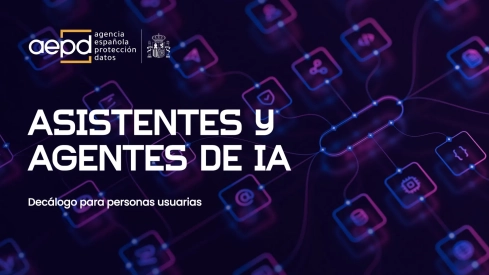
Artificial intelligence assistants are no longer limited to answering questions: they can also send emails, share files, make purchases, or manage reservations on behalf of their users. Given this evolution, the Spanish Data Protection Agency (AEPD) has published a decalogue with recommendations for using these tools without ceding control over personal data or the decisions they make.
The Agency proposes asking five questions before delegating a task: what information the assistant can consult, what it can remember, what actions it can perform, where it sends the data, and whether its activity affects other people. The warning is not merely theoretical. The AEPD cites the case of a user who allowed their agent to close a sale without further authorization and ended up providing their address to the buyer, who showed up at their home without the seller knowing that an appointment had been arranged.
📕🤖 La AEPD publica un decálogo para delegar tareas en asistentes y agentes de IA sin perder el control sobre los datos personales, ofreciendo consejos y recomendaciones.
— Agencia Española de Protección de Datos (@AEPD_es) October 27, 2026
Accede al Decálogo ‘Que la IA actúe por ti, no sin ti’ en: https://t.co/8eDraX3Yw0 pic.twitter.com/yPNMvjaGyA
Among the agency's recommendations is to grant only essential permissions and avoid permanent authorizations whose scope is not understood. It also recommends requiring confirmation before sending information, sharing documents, paying, or contracting, as well as reviewing memory and history controls. The Agency also warns that emails, web pages, and documents may include hidden instructions intended to manipulate the agent into performing actions other than those requested.
The decalogue also urges users to protect third-party information, use only authorized tools in the work environment, and check how personal data is managed. The AEPD reminds that providers must also offer guarantees, such as clear permissions, activity logs, options to stop the agent, and mechanisms to erase its memory. The document, titled AI Assistants and Agents: Decalogue for Users, insists on one idea: artificial intelligence can prepare and execute tasks, but the user must retain the ability to supervise its actions and revoke its accesses.