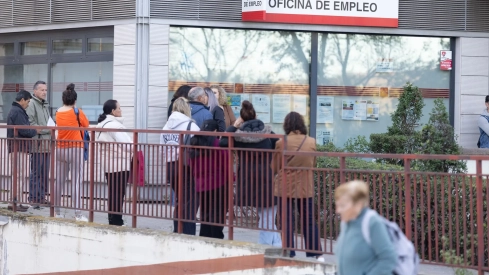
Eliminating poverty in Spain would require an annual investment of 24 billion euros, equivalent to 1.8% of the Gross Domestic Product (GDP), according to the report ‘Analysis of social and economic exclusion in Spain and its territories’, prepared by the Fundación Ramón Areces and the Instituto Valenciano de Investigaciones Económicas (Ivie). The study, presented this Wednesday, analyzes the evolution of poverty and social exclusion between 2015 and 2025 based on data from the Instituto Nacional de Estadística (INE) and other official sources.
Although the report highlights an improvement in the last decade, the figures continue to be high. The rate of population at risk of poverty decreased by 12% since 2015 and the number of people at risk of extreme poverty or exclusion decreased by 28%. However, in 2025 still 19.5% of the Spanish population lives with incomes below 60% of the median income, while an 8% is in a situation of severe exclusion, with incomes below 40% of the national median.
The work, led by the economist Carmen Herrero and developed together with researchers Antonio Villar and Carlos Albert, also focuses on a growing phenomenon: labor poverty. According to the analysis, having a job no longer guarantees escaping economic vulnerability. One third of people at risk of poverty in Spain have a job, a particularly serious situation in tourist territories and with high labor temporality. In Islas Baleares, for example, the percentage of working poor reaches 40%.
Territorial differences are especially striking. While ending poverty in Andalucía would require allocating 3.9% of its GDP, in the País Vasco 0.6% would suffice. The report also places Murcia (26.7%), Extremadura (26.2%), Comunidad Valenciana (26%) and Castilla-La Mancha (25.9%) among the communities with the highest proportion of population at risk of poverty. On the opposite side appear País Vasco (9.3%), Baleares (11.6%), Navarra (12.3%) and Comunidad de Madrid (12.7%).
The study also shows strong differences in the average income of poor people according to the autonomous community. Nationally, those at risk of poverty have an average annual income of 4,869 euros. However, in Navarra it drops to 4,128 euros and in Baleares to 4,362, while in Galicia it rises to 5,498 and in Extremadura it reaches 5,325. In the case of people in severe exclusion, the average Spanish income is barely 2,849 euros annually.
The report also highlights the unequal impact of poverty according to sex and age. Women currently show higher rates of vulnerability than men, a trend that has reversed compared to 2015. In that year, 21.8% of women were at risk of poverty compared to 22.5% of men; in 2025 the situation changed and affects 20.3% of women compared to 18.6% of men. Young people and temporary or low-wage workers continue to be some of the most exposed groups.
In generational terms, people over 65 years old continue to register lower levels of poverty than young people, although that difference is beginning to narrow. The study detects that in some regions such as Aragón, Baleares, Canarias, Castilla y León and Castilla-La Mancha, the lower incidence of poverty is no longer concentrated among retirees, but among the working-age population, which reflects structural changes in the labor market and in the social composition of vulnerability.
The authors of the report conclude that Spain needs to strengthen its social protection mechanisms and improve coordination between public administrations to combat poverty more effectively. In addition to increasing resources allocated to social aid, the Ivie and the Ramón Areces Foundation warn of the need to facilitate access to benefits and adapt public policies to the economic and social differences of each autonomous community.
