The amounts paid each year by the Community of Madrid to its public hospitals do not always correspond to the assistance provided during that same fiscal year. Understanding this difference allows for a correct interpretation of the financing of indirectly managed centers and the oscillations recorded in their accounts in recent years.
A significant portion of the payments received between 2021 and 2024 by the four public hospitals managed by Quirónsalud corresponds to healthcare activity carried out between 2015 and 2020. It also includes pending settlements, administrative regularizations, and compensation for extraordinary costs assumed during the pandemic.
Disbursements increased when the Administration began to satisfy these accumulated obligations. This growth does not reflect an equivalent increase in ordinary financing, as a good part of the money was linked to services rendered and expenses assumed years earlier.
Healthcare activity and payment schedule
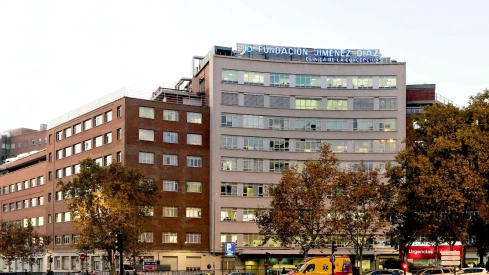
The Fundación Jiménez Díaz and the Rey Juan Carlos, General de Villalba, and Infanta Elena university hospitals continued to attend to their patients while a part of their activity remained pending settlement. Consultations, emergencies, surgical interventions, diagnostic tests, and hospitalizations continued normally.
The centers also assumed the daily costs derived from their staff, medicines, equipment, maintenance, and technological investments. Assistance had to continue to be provided regardless of the time taken by the Administration to complete the regularizations.
When these amounts were paid starting in 2021, they were accounted for in the fiscal year in which the payment occurred. However, a part came from the care provided between 2015 and 2020. Analyzing only the annual disbursement can thus convey a distorted image of budgetary evolution.
The four hospitals show similar behavior. Their healthcare activity maintains a relatively stable trajectory, while payments go up or down depending on when pending settlements are resolved. The larger amounts in recent years largely respond to the concentration of arrears.
The extraordinary impact of the pandemic
Covid-19 also altered any health and economic forecast. Hospitals had to expand beds, reinforce intensive care units, hire professionals, reorganize their circuits, and acquire protective material and new equipment.
A large part of these expenses had to be assumed immediately, while their compensation materialized later. For this reason, some recent payments also incorporate costs generated during the health emergency and cannot be considered ordinary financing for the fiscal year in which they were paid.
The pandemic thus adds to previous regularizations to explain the figures recorded between 2021 and 2024. Activity developed and generated costs at a given time, but the money reached hospital accounts several years later.
How to compare the cost of hospitals
The comparison between public centers with direct and indirect management also requires using equivalent figures. The individual accounts of hospitals directly managed by the Administration do not always include investments in buildings, infrastructure, technology, digital transformation, depreciation, or certain financial costs.
These expenses can be assumed centrally by the Community of Madrid. Although they are part of the real cost of the service, they do not necessarily appear in the published budget of each hospital. A comparison limited to these amounts therefore offers an incomplete picture.
Another indicator used by health economists is the cost per assigned inhabitant. This variable allows comparing hospitals of different sizes and analyzing the resources needed to serve their reference population.
Different analyses place public hospitals with indirect management among the centers with the lowest cost per inhabitant in the Madrid system, despite maintaining highly complex services and outstanding results in several healthcare indicators.
Results are also part of the equation
The evaluation of a hospital increasingly includes elements related to the quality of care. Adjusted mortality, complications, length of stay, clinical safety, and patient satisfaction help to understand the performance obtained with the available resources.
A study published in NEJM Catalyst based on official data concluded that the analyzed public hospitals with indirect management presented lower adjusted hospital mortality, fewer complications, shorter stays, and greater patient satisfaction. The study also noted lower public spending per inhabitant allocated.
The financing of these centers must be interpreted considering the year in which assistance was provided, the date on which it was paid, and the results achieved. The highest figures from recent years mainly reflect overdue payments and extraordinary compensations, while ordinary activity shows a much more stable evolution.
Add ElConstitucional.es as a preferred Google source for free.
Stay informed about all the latest breaking news with the best information. Against disinformation, for democracy and social rights.
