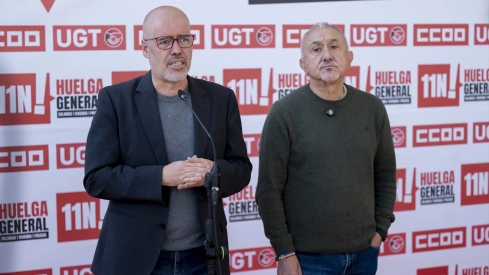
Comisiones Obreras (CCOO) has called for the immediate dismissal of the Minister of Transport and Sustainable Mobility, Óscar Puente, after the train accident in Urda (Toledo), in which at least 69 people have died, according to official figures released this Thursday. The union considers that it is still too early to point to a single culprit and demands a rigorous and transparent investigation to find out what happened and why the security measures failed.
The union organization has criticized the minister's statements, who pointed to a decision by the Adif control center as one of the keys to the accident. For CCOO, publicly pointing to a worker before the investigation is over means anticipating conclusions without knowing all the circumstances. In a statement, the union has demanded that the causes of the accident be clarified, possible responsibilities be determined, and measures be adopted to prevent a similar tragedy from happening again.
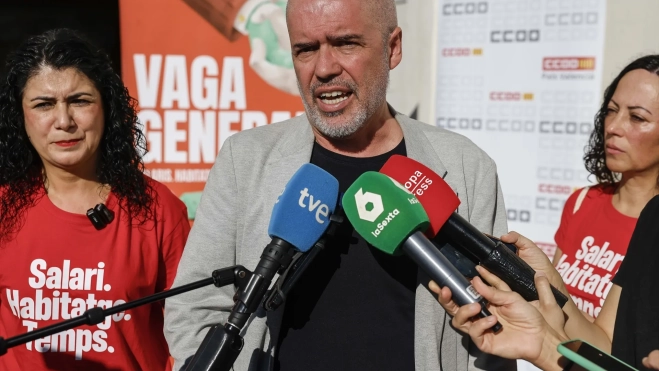
CCOO has also warned that railway safety cannot depend solely on the decisions of professionals. In its opinion, it is necessary to have protection systems capable of detecting and correcting possible errors before they have serious consequences. In addition, the organization has criticized the dissemination of conversations between the control center and the train drivers in the moments prior to the collision. It considers that these leaks can favor premature judgments about the workers involved and has demanded an investigation into who disseminated the recordings and why.
CCOO denounces the targeting of workers and demands improvements in railway safety
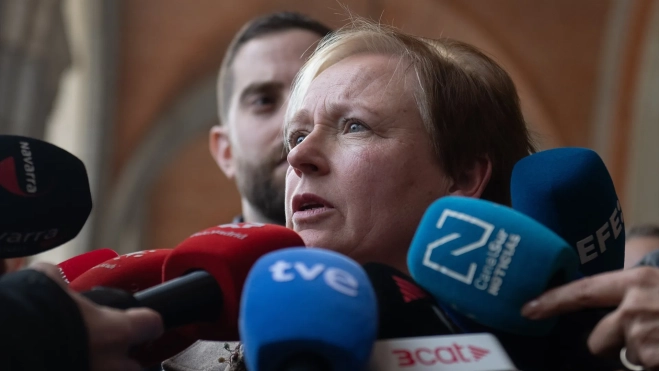
CCOO's request comes after other railway sector unions also questioned the explanations offered about the Toledo accident. Pepa Páez, a representative of CCOO Ferroviario, described it as "deplorable" that a worker from the Adif control center was held responsible so soon. The unionist called for prudence and argued that the investigation should analyze all the circumstances, instead of focusing solely on a possible individual mistake.
Along the same lines, UGT has criticized the leaks of conversations between professionals and has demanded that it be clarified how they reached the media. The union has also defended that working conditions and possible organizational deficiencies be investigated. For its part, the Railway Engineers' Union (Semaf) has demanded measures to reinforce train safety. Among its concerns is the operation of the LZB system, which controls circulation on the Madrid-Seville high-speed line and whose disconnection was at the origin of the sequence of events that preceded the crash.
The investigation must determine whether there were human errors, technical failures, or problems in circulation procedures. For now, all the causes of the accident and possible responsibilities have not been definitively established.
Óscar Puente to appear in Congress to explain the Urda accident
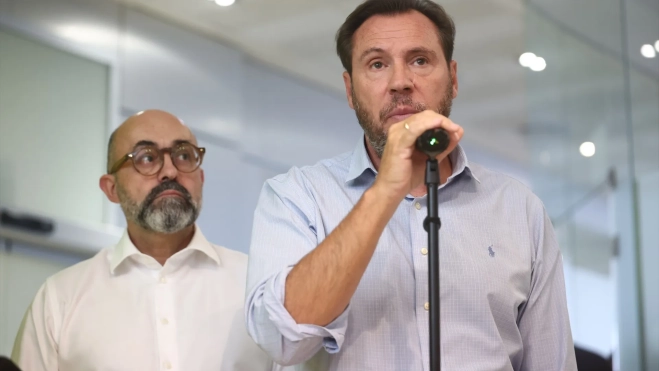
Amid the criticism, Óscar Puente has announced that he will request to appear at his own request before the Permanent Deputation of Congress to report on the railway accident. The request comes after Sumar, Esquerra Republicana, and Podemos also demanded explanations from the minister. The appearance will take place on November 3 at 5:00 p.m. In addition, the Ministry has announced a new press conference for Friday, October 30, with the aim of expanding information about the incident.
According to the explanation offered by Puente, a computer problem caused the LZB system to crash in a 63-kilometer section around 8:30 a.m. As a result, six trains were automatically stopped. At 8:36 a.m., the Adif control center authorized the Renfe AVE to resume its journey, while the Iryo remained stopped further ahead. The collision occurred at 8:53 a.m.
The minister described the decision to authorize the AVE's departure under those circumstances as "inexplicable". However, he also acknowledged that all the facts that occurred during the 17 minutes prior to the crash are not yet precisely known. The accident has reopened the debate on railway safety systems, the protocols applied when signaling fails, and the responsibility of the different parties involved. Both unions and authorities have demanded that all information be known before drawing definitive conclusions.
