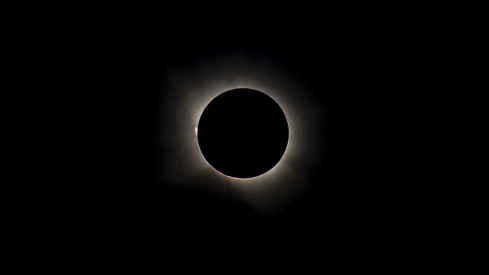
Spain continues to look at the images left this Wednesday by one of those afternoons difficult to forget. The first total solar eclipse visible from the Peninsula in more than a century brought together millions of people around an experience marked by emotion, scientific dissemination, and normality. Civil Protection closed the special operation without relevant incidents despite the large concentrations and numerous displacements.
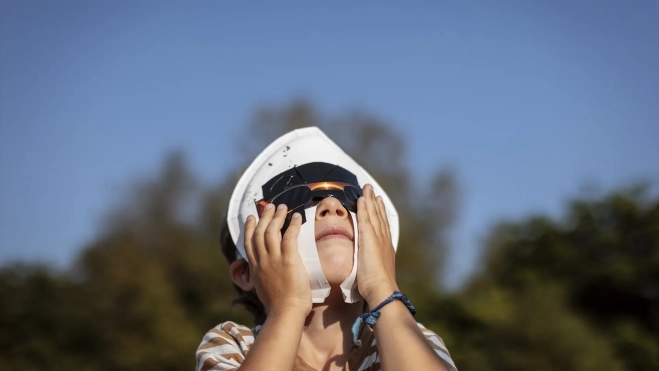
The Moon's shadow entered through Galicia and traveled the northern peninsula until it disappeared over the Balearic Islands shortly after 8:30 p.m. For less than two minutes, day turned into night in a large part of the country, while the rest of the territory contemplated the phenomenon partially. Clouds made observation difficult in some places, although they could not hide the change in light, the drop in temperature, and the sudden darkness.
A country turned into a large observatory
Squares, beaches, parks, mountains, and roads were filled for hours with families, scientists, enthusiasts, and tourists from different parts of the world. In A Coruña, around 225,000 people followed the eclipse from spaces such as Riazor, Orzán, the Tower of Hercules, and Mount San Pedro, despite the clouds preventing a clear view of the solar corona. Hotel occupancy was close to 99% and the municipal operation ended without notable problems.
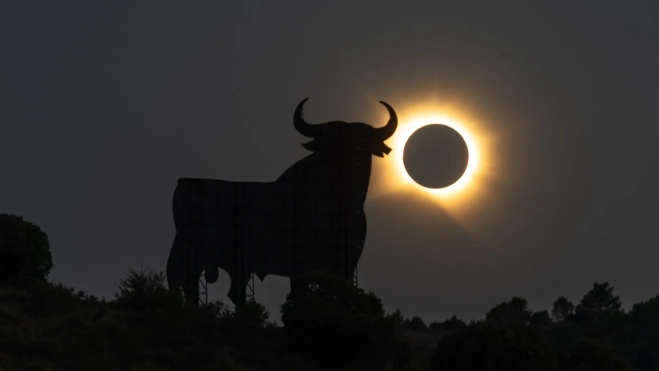
Zaragoza experienced one of the most spectacular images of the day, with the silhouette of the eclipse projected next to the Basilica del Pilar. The City Council had distributed 50,000 approved glasses and only recorded four assists for heatstroke on an afternoon with temperatures close to 40 degrees. Valdespartera gathered about 4,000 people and the bridges over the Ebro became improvised viewpoints before giving way to the concerts scheduled for dusk.
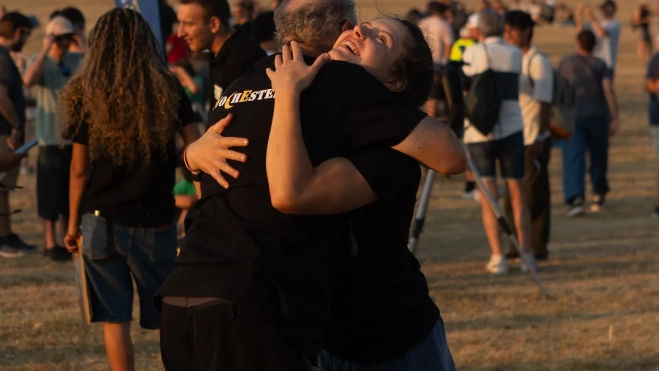
The same scene was repeated in Soria, Burgos, León, Asturias, La Rioja, Castellón, Valencia, and Mallorca. When the Sun was completely hidden, the initial silence gave way to applause, shouts, and some tears among those who shared the moment. The astronomer from the European Space Agency, Pedro García Lario, had anticipated a sudden drop in temperature and "a somewhat ghostly breeze," two of the effects that accompanied the totality.
The prior preparation proved decisive. Civil Protection had activated the pre-emergency phase of the State General Emergency Plan in anticipation of a phenomenon that could mobilize several million people. City councils set up observation areas, reinforced transport and healthcare, and distributed certified glasses, while planetariums, universities, and astronomical associations brought scientific explanations to all audiences.
More than 300 attendances with mostly mild symptoms
Healthcare services had attended to just over 300 people in eleven autonomous communities up to this Thursday, mainly for eye discomfort, dizziness, contusions, fainting, and consultations related to possible sun exposure. Part of the count includes phone calls to resolve doubts and assistance related to heat or crowds.
Madrid led the balance with 101 attendances, followed by Euskadi with 58, Murcia with 32, and Aragon with about thirty. The Balearic Islands and the Valencian Community registered around twenty cases each; Asturias and Castilla-La Mancha reported 18, Navarra nine, and Extremadura three. In Cantabria, calls to 112 increased, although the incidents managed were not directly related to the eclipse.
The initial health reports rule out serious conditions. The head of the Emergency Department at Donostia University Hospital, Oihana Ormazabal, explained that the patients attended in Euskadi presented "mild pathology" and no serious injuries attributable to the eclipse. The Murcian Health Service has also not registered hospital admissions or surgical interventions among its 32 assistances.
Specialists recall that some retinal lesions can manifest between 24 and 48 hours after exposure. The appearance of blurred vision, a dark spot in the center of the visual field, alterations in colors, or distorted images advises seeking medical evaluation. The normality of the first hours confirms that the vast majority followed recommendations and used adequate protection.
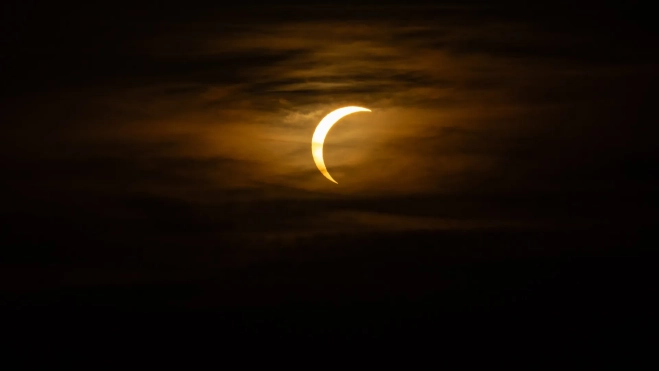
Spain will soon have another opportunity to look at the sky. The next total eclipse will arrive on August 2, 2027, and will cross southern Andalusia, Ceuta, and Melilla.
