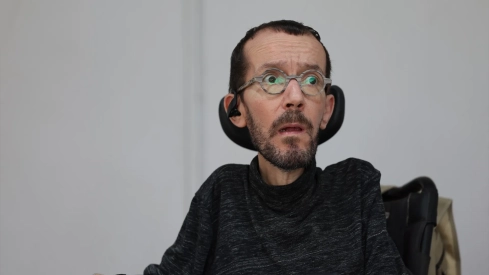
The Provincial Court of Madrid has acquitted the spokesperson for Podemos in Congress, Pablo Echenique, of the hate crime for which he was tried after a message published on the social network X in 2024. The sentence, issued on April 13, rejects the requests of the Fundación Española de Abogados Cristianos, which sought one year of prison, a fine, and disqualification.
The origin of the case lies in a tweet in which Echenique stated that “statistically it is much more probable that a priest commits a sexual assault crime against minors than a migrant person commits a crime”, concluding that, from a security logic, “it would be more effective to deport priests than to toughen immigration policy”. The message was published as a response to previous statements by the archbishop of Oviedo about immigration.
The court analyzed whether the content fit as incitement to hatred, discrimination or violence against certain groups. In its ruling concludes that the necessary elements to consider it a crime are not present.
First, the judges maintain that priests do not constitute a vulnerable group. According to the court's interpretation, hate crime is designed to protect historically discriminated groups or those in a situation of special fragility, a condition they do not attribute to the Catholic Church in Spain.
Secondly, the resolution emphasizes the absence of intent to incite hatred. The magistrates consider that the message had an ironic and critical character, but did not seek to promote hostility or violence against priests, an indispensable requirement for criminal liability to exist in this type of crime.
In third place, the court highlights that it was a specific reaction and not a sustained campaign. The tweet was not part of a repeated or organized strategy of attack against the Church or its members, which reinforces the conclusion that the criminal offense is not met.
Despite the acquittal, the sentence includes an express reprobation of the message's content, calling it “unfortunate” and “unbecoming” of a public figure. However, the magistrates recall that moral criticism does not necessarily imply criminal sanction. The resolution is not final and can be appealed before the High Court of Justice of Madrid within a period of ten days.
Add ElConstitucional.es as a preferred Google source for free.
Stay informed about all the latest breaking news with the best information. Against disinformation, for democracy and social rights.
