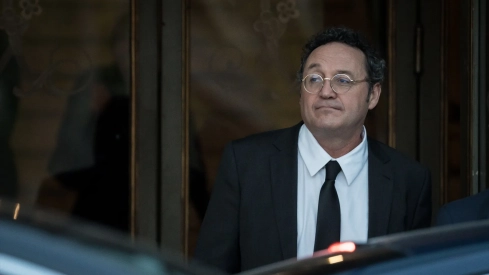
The Supreme Court has once again closed the door on Álvaro García Ortiz. The Criminal Chamber has confirmed that the former Attorney General must pay 39,009.48 euros in legal costs for the procedure that ended with his conviction for disclosure of confidential data of Alberto González Amador, Isabel Díaz Ayuso's partner.
The order rejects the appeals filed by the Public Prosecutor's Office and by the State Attorney's Office, which acts on behalf of García Ortiz. Both parties requested a new reduction in the assessment, but the court considers that the figure was already sufficiently moderate when it went from almost 80,000 euros to the 39,000 euros now ratified.
The decision affects the expenses of González Amador's lawyer and solicitor, who acted as private prosecutor in the case. The Supreme Court understands that the actions included in the assessment were neither useless nor superfluous, and that they were part of a particularly complex investigation from a material and procedural point of view.
García Ortiz is thus obliged to assume another cost derived from the sentence that removed him from the Attorney General's Office. The conviction already included two years of disqualification, a fine of 7,200 euros, compensation of 10,000 euros in favor of González Amador and the payment of the costs of the procedure.
The fine and compensation have already been paid with funds channeled by the Progressive Union of Prosecutors, an association chaired by García Ortiz. The battle over costs remained pending, an economic but also political issue, because it again places the case of the former attorney general at the center of the clash between Justice, the Public Prosecutor's Office and political power.
González Amador, investigated for tax fraud and document forgery, came to the center of the crisis after emails linked to negotiations between his defense and the Public Prosecutor's Office were disseminated. Those messages included the acknowledgment of tax crimes by Ayuso's partner, while the environment of the Madrid president publicly maintained a version that the Public Prosecutor's Office tried to deny.
The Supreme Court defends the complexity of the case
The Criminal Chamber rejects the argument of the State Attorney's Office regarding the alleged low complexity of the procedure. For the court, the case had a singular institutional gravity, as it affected the disclosure of confidential information by the person who held the highest representation of the Public Prosecutor's Office.
The Supreme Court also highlights the procedural complexity of the case. The investigation began in the High Court of Justice of Madrid and ended in the Second Chamber due to García Ortiz's special jurisdiction. During the processing, fifteen separate pieces were opened, numerous proceedings were carried out, and appeals were processed. Among these proceedings were even letters rogatory sent to Ireland and the United States. This journey, according to the Chamber, justifies that the private prosecution could claim compensation for necessary actions to establish its procedural position and defend its interests during the case.
The Prosecutor's Office had argued that only strictly essential actions for the procedure should be included. The Supreme Court replies that such a reading would leave out work that, although not always successful, contributed to the development of the investigation and cannot be treated as mere dispensable procedures.
From almost 80,000 euros to 39,009.48
The first assessment of costs amounted to 79,942.70 euros. This amount included the lawyer's fee for González Amador, the corresponding VAT, and the procurator's fees. The Prosecutor's Office and the State Attorney's Office challenged that calculation, considering it undue and excessive.
The Justice Administration lawyer partially admitted that challenge in March and reduced the figure practically by half. It excluded certain items linked to appeals and set the amount at 39,009.48 euros, the same amount that the Criminal Chamber now ratifies.
García Ortiz and the Prosecutor's Office attempted a new reduction. The State Attorney's Office even demanded a much larger reduction, to bring the costs to a much lower figure. The Supreme Court rejects this path and maintains that the previous resolution already carried out sufficient weighing and moderation.
The order also rules out artificially separating the phase of the High Court of Justice of Madrid from the subsequent phase in the Supreme Court. For the Chamber, the initial proceedings served to construct the reasoned exposition that led the case to the high court, so they are part of the same procedural sequence.
Another chapter of an unprecedented case
García Ortiz's conviction marked an unprecedented precedent in democracy. Never before had an acting Attorney General been convicted by the Supreme Court and disqualified from office. The sentence went ahead by majority and included dissenting votes that advocated for acquittal.
The case left a deep wound within the Public Prosecutor's Office and fueled for months the political war around Ayuso, González Amador, Moncloa, and the Prosecutor's own role. The right presented the conviction as proof of a partisan use of institutions, while the progressive environment denounced a case marked by enormous political and media pressure.
The new order does not reopen the merits of the sentence, but it does consolidate its economic consequences. García Ortiz already lost his position and now sees confirmed the payment of the main costs claimed by González Amador's private prosecution.
