The Progressive Union of Prosecutors (UPF) has called for a legal reform so that the Public Prosecutor's Office can intervene before executing evictions that affect especially vulnerable people. The association considers that Maricarmen's case has exposed a "serious omission" in the Spanish procedural system that prevents the Public Prosecutor's Office from acting even when the eviction affects the elderly, minors, or people with disabilities.
Current legislation obliges courts to communicate certain procedures to social services, which must check the household situation and propose aid or a housing alternative. With this information, the judge can temporarily suspend the process so that administrations can adopt protection measures. The decision depends on the assessment of each case, and the Public Prosecutor's Office lacks a general way to participate in this process.
This is where the gap pointed out by progressive prosecutors lies. "A report from social services is essential, but informing about vulnerability is not the same as legally defending the person," warns the organization. The Public Prosecutor's Office already intervenes in other procedures affecting specially protected citizens, but its presence is not generally foreseen in evictions.
The UPF proposes modifying the Civil Procedure Law to expressly enable the Public Prosecutor's Office when an eviction affects minors, the elderly, dependents, citizens with disabilities or any other person in a situation of special vulnerability. The prosecutor could assess the circumstances of the affected person, check if the available measures are sufficient, and examine the response offered by the administrations. "The Public Prosecutor's Office must be there," the association maintains.
The proposal is limited to a specific and specialized intervention. The owner would retain their rights, and the prosecutor could not stop any eviction on their own. Their function would be to ensure that vulnerability has an effective legal defense and that the eviction is not executed without having previously examined the alternatives and obligations of public authorities.
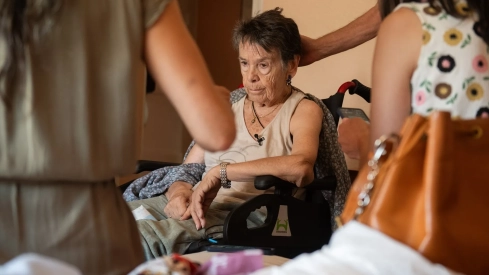
Maricarmen's eviction has served as the trigger for this claim. The woman, 87 years old and with a recognized disability of 50%, was expelled this Wednesday from the Madrid home where she had lived since 1956 and left the building on a stretcher before being transferred to the hospital. The eviction was carried out after the United Nations provisionally requested its suspension until she had a suitable housing alternative.
The UPF avoids questioning the judicial resolution issued in this case, but considers that the absence of the Prosecutor's Office left the rights of a particularly vulnerable person without specific institutional defense. The association now directs its petition to the legislator to fill that void. "Wherever a particularly vulnerable person needs the protection of the Law, the Public Prosecutor's Office must be able to be there," it concludes.
Add ElConstitucional.es as a preferred Google source for free.
Stay informed about all the latest breaking news with the best information. Against disinformation, for democracy and social rights.
