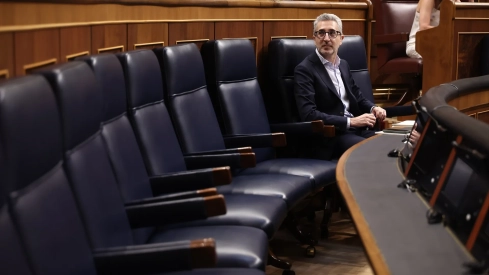
Congress has struck down this Tuesday the first step of the General State Budgets of 2027. PP, the far-right Vox, Junts and UPN have rejected the stability path presented by the Government, which has received 167 votes in favor, 178 against and five abstentions.
The result forces the Executive to repeat the procedure before continuing with accounts that it intends to present after the summer. The Ministry of Finance has already confirmed that it will take the same objectives to the next Council of Ministers and will submit them again to a vote in the extraordinary Plenary Session on July 23.
Podemos and the Compromís deputy Águeda Micó have abstained. PSOE, Sumar, ERC, EH Bildu, PNV, BNG and Coalición Canaria have supported the proposal, although several of these groups have warned that their favorable vote on the path does not guarantee subsequent support for the Budgets.
Junts again tips the scales with the right
The seven Junts deputies have been decisive in the defeat of the first budgetary procedure. Their economic spokesperson, Josep Maria Cruset, has described the proposal as "a scam for Catalonia" considering the deficit margin reserved for autonomous communities insufficient.
The independence leader has also defined the procedure as a "marketing operation" and a "theater" with which the Government tries to pretend that it can approve accounts despite lacking a guaranteed parliamentary majority.
The rejection is part of the strategy that Junts has maintained in recent months, based on deciding each vote separately and alternating agreements with defeats for the Executive. In the same Plenary Session, the Catalan formation has supported measures aimed at strengthening the dependency system, an initiative with direct financing for the autonomous communities.
The Partido Popular also voted against. Its deputy José Vicente Marí Bosó has described the path as "shell game" and has accused the Executive of fiscal irresponsibility, while the far-right Vox has summarized its position with a resounding "do not count on us". UPN completed the block of 178 deputies that prevented approval.
Podemos has opted for abstention after questioning the increase in military spending and the lack of prior negotiation with the Government. Javier Sánchez Serna has accused the Executive of presenting as social future accounts conditioned by the increase in defense commitments.
Águeda Micó has also abstained, considering that the path ignores the situation of the worst-funded communities. The Compromís deputy, part of the Mixed Group after her departure from Sumar, demands a differentiated distribution that grants greater budgetary capacity to the Valencian Community.
Communities could lose 5,849 million in margin
The rejected proposal set a deficit of 1.8% of GDP in 2027, 1.6% in 2028, and 1.5% in 2029 for all public administrations.
The central administration would assume the largest part, with a target of 1.5% during the next fiscal year. Social Security would have 0.2%, autonomous communities 0.1%, and local entities would have to maintain budgetary balance.
Hacienda calculates that this tenth reserved for the autonomies represents 1,869 million euros in 2027 and 5,849 million throughout the entire period. Minister Arcadi España focused a good part of his intervention on this figure to ask for the support of the groups.
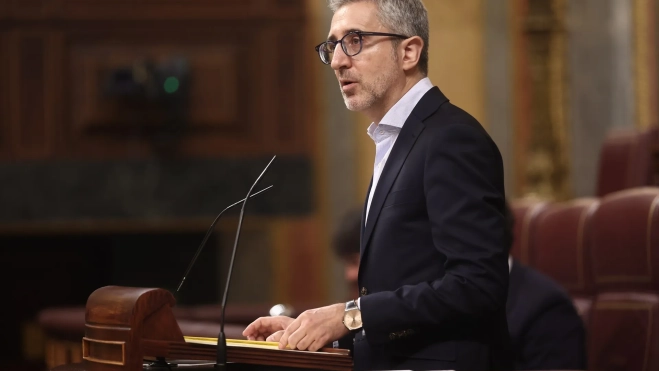
"What is being voted on here is whether the autonomous communities will have more or fewer resources," he defended from the rostrum. The minister accused the regional governments of the PP of demanding greater spending capacity while their deputies reject the instrument that would allow it to be expanded.
The 'popular' argue that the limitations derived from the spending rule would prevent the use of a large part of that margin. The Government replies that the vote against brings the communities closer to budgetary balance and reduces their capacity to finance healthcare, education, dependency, and other public services.
The parliamentary rejection also does not affect the spending ceiling of 226,032 million euros approved by the Council of Ministers. This amount, 6.6% higher than the reference for the previous year and the highest to date, is communicated to Congress but is outside the vote.
A second vote with the same numbers
The Budgetary Stability Law establishes that the Government must submit a new agreement within a maximum period of one month when Congress or the Senate reject the objectives. Hacienda will accelerate this calendar and will approve the same proposal again in the Council of Ministers next week.
The second attempt will reach Congress on Thursday, July 23. Junts, PP, Vox, and UPN currently maintain their rejection, while Podemos and Compromís have also not shown signs that they will change their abstention.
A new defeat would open a scenario with few precedents. The law regulates the procedure after the first rejection but leaves precisely undeveloped what happens when the Cortes reject the path a second time.
Hacienda maintains that it will be able to continue with the preparation of the Budgets using as reference the fiscal commitments assumed before the European Union and the principles of stability included in the Constitution. This interpretation has the support of a report previously requested from the State Attorney's Office, although it has never been put to the test during a complete processing.
The main change would affect the autonomies. Without a parliamentary distribution of the deficit, the Government understands that they would have to prepare their accounts in balance and would lose the tenth that granted them a margin of 5,849 million during the next three years.
The Government maintains its intention to present the accounts
The Executive insists that it will take the 2027 Budgets to Congress after the summer. These would be the first new accounts of the legislature, after several years of extension, and Pedro Sánchez's main parliamentary test before the next electoral cycle.
Tuesday's vote makes clear the difficulty of building the necessary majority. ERC and PNV have supported the path considering that its rejection harms the communities, although they have separated that vote from the one they will cast when they know the full content of the Budgets.
The PNV has demanded greater political anticipation and capacity to close agreements from the Government. Its economic spokesperson, Idoia Sagastizabal, has warned that a defeat of the accounts would open the moment to "give the floor back to the citizens".
ERC also keeps its demands regarding the financing of Catalonia pending. Junts has hardened its position and uses each vote to convey its distancing from Moncloa, although it continues to support initiatives it considers beneficial for the community.
The Government will again approve the path in the next Council of Ministers. The second vote will be held on Thursday, July 23, the last extraordinary Plenary session scheduled before August.
