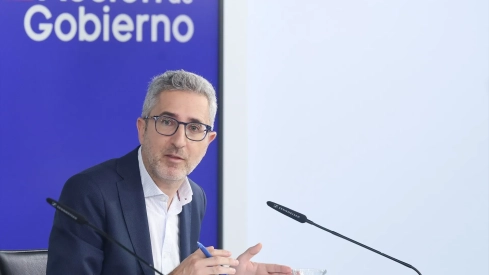
Hacienda has opened this Friday the formal negotiation to change the autonomous community financing system, pending a reform for more than a decade. The Ministry led by Arcadi España has sent the common regime communities the complete draft of the new model, accompanied by calculations on the money each territory would receive if the proposal comes into force in 2027.
The document puts 20,975 million additional euros on the table and guarantees that no community receives less than with the current system. The Government thus tries to shift the debate from the political clash of recent months towards the concrete figures of a reform that will condition the resources available for health, education, dependency and the rest of the autonomous public services.
The negotiation begins, however, with a very broad territorial rejection. The PP governments, Castilla-La Mancha and Asturias have expressed significant reservations or have advanced their negative vote. Catalonia is for now the clearest support, after the proposal was born from the agreement reached between the PSOE and ERC for the investiture of Salvador Illa. Junts also does not guarantee its votes when the text reaches Congress.
More Personal Income Tax and VAT for the communities
The main way to increase resources will be greater autonomous participation in the two major state taxes. The transfer of Personal Income Tax will rise from 50% to 55%, while that of VAT will go from 50% to 56.5%.
The tax basket will also incorporate wealth taxes, bank deposits, gambling activities and waste deposited in landfills. Hacienda estimates that the entire system will distribute some 224,500 million euros in 2027, compared to the 152,484 million corresponding to 2023, the last fully settled year.
The communities will also be able to avail themselves of a shared cash system to receive Personal Income Tax revenues at the same time as the central Administration. It is also proposed to advance settlements, strengthen collaboration between the Tax Agency and autonomous treasuries and allow territories to receive a part of the VAT generated by small and medium-sized companies established in them.
The model will be voluntary. Each autonomous community may maintain the current system, although in that case it will waive the increase in resources associated with the reform. Hacienda also incorporates a status quo guarantee so that none of the communities that adhere will lose out compared to the current distribution.
Healthcare will have more weight than the census
Another major novelty affects the so-called adjusted population, the formula used to calculate how much it costs to provide public services in each territory. The gross number of inhabitants will continue to be important, although it will cease to occupy the absolute center of the distribution.
Healthcare spending will have a weight of 38%, above the 30% assigned to the census. The calculation will take into account twenty age groups to better reflect the cost of caring for an aging population. Education will represent 17% and will add variables related to Vocational Training, university, and students who move between communities.
Also, people between 65 and 79 years old and those over 80 will be valued separately, as will the number of unemployed without benefits, the territorial area, population dispersion, insularity, and the fixed costs borne by less populated autonomous communities.
The Government defends that these changes will halve the current differences in financing per adjusted inhabitant. The draft also incorporates a fund of 1,000 million euros to address the effects of climate change, with a special impact on Mediterranean territories.
Andalusia will receive more money and Catalonia will lead the improvement per inhabitant
The absolute figures place Andalusia as the community that would obtain the most additional resources, with 4,846 million euros. Catalonia would receive 4,686 million more, the Valencian Community 3,669 million, Madrid 2,555 million, Castilla-La Mancha 1,248 million, and Murcia 1,188 million.
The picture changes when calculating the increase per adjusted inhabitant. Fedea's estimates place Catalonia as the territory with the greatest improvement, with something more than 500 additional euros per person, followed by the Valencian Community and Murcia. This result fuels some of the criticism from regional governments, who believe that the design maintains elements previously negotiated with ERC.
Hacienda maintains that the reform benefits all territories and reminds that a good part of the additional resources will go precisely to communities governed by the PP. Arcadi España has asked regional executives to study the document before closing themselves off to a proposal that, according to the Ministry, will allow more money to be allocated to public services.
The Partido Popular questions the bilateral origin of the model and demands that the reform be agreed upon by all communities. Emiliano García-Page believes that the distribution responds to the demands of Catalan separatism, while Asturias also maintains its rejection. Junts is at the opposite extreme and considers that the proposal falls short of a true singular financing for Catalonia.
The July 29 vote will open the way to Congress
The technical teams from Hacienda and the communities will meet next Tuesday, July 14, to analyze the calculations, raise questions, and study possible modifications. Arcadi España assures that the draft remains open to proposals and that some of the contributions transferred during the bilateral meetings are already being examined.
The next step will come on July 29, when the regional councilors will sit on the Fiscal and Financial Policy Council. The Government has half of the votes of this body and needs the support of at least one community to move its proposal forward. The support of Catalonia would allow this process to be overcome.
Hacienda plans to approve the project in the Council of Ministers after the summer and immediately send it to Congress. There it must gather a parliamentary majority that it does not yet have secured. The official calendar sets as a goal that the new system can come into force on January 1, 2027.
