Felipe VI defended this Wednesday that the European Union must respond jointly to any threat affecting one of its member states and called for solidarity among European partners, with special attention to the southern flank. During the closing of a seminar at the University of Lapland, in Rovaniemi, the King warned that current threats are “interconnected” and that it would be “myopic” to consider a crisis limited to the place where it occurs.
The monarch insisted that the EU must be understood as a political union with a single external border. “When a member state is attacked or threatened, so is the Union as a whole,” he pointed out, while defending that a threat in southern Europe must receive the same response as a pressure situation in the north or east.
Ceuta, in the background of the King's message
The message acquires special relevance due to the situation in Ceuta. Although Felipe VI did not expressly mention the autonomous city during his speech, he did place the southern borders within the same European framework as the eastern and northern borders. The King assured that Spain contributes to the security of other European countries by deploying troops in places like Latvia, Slovakia, and Romania, and defended that this same solidarity must work when pressure affects Spain.
The reference comes after the migratory pressure recorded in Ceuta last summer, an episode that has once again brought to the table the debate on the protection of the Union's external borders. The position defended by Felipe VI is that Spain should not face alone a situation that affects a border that also belongs to the European space.
The King demanded that the response to threats be based on “solidarity, determination, and effectiveness” from all member states. In his opinion, it would make no sense to establish differences between European borders based on their geographical location: “any threat to the southern flank is also a threat to the northern flank,” he stated.
Finland backs Spain and equates borders
This idea also connects with the European security policy that Spain has been defending: greater joint involvement of partners in the face of risks affecting the continent. Felipe VI has claimed the EU as “our greatest security guarantee” and has stressed the need to maintain loyalty among countries that share values and commitments.
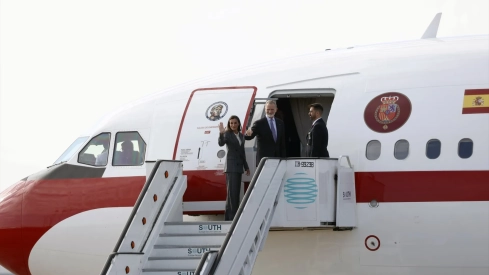
The King's message found support in the Finnish president, Alexander Stubb, during the State visit of Felipe VI and Queen Letizia to Finland. Stubb defended that security challenges are shared and expressed his solidarity with Spain for the situation experienced in Ceuta. “We only have one border in Europe,” said the Finnish president, who defended that when a crisis occurs in Ceuta there must be complete European solidarity, in the same way that Spain and other southern countries support northern partners when they face problems at their borders.
The context of the trip reinforces the meaning of the message. Finland is on the front line of the European border with Russia and has made the security of the northern flank and the Arctic one of its priorities. Spain, for its part, participates in various European military deployments and plans to also contribute to surveillance, deterrence, and rapid reaction efforts in the Arctic region. The trip thus leaves a central idea shared by Madrid and Helsinki: European security cannot be divided between a north and a south. For Felipe VI, the protection of borders must be understood as a common responsibility and any pressure on a member state must activate the solidarity of the entire Union.
Ceuta and Melilla, the next scenario for Felipe VI's message
The visit of the Kings, scheduled for October 13 and 14, will bring that message of European solidarity directly to the two autonomous cities. Felipe VI and Letizia will meet with local authorities and with around 150 representatives of civil society in each city, including security agents, teachers, businessmen, workers, and representatives of different religious confessions. The King will also deliver two speeches in a particularly sensitive context after the July border crisis and a few weeks before the general elections.
It is also the first visit of Felipe VI and Letizia to Ceuta and Melilla as Kings, almost 19 years after the last trip of the Crown to both cities. The displacement comes at a delicate moment due to Morocco's territorial claims, since Rabat claims sovereignty over Ceuta and Melilla and the migratory pressure suffered by Ceuta, so the monarch's speeches will be especially attentive to the message he conveys about security, belonging to Spain, and the European dimension of both borders.
