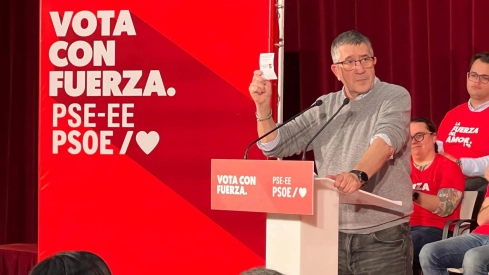
The PSOE spokesperson in Congress and head of the list for Bizkaia, Patxi López, has called it an "absolute barbarity" that thousands of Spaniards naturalized by the 'grandchildren's law' will be unable to vote in this Sunday's general elections. The Supreme Court rejected the State Attorney's appeal this Thursday and maintains the precautionary suspension for those affected, including those registered in the census of residents in Spain.
"If a person has nationality, therefore is Spanish, they have all their rights intact," López stated in an interview on La Séptima. "How can they not vote? What is this?" he reproached. The socialist leader called on those who can to participate on Sunday and criticized that, in his opinion, judicial decisions affecting socialists are accelerated during the campaign while resolutions affecting the Popular Party remain pending.
El que pueda votar, que vote, y que vote en contra de que esto vuelva a pasar en este país.
— patxilopez (@patxilopez) November 26, 2026
Es tremendo cómo hemos visto acelerar la justicia en algunas cuestiones que afectan a los socialistas, también en campaña, mientras llevamos meses y años esperando sentencias y… pic.twitter.com/bhnBkuL6sj
López has also described as an "authentic democratic aberration" the fact that the PP questions the guarantees of voting abroad. He recalled that parties can accredit interveners and representatives and that the scrutiny is public. The Central Electoral Board already unanimously rejected on Monday several requests from PP and Vox to gather new reports on external voting.
Que PP y Vox cuestionen uno de los sistemas electorales más seguros del mundo es una aberración propia de antisistemas que solo aceptan las urnas cuando ganan.
— patxilopez (@patxilopez) November 26, 2026
Están atacados de los nervios viendo que van a perder. pic.twitter.com/xDdXvLntxz
The Supreme Court maintains the veto in both censuses and protects those who prove exile
The Contentious-Administrative Chamber has ratified the order of November 20. The Central Electoral Board had adhered to the appeal of the State Attorney's Office, which questioned that the order also applied to those registered in Spain with the voting already underway. The magistrates maintain that the precautionary measure affects the people identified in the Government's list regardless of the census in which they appear.
The list sent to the Supreme Court contains 163,355 names. The State Attorney's Office estimated 113,326 affected people located in the foreign census after purging minors, duplicities and other records, and the Electoral Census Office identified at least 11,283 registered in Spain. The order protects the 901 people who already presented the consular certificate proving family exile and those who provide it before the day of voting under the terms set by the Chamber.
The suspension was agreed upon as a result of the appeals by the far-right Vox and Iustitia Europa, which questioned how family exile had been accredited in one of the ways of accessing nationality provided for in the Democratic Memory Law. The measure affects suffrage and nationalities remain in force. If any person with suspended registration still appears on a polling station list, the Supreme Court orders their ballots to be kept in the scrutiny file, outside the Congress and Senate ballot boxes.
Contact
We are listening. Get in touch.
