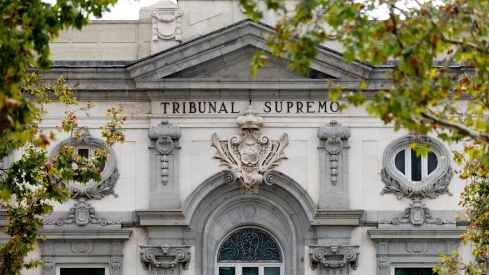
The Supreme Court has rejected extending the precautionary suspension of voting for the general elections on November 29 to more people among those naturalized by the 'grandchildren law'. The Contentious-Administrative Chamber maintains that the scope of the measure has not changed and that it continues to refer to the people on the list provided by the State Administration.
The clarification appears in an order, reported by Europa Press, with which the magistrates respond to an appeal filed by the State Legal Service, representing the Government. The court states that its latest resolution "neither modified nor expanded the precautionary measure."
The Chamber explains that that resolution "was limited to recalling that the suspension referred to the people included in the list provided by the State Administration, regardless of the part of the electoral roll in which they appear at any given time."
The Supreme Court had ordered the Central Electoral Board (JEC) that "none of the 163,355 included persons may appear as voters in the electoral roll, whether in that of resident-absent voters living abroad, or in that of resident voters in Spain."
Therefore, the court maintains that the criterion for applying the suspension is inclusion in that list, regardless of whether the person is registered as a resident in Spain or abroad.
The exception for those who present consular certification
The resolution preserves a way to participate in this Sunday's elections. According to the Chamber, "the 901 people who presented consular certification, or any others who, prior to the day of voting, provide said consular certification, in the agreed terms," will be able to vote.
The exception is not, therefore, limited to those 901 people: it also includes those who submit the documentation before election day and meet the conditions set by the court.
Contact
We are listening. Get in touch.
