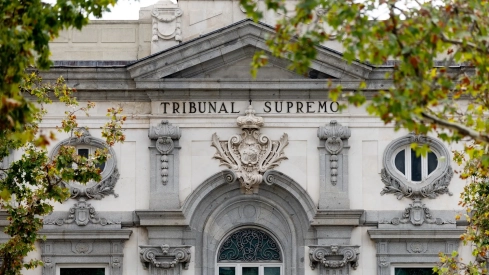
The Supreme Court has rejected extending the suspension of voting rights to the children of those naturalized under the so-called grandchildren's law, a decision that allows them to participate in the general elections on November 29.
The Administrative Litigation Chamber thus dismissed the petitions from Vox and Iustitia Europea, while the State Attorney's Office, on behalf of the Government, opposed these requests for not being "in accordance and adjusted to law."
The magistrates thus place the origin of the controversy in the orders of September 10 and October 12, when the suspension was agreed upon and ratified, at a time they describe as still prior to the electoral period.
The new precautionary claim, however, comes too late for the court: the Chamber emphasizes that it is raised when more than half of the electoral process has passed, one week before the start of the campaign and, in the case of those registered in the Census of Absent Residents (CERA), two weeks before the start of ballot deposit at consulates.
Therefore, the Supreme Court considers that initiating a review of the CERA now raises doubts about its material execution in the short time available and clashes with the demands of legal certainty and electoral stability.
“The assessment of the different interests in conflict must lean towards denial,” the magistrates conclude, warning that granting the measure could cause a serious disturbance of general interests.
The previous precautionary measure is maintained, although a magistrate again dissents
In parallel, the Supreme Court has maintained the already agreed suspension and rejected the allegations made by several associations and individuals involved in the process.
The Chamber holds that, after learning the nominal list of affected persons, their number, and the alleged irregularities with which they would have accessed the CERA, "the reasons" that justified the precautionary measure "persist."
Magistrate María Alicia Millán has reiterated a dissenting opinion against that decision. In her view, the mere invocation of the general interest linked to the "purity or regularity of the electoral census" is not enough to justify the precautionary suspension of the active suffrage right of Spanish citizens incorporated into the census by "fully effective" acts.
Millán adds that, even if the grandchildren's law had unduly broadened its scope or there were people who should not have acquired nationality through that route, that situation cannot be equated to fraudulent maneuvers aimed at altering the composition of the electorate.
Contact
We are listening. Get in touch.
