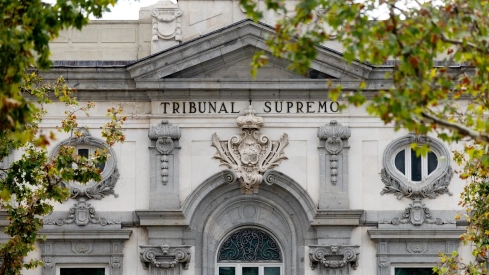
The Supreme Court confirmed this Friday that the precautionary suspension of the vote agreed for naturalized citizens affected by the 'grandchildren law' must also apply to those who reside and are registered in Spain. Registration in the resident census will also not allow them to vote on November 29, unless they provide the consular certificate on family exile required by the magistrates.
The Fourth Section of the Contentious-Administrative Chamber orders the Central Electoral Board (JEC) and the Electoral Census Office (OCE) to guarantee the application of the measure in both registers. The ruling states that those affected will be excluded "whether from the register of resident-absent voters living abroad, or from the register of resident voters in Spain". The decision thus specifies the scope of the suspension nine days before the elections.
The resolution takes as reference the list of 163,355 people sent by the Government, with an exception for the 901 who already presented a consular certificate that accredits their status as descendants of exiles. This possibility remains open for those who provide the document before the day of voting, under the terms established by the court.
The ruling comes after claims by the far-right Vox and the extra-parliamentary party Iustitia Europa. The State Attorney's Office had warned that the previous measures caused a different treatment between citizens naturalized by the same procedure. While those living abroad had the electoral effects of their registration suspended, those residing in Spain could retain their vote through the ordinary census. The Supreme Court now demands the application of the exclusion in both cases.
The magistrates also reproach the Administration for the lack of clarity in its explanations. They consider that the latest reports from the State Attorney's Office and the Electoral Census Office are "difficult to understand, as the Public Prosecutor's Office rightly points out". The ruling obliges to specify the application of a restriction that affects already naturalized Spaniards when the electoral campaign has entered its final stretch.
The figures reported during the procedure correspond to different records. The State Attorney's Office had placed the number of affected individuals located in the Census of Absent Residents (CERA) at 113,326, after verifications by the National Institute of Statistics (INE). The review discounted minors, duplicates, and people who were outside that census. The general list of 163,355 identities is what the court now uses to demand compliance with the suspension also among those who appear as residents in Spain.
A precautionary suspension that requires proof of family exile to be able to vote
The so-called 'grandchildren's law' corresponds to the avenues for accessing nationality included in the eighth additional provision of the 2022 Democratic Memory Law. The instruction approved by Justice on October 25 of that year interpreted that both descendants of Spaniards of origin and descendants of those who lost or renounced their nationality as a result of exile could avail themselves of its first section. This interpretation is part of the controversy that has reached the Supreme Court.
The instruction also presumed the status of exile for those who left Spain between July 18, 1936, and December 31, 1955, provided they could prove their departure. The Supreme Court requires a consular certificate proving family exile without resorting to that presumption to lift the suspension. The difference affects people who obtained nationality following the criteria established by the Administration itself.
The initial suspension was agreed upon on September 10 and confirmed on October 12, when the Chamber rejected the appeal of the General State Administration and the INE. The Government delivered the nominal list on October 28, after the judges requested it from the Ministers of Justice and Foreign Affairs. The restriction maintains its precautionary nature while the procedure continues, although its effects already determine the participation of those affected in the 29N elections.
Another group retains the possibility of voting. On November 9, the Supreme Court refused to suspend the suffrage of the sons and daughters of those who had previously accessed nationality through this route, around 190,000 people, and last Wednesday it confirmed that decision by majority against Vox's appeal. The Chamber argued that the time available prevented completing another review of the census and guaranteeing that those affected could be heard and defend themselves before the elections.
Contact
We are listening. Get in touch.
