Movimiento Sumar reaches this Saturday its third assembly in just three years with a question that weighs much more than the election of its new leadership. The party must demonstrate that it still has its own space within the left and that it can reach the next general elections without ending up diluted among organizations with a much more solid structure.
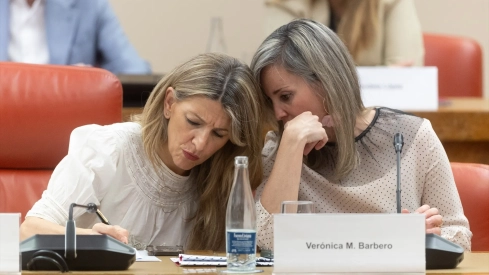
The 304 delegates convened will elect Verónica Martínez Barbero and Rosa Martínez as new general coordinators. Both head Sumar para gobernar (Sumar to govern), the only candidacy presented to lead the party, so the result is decided beforehand. The unknown begins afterwards, when they have to face a worn-out organization, without an electoral candidate, without an agreed brand for 2027 and with new territorial cracks opened just hours before the meeting.
Sources close to the formation consulted by ‘ElConstitucional.es’ describe a climate of deep discontent with the internal management of recent months. Part of the cadres consider the Movimiento Sumar brand in its current configuration to be amortized and assume that its disappearance may be near if the new leadership fails in the attempt to rebuild it.
This fear affects the party created to structure the space, although it is different from the future of the parliamentary coalition. Izquierda Unida, Más Madrid and the Comuns have their own structures and are already working with Movimiento Sumar on a future joint candidacy. The discussion now revolves around knowing what weight each organization will retain and whether the party that was born as the center of the project will end up becoming just another partner within an alliance directed from other places.
Barbero and Rosa Martínez take over a weakened party
Verónica Barbero arrives at the coordination after assuming the parliamentary spokesperson position after the departure of Íñigo Errejón. A labor inspector on leave of absence and former general director of Labor, she represents the most labor-oriented profile of the new team. Rosa Martínez, Secretary of State for Social Rights and from political ecologism, provides the other half of a leadership designed to combine work, care, and ecological transition.
The two have christened their proposal as “ecosocialist laborism”. Their document proposes strengthening labor rights, building a public care system, tackling the climate crisis with a new industrial policy, and shifting the economic conflict towards housing and rent-seeking. They also advocate for Movimiento Sumar to develop its own organization while participating in a common front with other forces “as equals”.
The approach implicitly recognizes that the party already lacks the strength to act as an umbrella for the entire alternative left. Its scarce territorial presence has accompanied almost all its electoral setbacks and remains one of the main problems that the new leadership will have to address. The candidacy incorporates regional leaders and young profiles to try to correct this deficiency, in addition to keeping Ernest Urtasun as its most recognizable ministerial face.
The polls have been narrowing the margin. Movimiento Sumar was left out of the Galician Parliament, barely achieved a minimal presence in Euskadi, and suffered a hard blow in the 2024 European elections. The subsequent regional elections have also not allowed the project to take off, while the latest '40dB' barometer places Sumar at a 5.8% estimated vote, less than half of the 12.3% achieved by the coalition in the 2023 general elections.
Barbero and Martínez want to respond to this decline with more presence in neighborhoods, municipalities, and regional parliaments. The immediate problem is that the assembly intended to show unity arrives surrounded by a new internal rupture and with a part of the party questioning the way Madrid manages the territories.
The Valencian rebellion tarnishes the handover
The majority of the Valencian leadership has decided to boycott the assembly. Delegates close to coordinators Carmen Padilla and Xavier López, who claim to represent more than 60% of the regional organization, refuse to attend due to the handling of an internal complaint of alleged harassment filed by Padilla and what they consider an attempt to politically control the federation from the national leadership.
The critical sector accuses the party of “complicity” and maintains that several organizational amendments would allow for discretionary intervention in territorial structures. The Valencian Community constitutes the third organization of Movimiento Sumar by number of affiliates, so its absence goes beyond the local scope and hits the message of normality that Barbero and Martínez wanted to convey.
The protest also connects with the crisis that has preceded this assembly. Lara Hernández left the coordination and the party on July 1 after the archiving of an internal investigation for alleged workplace harassment. The former leader denounced a “smear campaign” against her and accused sectors of the formation of having breached the confidentiality of the procedure. Barbero rejects these criticisms, although she avoids going into the details of the conflict.
The format chosen for this Saturday also does not help to clear up suspicions. Movimiento Sumar will limit journalists' access to the venue and will keep internal debates closed for most of the day. The leadership alleges space problems, but the decision reinforces the impression of an assembly designed to control the message and prevent differences from once again occupying the center of coverage.
The candidate and the brand are left for later
The assembly will renew the organs and approve the political document, but it will not elect the candidate for the general elections. Nor will it resolve the name with which the alternative left will run in 2027. These decisions must be agreed upon with IU, Más Madrid and the Comuns, who come to the negotiation with more autonomy and with the intention of preventing Movimiento Sumar from once again imposing the rules from above.
Barbero has acknowledged in an interview with 'La Voz de Galicia' that they need to clarify “as soon as possible” who will lead the candidacy. She assures that she has never seen herself in that role, although she does not completely close the door either. “I will always be there for whatever they ask of me,” she replied when asked about the possibility of becoming the new electoral poster.
The future coordinator also keeps conversations open with Podemos and supports a broad understanding with forces such as ERC, Compromís, Chunta, or BNG. Regarding Gabriel Rufián, she has praised his political and communicative ability and has welcomed any proposal that promotes unity, although a state alliance with sovereignist parties presents territorial and electoral difficulties yet to be resolved.
Izquierda Unida is pushing for the candidacy and the new brand to be defined by September at the latest. The delay makes it difficult to build a recognizable leadership, organize alliances, and prepare lists before an electoral cycle that will include municipal, regional, and general elections. Movimiento Sumar arrives at that negotiation with less strength than in 2023 and with the risk that its partners will occupy the space it intended to lead.
The assembly will begin this Saturday in Madrid and will culminate at seven in the evening with the intervention of Verónica Barbero and Rosa Martínez. After their election, the new leadership must open conversations with IU, Más Madrid, and the Comuns to agree on the candidacy, the distribution of power, and the brand with which the alternative left will try to reach the 2027 elections.
