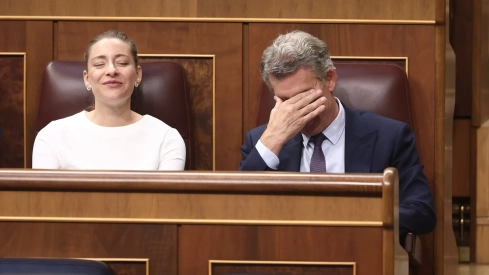
The PSOE has placed the Partido Popular in front of its own words this Friday after the deputies of Alberto Núñez Feijóo voted alongside the far-right Vox against the reform that obliges the State to finance 50% of the total certified expenditure on dependency. A commitment that the popular party has been demanding for years from Congress, the Senate, and a good part of its regional governments.
“The PP is a contradiction in itself. They demand it and now they vote against it,” the party denounced on its social networks along with a video that retrieves statements from popular leaders demanding exactly the same distribution that they have now rejected in the Social Rights Commission.
The images show PP officials demanding that Pedro Sánchez fulfill the promise to co-finance the system equally with the communities. Andalusian representatives are also heard asking the central Government to contribute the same percentage to Andalusia that it already assumes in other territories and reproaching the Executive for having used the lack of Budgets as an excuse not to reach 50%.
El PP es una contradicción en sí misma.
— PSOE (@PSOE) July 10, 2026
Lo exigen y ahora votan en contra de que la financiación del Estado a la Dependencia alcance el 50%. pic.twitter.com/K2mZsOOdKT
Years demanding 50% and a vote against alongside the far-right
The contradiction pointed out by the socialists goes beyond isolated statements. In April 2022, shortly after Feijóo's arrival to the national presidency of the party, the popular group itself registered a proposition in Congress to modify the Dependency Law and guarantee a state contribution equivalent to 50% of the system's cost.
The PP then maintained that the communities were bearing most of the financing and reproached the central Government for never having matched their effort. Two years later, it took a similar demand to the Senate and again demanded that the General State Administration cover half of the expenditure “without exception.”
That same discourse has been repeated from communities governed by the popular party. The Community of Madrid has for years accused the Executive of financing only a reduced part of the system, while Andalusia, Murcia, Castilla y León, and other territories have demanded in various sectoral meetings that the distribution reach a 50% balance for each administration.
The parliamentary spokesperson for the PP, Ester Muñoz, still insisted in May that some popular autonomous communities contributed more than 80% of the resources. Juanma Moreno has also publicly defended that the Government should provide "the same" as the Junta de Andalucía and has compared its situation with the funding received by Euskadi.
When the amendment reached Congress, the PP positioned itself in rejection. The opinion on the reform of the dependency and disability laws was approved this Thursday by 20 votes in favor and 17 against, those of the 'popular' and the extreme right.
The PP now shields itself behind the economic report
The popular spokesperson in the commission, Enrique Belda, justified the negative vote due to the absence of an economic report detailing how the new benefits will be financed starting in 2027. The deputy left open the possibility of modifying the position before the Plenary if the Government provides more information on spending forecasts and the number of beneficiaries.
This argument comes after the Council of Ministers approved an injection of 6,162 million additional euros for 2026 and 2027, aimed at strengthening the System for Autonomy and Dependency Care. The state contribution will amount to 5,513.8 million this year and will exceed 7,200 million next year.
The reform incorporates into the legal text that the State will cover "in any case" 50% of the expenditure certified by the communities, once the contribution of the users has been deducted. The objective is that funding ceases to depend on specific budgetary decisions and remains protected against future cuts.
Social Rights recalls that during the governments of Mariano Rajoy, the system lost more than 5,400 million euros due to the reduction of state contributions. The new formula seeks to recover that ground and offer stability to communities that directly manage benefits, centers, and care services.
Montero asks Moreno for explanations
María Jesús Montero has directly transferred the clash to the Andalusian president. The general secretary of the PSOE-A believes that Moreno must explain to dependent people and their families why the PP has voted against funding that the Junta has been demanding for years.
“It is difficult to find a greater inconsistency,” the socialist leader has stated, who accuses the popular party of prioritizing the wear and tear of the Government over a measure aimed at reinforcing care. Montero maintains that rejecting the reform after asking for the same commitment for years exceeds the limits of ordinary political opposition.
La semana pasada, contra el derecho de las mujeres a decidir sobre su propio cuerpo.
— Pedro Sánchez (@sanchezcastejon) July 9, 2026
Ayer, contra los trabajadores y su derecho a una baja laboral.
Hoy, contra las personas en situación de dependencia.
Así opina y actúa el PP de Alberto Núñez Feijóo. No son lapsus. Son sus…
Pedro Sánchez has also attacked Feijóo and has linked the vote on dependency with the latest controversies of the PP regarding abortion and sick leave. “Last week, against women's right to decide over their own bodies. Yesterday, against workers and their right to sick leave. Today, against people in a situation of dependency,” the president wrote.
The socialist criticism now focuses on the distance between the discourse maintained by the PP when demanding resources from the Government and its behavior when the vote arrived. The reform precisely incorporates the central demand of the popular autonomies and converts it into a permanent obligation for any Executive.
The Plenary Session obliges the Popular Party to decide again
The debate is not limited to money either. The reform eliminates incompatibilities between benefits, expands home care, recognizes telecare as a right, and reinforces personal assistance. It also facilitates that close relatives can act as caregivers in the usual environment and adapts disability legislation to the new article 49 of the Constitution.
The system currently serves nearly 1.7 million people, although it maintains significant waiting and processing problems. The latest official data show 142,887 people who have been waiting for a benefit for more than six months, while the State Observatory for Dependency raises the total backlog to over 255,000.
The text will reach the Plenary Session of Congress next Tuesday, July 14, along with the decree that mobilizes the additional 6.2 billion. The PP will then have a new opportunity to decide whether to maintain its alliance with Vox in rejection or finally support the funding that its own leaders and regional governments have demanded for years.
