The Government and the Center for Sociological Research are preparing a major survey to find out how Spaniards are experiencing the housing crisis and what measures they consider most useful to address it. The new 'Housing Barometer 2026' will include 6,000 telephone interviews and a maximum budget of 288,000 euros.
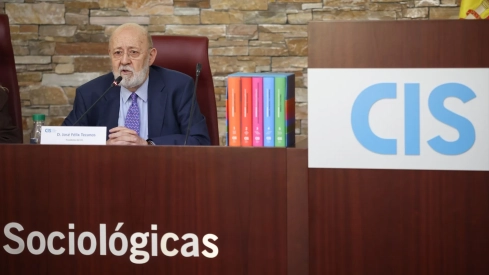
The Ministry of Housing and Urban Agenda, led by Isabel Rodríguez, will design the questionnaire together with the organization chaired by José Félix Tezanos. The objective is to evaluate the policies applied so far and gather information that allows guiding future public decisions on one of the problems that most concerns citizens.
The questions will address the demand for owned and rented housing, access difficulties, and the assessment of measures adopted by administrations. The questionnaire will also include the proliferation of tourist apartments, the concentration of real estate ownership, and foreign investment.
The fieldwork will be divided into three waves and will have national and regional representation. The CIS will randomly select landlines and mobile phones and apply quotas for age, sex, place of residence, and municipality size. Each interview will have a maximum approximate duration of between 17 and 18 minutes.
The design also includes a reinforced sample in medium and large municipalities with high population density, where pressure on rent and purchase is particularly intense. The CIS will assume the technical direction, the programming of the questionnaires, the calls, and the subsequent debugging and analysis of the results.
The agreement sets a maximum cost of 288,000 euros, of which 30,000 correspond to design, sample, and coordination, and 258,000 to fieldwork. Housing will contribute 144,000 euros, and the CIS will assume the other half through its own means, an in-kind contribution that will not imply additional expenditure in its budget.
The results must be completed and delivered to the Ministry before next November 30. The barometer will be jointly owned by both institutions and will be disseminated through their official channels and the CIS Data Bank. Anonymized microdata will also be available for consultation.
It will be the third specific barometer of these characteristics prepared by the CIS. The first was published in 2014, after the hardest years of the real estate crisis, and the second arrived in 2018 focused on housing and rent. The organization had also carried out a study dedicated to young people and housing in 2010.
A crisis that keeps young people in their parents' homes
Housing has been appearing as the main problem in Spain in the CIS barometers since December 2024. In May it reached a maximum of 48.8% and the latest study, corresponding to July, keeps this issue in first position with 43% of mentions.
The price increase continues to fuel this concern. Purchase and sale prices rose 12.9% year-on-year during the first quarter of 2026, according to the INE. New housing increased by 9.1% and second-hand housing by 13.5%.
The difficulties especially affect younger generations. 67.1% of people between 18 and 34 years old lived with one of their parents in 2025. Even among those between 26 and 34 years old, a stage in which emancipation was traditionally consolidated, the percentage was still at 44.3%.
Almost half of those who remained in the family home between 26 and 34 years old claimed they could not afford to buy or rent. Among young people aged 16 to 29 who looked for housing without managing to move, 65% directly pointed to the excessive price as the main barrier.
