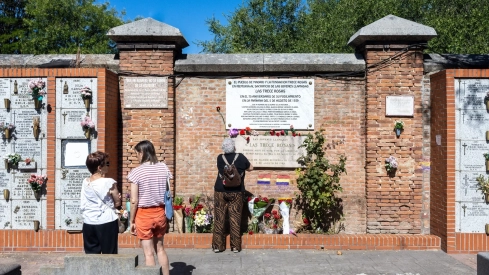
87 years ago, during the early morning of August 5, 1939, thirteen women between 18 and 29 years old were taken from the Ventas prison and driven to the walls of the East Cemetery in Madrid. A Francoist firing squad awaited them there.
Their names were Carmen Barrero Aguado, Martina Barroso García, Blanca Brisac Vázquez, Pilar Bueno Ibáñez, Julia Conesa Conesa, Adelina García Casillas, Elena Gil Olaya, Virtudes González García, Ana López Gallego, Joaquina López Laffite, Dionisia Manzanero Salas, Victoria Muñoz García, and Luisa Rodríguez de la Fuente. History would remember them as the Trece Rosas (Thirteen Roses).
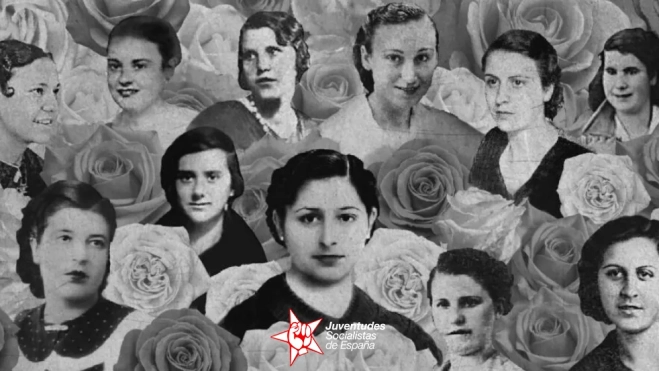
The Civil War had ended four months earlier. Madrid was already under the control of Franco's troops, and the dictatorship had begun to build its new State on courts-martial, overcrowded prisons, purges, fear, and executions. The execution of those thirteen women was part of the organized repression against those who had defended the Republic or could represent any future resistance.
Hours before dying, Julia Conesa wrote a farewell letter to her family. It ended with a phrase that has spanned generations and continues to appear every August 5 among red flowers, banners, and tributes: "May my name not be erased from history."
The dictatorship tried precisely that. To turn them into a military file, bury them under the accusation of "adherence to the rebellion," and spread silence about their lives. Eighty-seven years later, their names remain present while an extreme right wing grows again in Europe, relativizing dictatorships, degrading their victims, and presenting democratic memory as a threat.
Thirteen lives crushed by Francoist repression
After the occupation of Madrid, some young people linked to the Unified Socialist Youth tried to rebuild a practically dismantled clandestine organization. The Francoist police responded with a chain of arrests fueled by denunciations, interrogations, torture, and documentation seized at the end of the war.
The Thirteen Roses were arrested between May and June 1939. Some had been members of the JSU or the Communist Party during the war. Others had barely re-established contact with their former comrades. Blanca Brisac, a pianist, Catholic, and mother of a child, had no political affiliation. Her relationship with a communist musician was enough to drag her to prison and then before the firing squad.
They were dressmakers, secretaries, transport workers, seamstresses, or young women who helped support their families. Virtudes González, Victoria Muñoz, and Luisa Rodríguez were 18 years old. Adelina García was 19. Carmen Barrero, Julia Conesa, Elena Gil, and Dionisia Manzanero were 20. The oldest, Blanca Brisac, had just turned 29 and was the only one who had a child.
All of them passed through the Ventas women's prison, which became one of the main centers of female repression during the first months of the dictatorship. There they waited for weeks among thousands of political prisoners, many accompanied by their children, while military courts handed down sentences in collective proceedings.
On July 27, Civil Guard commander Isaac Gabaldón was assassinated along with his daughter and driver. The regime used that attack to further harden the repression against the clandestine communist organization. The Thirteen Roses were already imprisoned when the attack occurred, a fact that discredits any attempt to attribute direct participation to them.
On August 3, they appeared before a summary court-martial. Case 30,426 accused them of reorganizing the JSU and the PCE to act against the "social and legal order of the new Spain". The proceeding was also linked to a supposed plan to attack Franco during the Victory Parade, which historical investigations consider non-existent.
The trial lacked guarantees, sufficient individualization of conduct, and real possibilities of defense. The military justice of a dictatorship born from a coup d'état condemned for "adherence to rebellion" those who had defended republican legality.
Two days later, they were shot along with 43 men. The shots began at dawn against the cemetery wall. Some of the condemned had written their last letters to mothers, siblings, partners, and children in the preceding hours.
Blanca Brisac asked her family to protect Enrique, her son. Julia Conesa demanded that her name remain in history. Those letters gave back a face, voice, and affections to those whom Francoism had treated as a simple list of condemned women.
Memory in the face of the new far-right advance
Democratic memory starts from facts like that one. It seeks to know what happened, to repair the dignity of the victims, to locate those who remain in mass graves, and to transmit to new generations the consequences of a dictatorship. Truth, justice, reparation, and guarantees of non-repetition are part of a democratic obligation also recognized by international human rights organizations.
Its importance has grown again with the advance of the European far-right. Far-right forces participate in governments, condition parliamentary majorities, and have managed to shift much of their language towards traditional conservative parties. Attacks against migrants, feminists, minorities, journalists, and democratic institutions coexist with a self-serving revision of the past.
Historical fascism belongs to the 20th century, but its methods of dehumanization, search for internal enemies, and contempt for pluralism are once again finding political space. The manipulation of memory facilitates this path because it blurs responsibilities, turns the crimes of a dictatorship into a dispute between versions, and ends up presenting victims and executioners on the same level.
In Spain, PP and Vox have promoted the repeal or replacement of various regional memory laws. Aragon, Extremadura, and the Balearic Islands have experienced setbacks driven under the concept of "concord," a formula that avoids expressly condemning Francoism and dilutes the repression after the war.
Vox has gone further. Its leaders have called for the repeal of the Democratic Memory Law, have defended the dictatorship, and have spread falsehoods about the Trece Rosas themselves. Javier Ortega Smith even accused them of torturing, raping, and murdering in the Madrid chekas. The sentence that led them to the firing squad never attributed any of those crimes to them.
Madrid offers its own example of forgetfulness. José Luis Martínez-Almeida paralyzed in 2019 the memorial of La Almudena dedicated to the 2,936 people shot there by Francoism between 1939 and 1944. The City Council removed the plaques containing their names, some of which ended up broken on the ground, and replaced the project with a generic inscription dedicated to victims of both sides. Almost seven years later, those plaques remain packed in plastic and boxes in a corridor of the Almacén de la Villa. Among them were the words of Julia Conesa. The municipal plenary approved their restitution in 2020, but the Almeida government still has not returned them to the cemetery.
The mayor has also appealed the declaration of the execution wall as a place of democratic memory. His City Council considers that officially recognizing the space is "harmful" to municipal interests, reopens wounds, and offers a negative image of the cemetery.
The wall was the place where Francoism murdered almost 3,000 people. Among them were the Trece Rosas. Remembering what happened there is part of Madrid's history, although Almeida continues to try to hide their names in a municipal warehouse.
The left returns to bring flowers to La Almudena
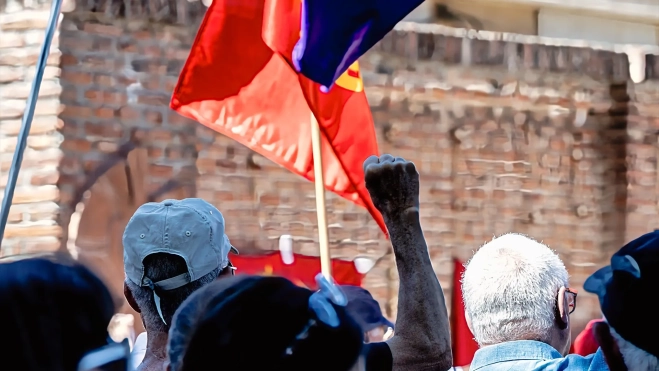
The PSOE and Juventudes Socialistas celebrated their traditional tribute this Wednesday before the plaque of the Trece Rosas in the La Almudena cemetery. The general secretary of JSE, Aránzazu Figueroa, has vindicated the women who led the resistance, suffered imprisonment, exile, and Francoist humiliation.
"They have been too often forgotten and made invisible throughout history," Figueroa said. The socialist leader has placed the defense of democracy as the task of her generation against those who "want to return us to a black and white Spain."
She also responded to the growth of hate speech. "We do not resign ourselves to giving up, nor to lowering our arms, nor to bowing our heads. This legacy is the most important thing we have and we will continue fighting against fascism and intolerance," she affirmed.
Hoy se cumplen 87 años del fusilamiento de las Trece Rosas, trece jóvenes asesinadas en la dictadura franquista por defender una sociedad más justa, igualitaria y en libertad.
— PSOE (@PSOE) August 5, 2026
Recordarlas es defender la Ley de Memoria Democrática y el compromiso con la verdad, la justicia, la… pic.twitter.com/ZnvKGby2UY
The PSOE has remembered the thirteen young women as defenders of a more just, egalitarian, and free society. The party has linked their memory with the Democratic Memory Law and with the public commitment to preserve truth, justice, reparation, and non-repetition.
Socialist councilwoman Meritxell Tizón also spoke at the event, reproaching the Madrid City Council for its use of memory as an element of confrontation. "To remember is a duty," she defended before the very wall whose declaration as a place of memory has been appealed by the Almeida government.
Regional deputy Cristina González responded to those who claim that during the dictatorship "life was better." "With the dictator, what happened was that many women and men were shot for their ideas," she recalled. Diana Matos, general secretary of Socialist Youth of Madrid, warned that violence and intolerance continue to claim lives.
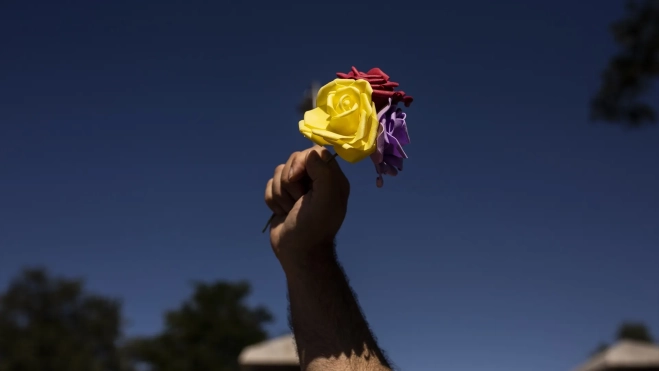
Izquierda Unida also recalled this Wednesday the names of the Trece Rosas and their connection with the Unified Socialist Youth. The organization has presented their memory as an impulse to keep the anti-fascist struggle alive.
🌷 Trece mujeres de entre 18 y 21 años, militantes organizadas en la JSU, fusiladas por el fascismo.
— Izquierda Unida🔻🇵🇸 (@IzquierdaUnida) August 5, 2026
Sus nombres no se borran de la historia, nos mueven para seguir en la lucha. pic.twitter.com/kNkbjst3s9
The Communist Party of Spain has recalled their attempt to organize resistance during the first months of the dictatorship. The PCE has also responded to attacks from the new far-right and has defended the dignity of the young women against revisionist campaigns.
87 years ago, Francoism shot the #ThirteenRoses, militants of the Unified Socialist Youth, for organizing anti-fascist resistance.
— Partido Comunista de España (@elpce) August 5, 2026
Neither then did they manage to erase their names from history, nor will the attacks of the new fascists manage to stain their dignity.
🌹✊ pic.twitter.com/FCPzjt406F
While the City Council keeps their names packed in a warehouse, the wall of La Almudena has once again been filled with roses and repeated Julia Conesa's last request: "May my name not be erased from history."
