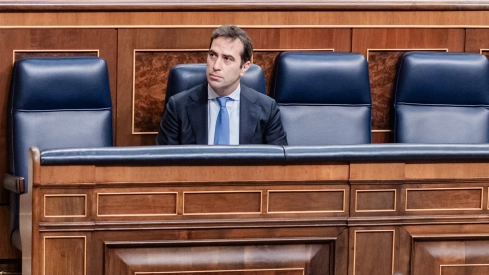
The Government has secured this Thursday the necessary majority to keep its second package of measures against the economic consequences of the Iran war in force. The decree will go ahead with the votes of the investiture bloc and support from both sides of the Executive, although practically all groups have accompanied their backing with reproaches.
Junts, ERC, EH Bildu and PNV have confirmed that they will allow the validation. Podemos will also not block the norm and the PP is heading towards abstention. The far-right Vox has remained the only formation willing to vote against, pending Congress formalizing the result at the end of a long extraordinary session.
The First Vice President and Minister of Economy, Carlos Cuerpo, has defended measures that already came into force on July 1 and that mobilize another 1,825 million euros to protect families, transport, agriculture, fishing and activities most exposed to rising energy costs.
The new military escalation between the United States and Iran has strengthened the Executive's arguments for maintaining this cushion. The attacks have again raised oil prices and reopened the risk to maritime transit in the Strait of Hormuz, one of the world's main energy routes.
Fuel price reductions with a gradual withdrawal
The most visible measure affects fuel prices. The decree reduces the hydrocarbon tax by 15 cents per liter during July, 10 cents in August and five cents in September. The bonus will conclude in October if prices evolve within the foreseen margins.
The text includes a clause to recover larger discounts when the year-on-year increase in gasoline or diesel exceeds 15%. In that case, the reduction may again reach 20 cents per liter during the following months. The mechanism extends to electricity and natural gas. Tax reductions can be automatically reactivated in the event of a new extraordinary increase, without the need to wait for the Government to negotiate another decree with its partners.
Cuerpo has presented this design as a prudent response to a particularly volatile conflict. He has also argued that the measures approved since March have allowed Spanish inflation to be contained and a significant part of the relief to be passed on to consumers.
The VAT on fuels has, however, returned to 21%. The Executive has decided to concentrate the aid on the special tax, a formula that allows graduating the discount and directing additional support towards professionals who depend on diesel. Transporters, farmers, ranchers, and fishermen will retain their specific aid. The agricultural sector will receive another 165 million to face the price of fertilizers, while compensation for transport and fishing companies will be extended during the summer.
Junts supports the decree but criticizes the electricity bill
The majority has been cleared after Junts confirmed its favorable vote. The pro-independence party has valued the progressive disappearance of the Tax on the Value of Electricity Production, a demand shared by the industry and other groups in the Chamber.
This tax, known as the generation tax, will gradually decrease until it disappears in 2028. The Ministry of Economy estimates that its withdrawal could reduce certain electricity costs for companies and households by around 6%, although it will mean about 2,700 million euros less in revenue between 2027 and 2028.
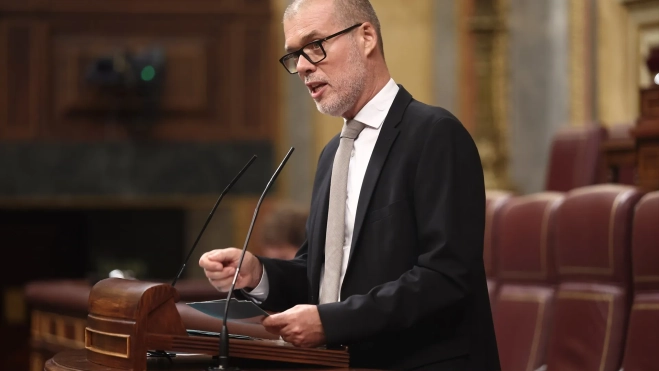
Junts' support has been accompanied by strong criticism. Josep Maria Cruset has reproached the Executive that the VAT on electricity has returned from 10% to 21% in the middle of summer, when heat waves trigger the use of air conditioning.
The party has also denounced territorial grievances and has called for structural measures to protect Catalan industry. Its vote will allow the decree to be approved, but Junts considers it insufficient to respond to the energy cost borne by households and businesses.
ERC has described its position as a "demanding yes". Teresa Jordà has valued the protection of vulnerable consumers and measures on renewables, while also calling for more ambitious taxation on corporate profits.
EH Bildu has supported immediate protection, although it has warned of the contradiction of allocating such a significant part of public effort to subsidizing fossil fuels. The PNV, for its part, has defended that aid should be concentrated in the professional sectors most affected.
Podemos questions relief for oil companies
The harshest criticisms from the left have come from Podemos. Javier Sánchez Serna has announced that his party will allow the validation, but has rejected that the response to the energy crisis involves continuing to reduce taxes linked to fuels.
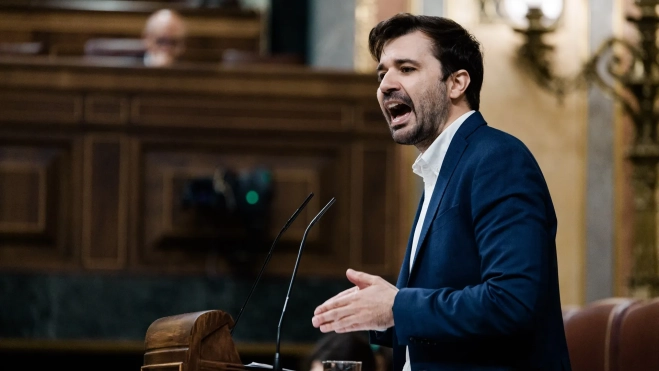
"Oil companies don't need more gifts," the deputy stated after Repsol announced a sharp increase in its profits this Thursday, favored by rising prices.
Podemos believes that the Government should intervene on business margins and ensure that the reductions fully reach the pump. Sánchez Serna has questioned the effectiveness of publishing a list of service stations that maintain margins considered anomalous and has demanded more forceful control mechanisms.
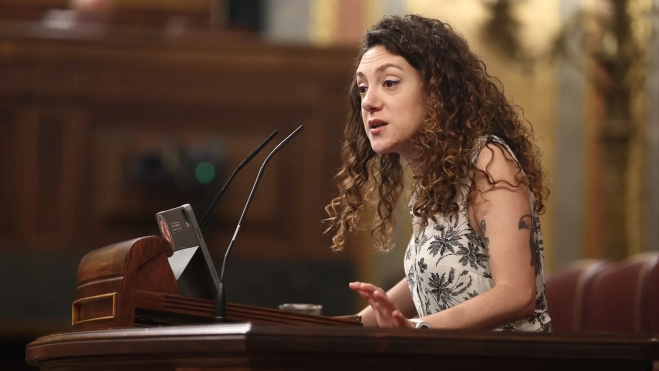
Reservations have also reached the coalition partner. Aina Vidal has defended Sumar's favorable vote because the decree protects families, but has reminded Carlos Cuerpo that the Government's social agenda cannot be limited to resisting every crisis.
The Comuns deputy has demanded that Economy unblock the reform of the time registration system promoted by Yolanda Díaz and has denounced the unpaid overtime hours that continue. She has also demanded answers regarding errors in the minimum vital income and a fairer distribution of economic growth.
The PP criticizes taxes but will not block aid
The PP has criticized the fiscal design of the package and has accused the Government of increasing pressure on the middle class. Jaime de Olano has questioned the return of some VAT rates to 21% and has argued that the Executive uses the crisis to modify taxes without offering a stable energy strategy.
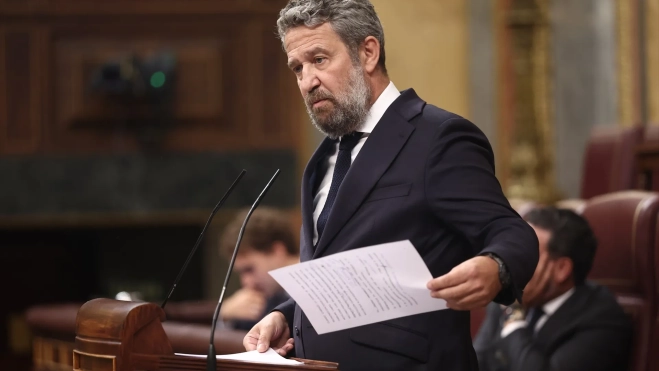
Despite this discourse, the 'populares' will not prevent the decree from remaining in force. The progressive elimination of the generation tax coincides with one of their main demands, and abstention prevents them from having to vote against aid for drivers, farmers, and transporters.
The far-right Vox has maintained its rejection. The far-right has been isolated in the face of a norm that preserves tax relief, direct aid, and labor guarantees for sectors affected by the conflict.
The decree also extends the prohibition of justifying dismissals due to the economic impact of the war in companies that receive public support. It also conditions certain aid on the implementation of sustainable mobility plans for their workers.
A 'sweep plenary' loaded with votes
The extension of the anti-crisis shield is one of the main decisions of the last extraordinary plenary session before the August break. The Chamber is also addressing the partial retirement of public administration personnel, the transition of mutualists to the self-employed regime, and the expansion of neonatal screening.
The agenda also includes the transfer of the AP-9 to Galicia, a reform of the requirements to form a parliamentary group, and the total amendments presented by PP and Vox against the partial debt forgiveness of the autonomous communities.
The stability path to prepare the 2027 Budgets will be put to a vote again later. The Government faces that point without sufficient support, after PP, Vox, Junts, and UPN have reiterated their rejection of the deficit distribution.
The votes will be grouped at the end of the session. The majority announced by the groups will allow the anti-crisis decree to be validated and the aid applied since early July to remain in force.
