The massive arrival of people from Morocco to Ceuta has brought the migratory crisis to the extraordinary Council of Interior Ministers of the European Union this Tuesday. The meeting, urgently convened after the request of the President of the Government, Pedro Sánchez, seeks to address the situation at Europe's southern border and coordinate a joint response among member states.
Following the events recorded in the autonomous city, Sánchez sent a letter to the President of the European Commission, Ursula von der Leyen, requesting an extraordinary meeting "with urgency." In the letter, he also expressed his "deep concern" about the reaction shown by some European governments to the migratory crisis.
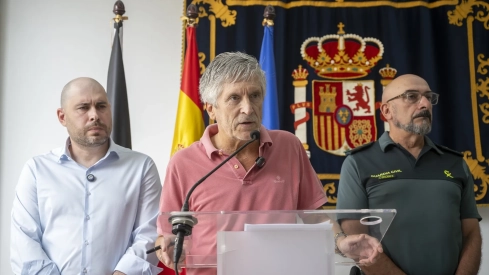
Representing Spain, the Minister of Interior, Fernando Grande-Marlaska, will defend before his counterparts the Spanish migratory policy, which he defines as "preventive, not short-term, offering stable and solid results, thanks to cooperation with countries of origin and transit, such as Mauritania, Senegal, Gambia and, also, Morocco." Furthermore, he will insist that Morocco is "a loyal partner with whom it maintains close collaboration based on mutual trust" and will reiterate that "Spain's commitment to its European obligations cannot be doubted or Spanish diligence in migratory matters questioned."
He will also convey his confidence that the "increases" in irregular arrivals will be "redirected" and will defend that Spain "will face any crisis, to which all first-entry countries of the European Union are exposed."
The minister will also put on the table the 42% decrease in irregular arrivals registered in Spain during 2025. Once the meeting, which will start at 10:00 a.m., concludes, he will appear before the media to explain the content and conclusions of the extraordinary council.
The meeting is held after some community partners questioned Spain's management of the crisis. In response to these criticisms, Von der Leyen responded to Sánchez highlighting Spain's and Morocco's "effective management" and emphasizing the need to offer a "common, united and solidary European response." Meanwhile, the Government maintains around 3,000 agents of the State Security Forces and Corps and the Army deployed in Ceuta to guarantee security in the city.
Add ElConstitucional.es as a preferred Google source for free.
Stay informed about all the latest breaking news with the best information. Against disinformation, for democracy and social rights.
