The PP has turned Óscar Puente's resignation into an accusation of electoral calculation and has placed Pedro Sánchez at the center of the clash over the Urda tragedy and the comparison with the DANA in Valencia.
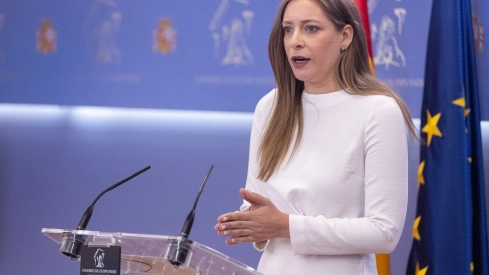
Ester Muñoz, spokesperson for the Popular Group in Congress, stated on Cuatro that the Minister of Transport is leaving "116 lives too late" and that the resignation occurs when it already poses a problem for the PSOE.
Muñoz criticizes the PSOE for the Urda-DANA comparison and for "how" the resignation is presented
Muñoz has reproached Sánchez for having "the nerve" to come out and say that the resignation is a dignified matter and has accused the left of using the Urda tragedy as part of a campaign strategy to "confront" Spaniards until the general elections.
"What I believe is that we must compare things that are comparable," she said, while indicating that if Carlos Mazón had to resign due to the DANA, Sánchez "should have resigned a long time ago due to the railway accidents." In the same vein, she maintained that the Sánchez Government did not carry out any structural work in the Poyo ravine, which, according to the PP, would have prevented the tragedy in the Valencian Community.
The popular spokesperson also recalled that Puente stated from the first minute after the Urda tragedy that he was not going to resign and that he would only do so if his permanence posed a problem for the PSOE's political project; therefore, she attributed his decision to "pure electoral calculation." Muñoz also said that she finds it "incomprehensible" that Sánchez kept Puente for months and pointed out that an audit was requested on the oldest railway line in Spain, where, according to the PP, there were incidents "practically daily."
In contrast, she recalled resignations and dismissals in PP governments during other crises, such as Ana Mato's after the Ebola crisis, and pointed out that in Andalusia a councilor was dismissed in the case of breast cancer screenings.
Sémper sees in Puente the symptom of a "toxic politics" designed by Sánchez
Borja Sémper, national spokesperson for the PP, wondered in Toledo why Puente did not resign ten months ago and defined his permanence as "the symptom of a toxic politics designed by Pedro Sánchez."
Sémper said that "it is actually irrelevant that Mr. Puente has resigned" and contrasted the PP's priority with what he criticizes about the PSOE: while, in his opinion, the Government promotes "politics of spectacle," the PP advocates for a return to management politics.
Sémper also questioned what he sees as the presentation of Puente "as a martyr" by Minister Milagros Tolón and wondered "what is the difference between the victims of Adamuz and those of Urda."
Montserrat attributes the resignation to "electoral panic" and questions European funds
Dolors Montserrat, Secretary General of the EPP and MEP for the PP, attributed Puente's resignation to "electoral panic" and polls, and defended in Segovia that on November 29, Spaniards are playing "to restore dignity" to the country with an Executive led by Alberto Núñez Feijóo.
Montserrat reiterated the need for an "audit of all money spent" and demanded that the railway be managed by "the best professionals and engineers."
The leader also enumerated other episodes of the legislature, such as the situation in Ceuta, the blackout of April 2025, and the state of the roads, and said that, in her opinion, the country is going through a health, housing, and migration crisis. She also questioned "where the money of Spaniards is" and stated that the Executive collects "more than 1.4 billion euros daily in taxes," double what is needed to repair the Madrid-Seville train line.
Asked about Brussels' response after Adamuz and Ceuta, she defended that Spain is not unprotected by Europe and stated that it is "by the worst Government in democracy," pointing out that Spain has received more than 140 billion euros in European funds and that Adif was the first recipient company, while the PP maintains that they have not been executed.