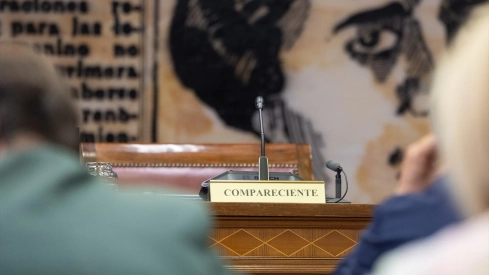
The Popular Group in the Senate has registered this Thursday before the Supreme Court the appeal with which it intends to ensure that the ministers summoned by the Upper House appear before the end of August. The party requests "ultra-precautionary" measures, a judicial response reserved for situations of special urgency that can be adopted initially without hearing the Government.
The petition seeks that the Third Chamber provisionally order the Executive "to cease its conduct of preventing or evading the appearances requested by the Senate" and to attend the sessions that may still be held during the coming days.
The PP also demands that the Government adopt within a maximum of 24 hours the necessary decisions to facilitate the presence of the ministers, immediately communicate their availability to the Senate, and allow the committees to be convened before August 31. This 24-hour period would only begin to operate if the Supreme Court accepts the requested measure. The popular party also asks the Executive to refrain from conditioning its presence in the Upper House on the appearances it has promoted for next week in Congress.
The appeal has been filed through the special procedure for the protection of fundamental rights. The PP's legal defense argues that the ministers' refusal has prevented senators from exercising one of the essential functions of their office, the oversight of government action.
The "ultra-precautionary" measures are regulated in article 135 of the Law on Contentious-Administrative Jurisdiction. The rule allows the court to resolve within a period of up to two days and without prior hearing of the other party when it appreciates a situation of special urgency.
The Supreme Court can directly adopt or reject the measure. It can also dismiss the extraordinary urgency and process the petition as an ordinary precautionary incident, with a hearing of the Government. If it initially accepts what the PP has requested, it will then have to hear the Executive and decide whether to maintain, modify, or lift the provisional order.
The Senate demands its own control
The calendar constitutes the basis of the urgency alleged by the Popular Group. September 1 marks the beginning of the ordinary session period, and the appeal argues that a resolution issued several months later would no longer allow the recovery of the political moment in which the appearances should have occurred.
The PP considers that the Government lacks the capacity to unilaterally choose before which of the two Chambers of the Cortes Generales it renders accounts. Its brief argues that an appearance requested by the Executive itself in Congress cannot replace a summons approved and processed by the Senate.
The party thus raises a conflict over the scope of parliamentary autonomy. The Constitution attributes to the Cortes the function of controlling the Government and recognizes the Chambers and their committees the possibility of demanding the presence of members of the Executive.
The appeal also invokes article 23.2 of the Constitution, which protects the exercise of functions linked to representative office. The popular party understands that absences prevent its senators from asking questions, requesting explanations, and scrutinizing the actions of the departments involved in the Ceuta crisis.
The summonses affected the Ministers of Interior, Fernando Grande-Marlaska; Foreign Affairs, José Manuel Albares, and Defense, Margarita Robles. Marlaska was again absent this Thursday from the Interior Committee, after missing a first summons held on August 12.
The Government has announced that several ministers will appear next week in Congress to report on the situation in Ceuta and has argued that its officials are focused on managing the crisis. The PP rejects that these explanations can substitute the control requested by the Upper House.
The possible granting of the measures would be provisional and would not yet resolve the merits of the appeal. The Third Chamber now has up to two days to appreciate or reject the special urgency alleged by the Popular Group.
