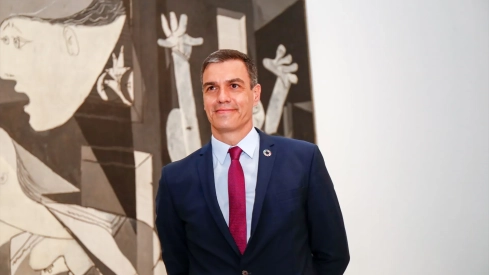
The Popular Party has filed a complaint against the President of the Government, Pedro Sánchez, for the video he recorded in front of Pablo Picasso's 'Guernica' at the Reina Sofía Museum. The Central Electoral Board (JEC) has opened a new procedure to study whether the recording could have violated the rules of institutional neutrality during the period prior to the elections.
The controversy revolves around the use of a public museum to disseminate a political message. While the Popular Party believes that Sánchez took advantage of the space to make propaganda, the president has used one of the best-known works against the barbarity of war to defend the slogan "No to war" and assert his Executive's position on international conflicts. The opening of the procedure does not mean that the Electoral Board has declared the president guilty or that there is already a new sanction. The body will have to analyze the facts and determine whether the action violated electoral legislation.
The PP questions Sánchez's video while the Electoral Board analyzes the complaint
The general secretary of the PP, Miguel Tellado, has criticized the recording and has accused the president of using public resources to promote his image in the middle of the pre-campaign. The Popular Party maintains that the chosen setting, the Reina Sofía Museum, should not be used to disseminate messages that could politically benefit the Government.
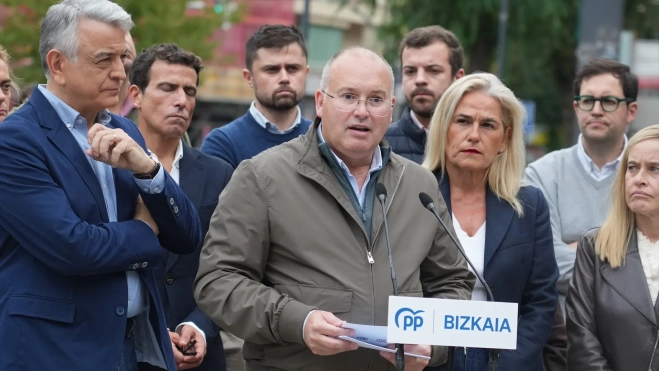
The complaint focuses on the possible violation of the principle of institutional neutrality contained in electoral legislation. This obligation seeks to prevent public administrations from using their means or spaces to favor a political option during electoral periods. However, the controversy has also focused on the circumstances in which the recording was made. The Reina Sofía Museum explained that the visit took place on a Tuesday, a day when it remains closed to the public, with the aim of not interfering with the normal functioning of the facilities.
The JEC must assess whether the content of the video, the context in which it was disseminated, and the use of public space constitute an electoral infraction. Until it rules, it cannot be considered proven that Sánchez has broken the law.
Why did Sánchez record the 'Guernica' video and what bothers the PP?
Sánchez's message revives the slogan "No to war" and uses the historical meaning of 'Guernica' to defend a position contrary to armed conflicts. Picasso's work represents the suffering of the civilian population during the bombing of the Basque town in the Civil War and has become an international symbol against war violence.
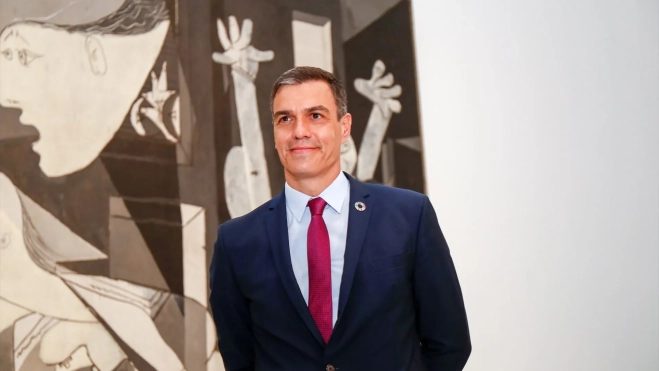
With this recording, the president links the legacy of the painting with the current debate on wars and foreign policy. The video seeks to reinforce the defense of peace advocated by the Government and convey to citizens its rejection of war and the normalization of violence. The PP, for its part, has focused its criticism on the chosen location and the possible electoral use of a public institution. The dispute thus confronts two issues: the political message Sánchez wants to convey and the limits that public officials must respect when using institutional spaces to communicate their positions.
This new file is added to other electoral procedures related to the president's actions. According to the information published on the case, Sánchez has accumulated six such procedures and the fines imposed in previous actions amount to 6,600 euros. The figure corresponds to previous sanctions and does not imply that the new complaint has resulted in another fine. The resolution of the Central Electoral Board will determine whether the 'Guernica' recording violated electoral rules. Until then, the PP's complaint constitutes an accusation that still needs to be examined by the competent body.
