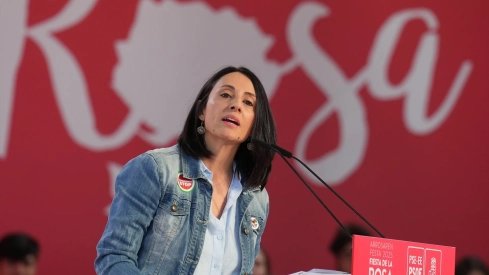
The PSOE brings pensions and labor rights to the center of its response to the PP and the far-right Vox on the first day of the pre-campaign for the general elections on November 29. The socialists link the far-right's proposal to transform the pension system with Alberto Núñez Feijóo's plan to give more power to mutual societies over sick leave and warn of what a government of both parties could imply.
The PSOE's Secretary of Organization, Rebeca Torró, has condensed this denunciation into a message published on X. "We already know Vox's plan for retirees: to end pensions which, with this Government, have been revalued by 45%," she states. She then links this proposal with Feijóo's proposal on mutual societies and concludes that "we already have the program of the scavenger coalition of PP-Vox".
In the information released by the party this Monday, the PSOE develops its criticism. It attributes to Vox the intention to question the public system and open the door to a model with private capital, and to the PP the intention to expand the powers of mutual societies. "Pensions, sick leave, collective bargaining" are the areas that the socialists place under threat, accusing both parties of promoting a project that involves repealing rights conquered over decades.
Ya conocemos el plan de Vox para los jubilados: acabar con las pensiones que, con este Gobierno, se han revalorizado un 45%.
— Rebeca Torró/❤️ (@Rebeca_Torro) October 5, 2026
Unido al proyecto de Feijóo de que los derechos de los trabajadores pertenezcan a las mutuas, ya tenemos el programa de la coalición carroñera de PP-Vox. pic.twitter.com/bChRMbHHCR
The possibility of a shared Executive also has explicit support within the PP. The former president of the Community of Madrid, Esperanza Aguirre, responded this Monday "of course yes" when asked about a vice-presidency for the leader of Vox, Santiago Abascal, whom she described as "a great guy." The PSOE picks up on that support and summarizes it with the expression "the coalition of vultures". The composition of a potential Government will depend, in any case, on the electoral result and subsequent agreements.
What PP and Vox propose
The origin of the response about pensions lies in the statements of Vox's economic spokesperson, José María Figaredo, in an interview published on Sunday in 'El Debate'. "The pension system is a zombie. They have broken it," he maintained before defending a reform that combines distribution with individual capitalization. In simple terms, one part would continue to be financed with contributions intended to pay current pensions and another would depend on accumulated savings for retirement.
Torró's accusation that Vox intends to end pensions expresses the PSOE's political assessment. Figaredo proposes a mixed system, but does not specify how much weight each part would have or how it would finance the transition. Nor does he detail who would manage the individual accounts. This lack of definition leaves unanswered questions that directly affect future retirees, especially those with low salaries or interrupted work careers and less capacity to save.
The Vox leader added that in almost three decades no corrective measure had been applied. The reforms of 2021 and 2023 disprove that statement. The first recovered revaluation linked to inflation; the second incorporated new financing channels and measures to improve the protection of the lowest pensions and reduce inequalities. The system faces challenges due to population aging, but these challenges require a different analysis than declaring it broken.
For his part, Feijóo proposes this Monday bonuses for companies with fewer sick leaves, without specifying their amount or the obligations they would reduce. The proposal adds to the one announced on September 29 to allow mutual insurance companies to issue discharges in certain pathologies. In cases of common illness leave, these entities can formulate proposals for discharge, but the decision rests with the competent public doctors.
Comisiones Obreras (CCOO) and the Unión General de Trabajadoras y Trabajadores (UGT) rejected that expansion of powers last week. Both unions warn of the conflict of interest of entities governed by associated companies that would manage the benefit and could decide when it ends. Their position helps to understand the scope of the dispute over mutual insurance companies, beyond the exchange of accusations between parties.
Against these proposals, the PSOE claims a revaluation of pensions of 45% during Pedro Sánchez's governments and promises to maintain the increase in public benefits, strengthen public services, and defend collective bargaining. Increases vary depending on the type of pension; in 2026, the general increase is 2.7%, while some minimum and non-contributory pensions reach 11.4%.
The socialists conclude their response with a commitment to expand social protection. "The rights that have been so hard to conquer are not cut: they are protected and expanded," states the party in the message disseminated this Monday.
