
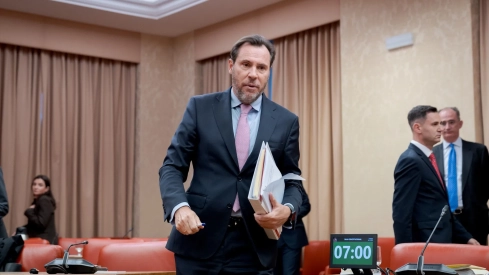
Óscar Puente has announced his resignation as Minister of Transport after the horrible railway tragedy in Urda, Toledo, where two trains collided, leaving behind a new catastrophe that once again strikes the Spanish railway system.
A tragedy that adds to the one that occurred less than a year ago in Adamuz.
I was among the first to defend that Óscar Puente did not have to resign. I did so despite the fact that not only the Popular Party and Vox demanded it, but also forces on the left, such as the Frente Amplio. My position was clear: with a general election just around the corner, called for next November 29, it seemed unfeasible for the head of Transport to leave office in the midst of a crisis of this magnitude.
There was—and still is—a tragedy to manage. What happened must be clarified, solutions must be put on the table, and victims and their families must be attended to. And although no compensation can bring back the lives of those who have died or repair the pain of their loved ones, the management of these compensations is also part of the response that the State must offer when tragedies of such magnitude occur and there is a possible patrimonial responsibility of the Administration.
That is why I defended that Óscar Puente should continue at the head of the Ministry and manage this crisis until the end of the legislature.
But, finally, he has resigned. And that, it must also be said, honors him.
Óscar Puente leaves assuming a political responsibility that corresponded to him as the highest authority of the Ministry of Transport. Responsibility, not culpability.
Because it is convenient to distinguish both concepts. One thing is guilt and a very different one is political responsibility. Eventual culpability is determined in court. Óscar Puente is not being judicially investigated for what happened and, therefore, no culpability can be attributed to him for this tragedy.
Another different issue is political responsibility. As head of the Ministry of Transport, he could be required to assume responsibility for what happened within the scope he directed. And that is precisely what he has done by announcing his resignation.
Puente does not assume judicial guilt. He assumes political responsibility. And that difference is fundamental.
That is why I believe his decision deserves to be recognized. He has decided to leave the Ministry and, as he has announced, also the political front line, making it clear with his gesture that not all politicians act in the same way when it comes to taking responsibility.
And it is inevitable to remember another case.
Carlos Mazón ceased to be president of the Generalitat Valenciana after the management of that devastating DANA, but he continues to be a deputy in Les Corts Valencianes and therefore retains his status as a privileged person. He has not completely abandoned politics.
Óscar Puente, on the other hand, has decided to leave.
And it's not about resorting to "what about you." It's about defending a much simpler idea: in politics, knowing how to resign is also a way of taking responsibility.
A resignation can grant dignity to someone who recognizes that, even if they are not guilty of certain events, they hold the position from which they must politically answer for them.
That is what Óscar Puente has done.
He has assumed the political responsibility that corresponded to him as Minister of Transport and has left with dignity. And, precisely for that reason, his resignation also leaves an inevitable comparison with those who, after facing political responsibilities of enormous gravity, continue to cling to a seat.
Óscar Puente has resigned. Carlos Mazón is still a deputy. And that difference also says a lot about how political responsibility is understood.
