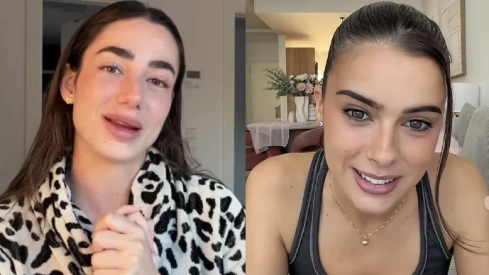
Lola Lolita and Mar Lucas have reappeared on social media after publicly acknowledging that they needed to stop. Their returns come after two absences that, although not exactly the same duration, share a common background: the exhaustion of living exposed to millions of people and the difficulty of moving forward when work, personal life, and the opinions of others constantly mix. Their stories once again bring up an uncomfortable question: what happens when what has given a person fame and opportunities also begins to emotionally wear them down?
In Lola Lolita's case, the alarm signal came on October 11. The content creator published a video looking directly at the camera, visibly emotional, to explain that she had not been feeling well for a long time. After a decade sharing her life on the internet, she admitted that she had tried to hide her discomfort and put her own needs aside until she felt that her body and mind were asking her to stop.
On Sunday, October 25, she posted again to share how she was doing: she assured that she was better, explained that she had sought professional help, and revealed that she had been taking medication for a few weeks. She also spoke about the anxiety episodes she suffered during the night and her intention to use her experience to raise awareness about mental health and online harassment. Her return, therefore, was not a simple return to the digital routine, but an update on a personal process that she had decided to share with her followers.
Mar Lucas also chose to temporarily disappear, but her withdrawal lasted for about a month. The influencer and singer explained in a video published on October 11 that she had not uploaded content for two weeks and needed to disconnect for a longer time. She has been on social media since she was 13 years old and, as she recounted, the hate and toxicity she encountered when entering the platforms had ended up affecting her. Several personal circumstances were added to that wear and tear: the sudden death of her dog and the breakup with her partner. Mar acknowledged that she had tried to distance herself other times, but ended up returning without anything changing. This time she wanted to give herself space to process what had happened, even considering traveling alone and turning off her phone.
After a month away from social media, she has reappeared with a message against cyberbullying. The singer explained that during this time she traveled alone, got lost, read, drew, and wrote, and learned to enjoy silence. She also denounced that social media, which had been her refuge since she was 13, has become spaces where insults and humiliations are disguised as opinions. "What else has to happen? Does someone have to die for something to be done?" she questioned, before reminding that digital harassment should not be accepted as part of her job.
Behind both stories there is a reality that goes beyond two well-known names. For those who live by creating content, being present on social media is not just about publishing videos or photos: it also involves maintaining a constant relationship with the audience, being exposed to comments, living with comparisons, and enduring that a part of one's private life becomes material for consumption or constant public judgment. When this dynamic extends for years, disconnecting can be especially difficult, both due to professional demands and the habit of sharing everything. Success, followers, or job opportunities do not prevent a person from feeling overwhelmed. And recognizing it publicly should not become a reason for ridicule or a new source of pressure.
The paradox is that, even when someone announces they need to disappear, their absence becomes news and their return again generates expectation. The vulnerability that Lola showed by crying in front of the camera could have ended up becoming a meme, something she herself feared, while Mar explained that she needed to distance herself so as not to return a few days later feeling the same. Therefore, the debate should not focus solely on how long they have been away or when they decided to return, but on the conditions that make it necessary to reach that limit. Taking a break is not failing or showing weakness: it can be a way of recognizing that something is not working and starting to change it. The question is whether, when they return to publishing normally, they will be able to do so with limits that protect their well-being or if the same dynamic of exposure will again demand them to be always available.